
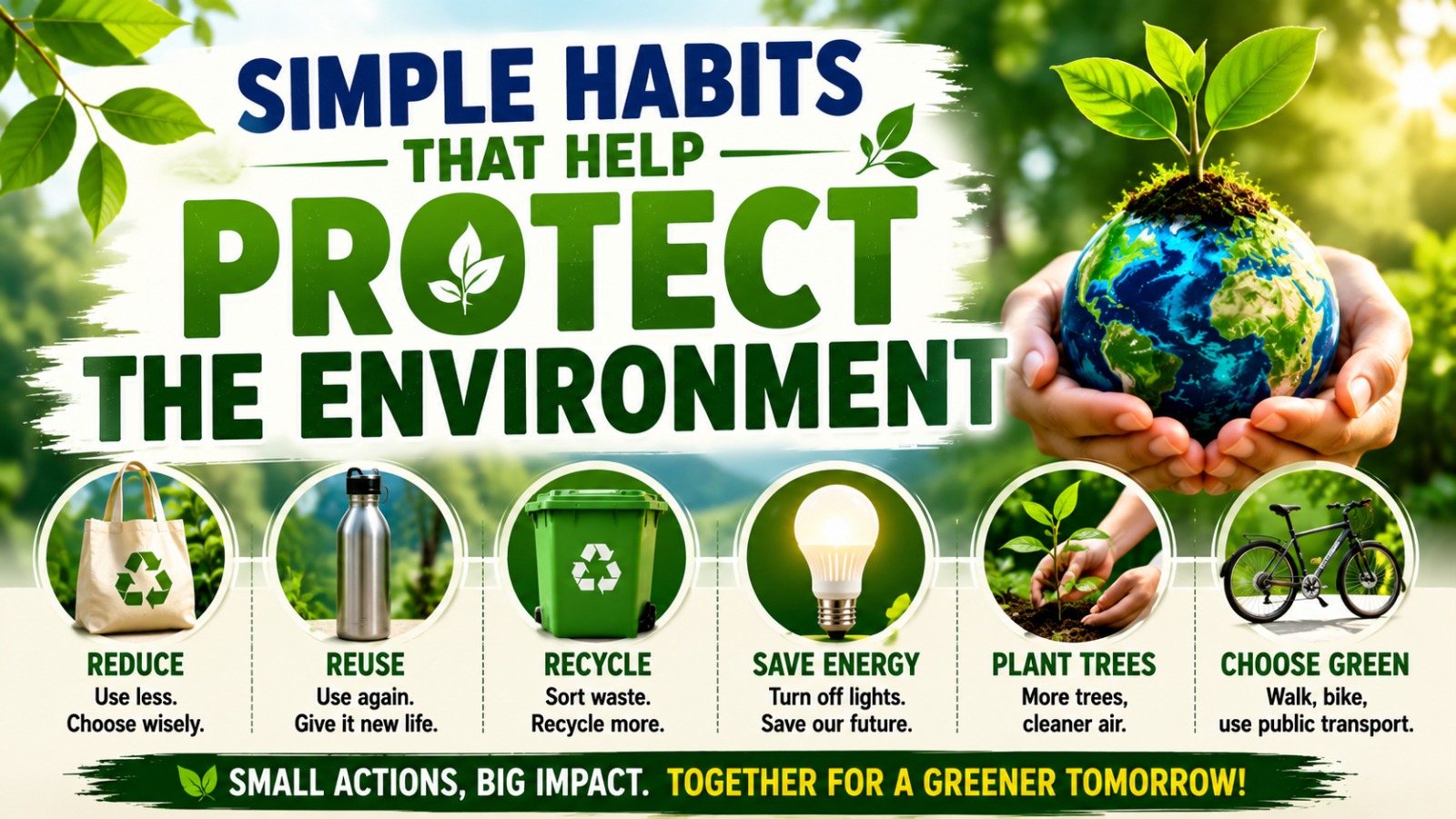
Protecting the environment is not always about large-scale actions or expensive technology. Simple daily habits can make a significant difference in reducing pollution, conserving natural resources, and creating a healthier planet. As environmental problems such as climate change, waste accumulation, air pollution, and deforestation continue to grow, every individual has an important role in preserving nature.
Small environmentally friendly actions practiced consistently can help build sustainable lifestyles and encourage positive change within communities. By adopting simple habits, people can contribute to environmental protection while improving their quality of life.
WHY ENVIRONMENTAL PROTECTION IS IMPORTANT
The environment provides essential resources needed for survival, including clean air, water, food, and energy. However, irresponsible human activities have caused serious environmental damage around the world.
Pollution, excessive waste production, overconsumption of natural resources, and greenhouse gas emissions threaten ecosystems and human health. Protecting the environment helps maintain ecological balance, supports biodiversity, and ensures that future generations can enjoy healthy living conditions.
Environmental protection also reduces the risk of climate-related disasters such as floods, droughts, and extreme weather events.
REDUCE PLASTIC USE
Plastic waste is one of the biggest environmental problems today. Single-use plastics such as plastic bags, bottles, and straws often end up in rivers, oceans, and landfills, harming wildlife and ecosystems.
People can reduce plastic waste by:
- Using reusable shopping bags
- Carrying refillable water bottles
- Avoiding plastic straws and disposable cutlery
- Choosing products with eco-friendly packaging
Reducing plastic consumption helps decrease pollution and supports cleaner environments.
SAVE WATER DAILY
Water is a valuable natural resource that should be used responsibly. Excessive water consumption can lead to shortages and environmental stress.
Simple water-saving habits include:
- Turning off taps when not in use
- Fixing leaking faucets and pipes
- Using water-efficient appliances
- Collecting rainwater for gardening
- Reusing water whenever possible
Conserving water also helps reduce the energy required for water treatment and distribution.
SAVE ELECTRICITY AND ENERGY
Energy production from fossil fuels contributes significantly to greenhouse gas emissions and climate change. Saving electricity is an easy way to reduce carbon footprints and protect the environment.
Effective energy-saving habits include:
- Turning off lights and electronics when not needed
- Using energy-efficient LED bulbs
- Unplugging unused chargers and devices
- Limiting air conditioner and heater use
- Maximizing natural lighting during the day
Using renewable energy sources such as solar power can further support environmental sustainability.
PRACTICE THE 3R METHOD
The 3R method — Reduce, Reuse, and Recycle — is one of the most effective ways to minimize waste and conserve resources.
Reduce
Buy only necessary items and avoid products with excessive packaging.
Reuse
Use reusable containers, bags, and household items whenever possible.
Recycle
Separate recyclable materials such as paper, plastic, glass, and metal from regular waste.
Practicing the 3R method helps decrease landfill waste and reduces environmental pollution.
USE ENVIRONMENTALLY FRIENDLY TRANSPORTATION
Transportation produces large amounts of carbon dioxide emissions. Choosing eco-friendly transportation methods can significantly reduce environmental impact.
People can help by:
- Walking or cycling for short distances
- Using public transportation
- Sharing rides with others
- Driving fuel-efficient or electric vehicles
These habits also help improve air quality and reduce traffic congestion.
PLANT TREES AND CARE FOR GREEN SPACES
Trees play a vital role in maintaining environmental health. They absorb carbon dioxide, produce oxygen, prevent soil erosion, and provide habitats for wildlife.
Planting trees and protecting green spaces can improve air quality and support biodiversity. Community gardening and urban greening projects also create healthier and more attractive environments.
AVOID FOOD WASTE
Food waste contributes to environmental problems because wasted food often ends up in landfills, producing greenhouse gases during decomposition.
People can reduce food waste by:
- Planning meals carefully
- Storing food properly
- Using leftovers creatively
- Buying only necessary amounts of food
Supporting local and sustainable food products can also help reduce environmental impact.
EDUCATE OTHERS ABOUT ENVIRONMENTAL CARE
Sharing environmental knowledge with family, friends, and communities can encourage more people to adopt sustainable habits. Environmental awareness campaigns, school programs, and social media can help spread positive environmental messages.
Teaching children about environmental responsibility from an early age helps create future generations that care about sustainability.
THE BENEFITS OF SIMPLE ECO-FRIENDLY HABITS
Simple environmentally friendly habits provide many benefits, including:
- Cleaner air and water
- Reduced pollution
- Lower energy and water bills
- Improved public health
- Better conservation of natural resources
- Reduced carbon emissions
When practiced collectively, small actions can create significant positive environmental impacts.
CONCLUSION
Simple habits can play a major role in protecting the environment and supporting sustainability. Actions such as reducing plastic use, saving water and energy, recycling waste, using eco-friendly transportation, and planting trees can help preserve natural resources and reduce pollution.
Environmental protection starts with individual responsibility and daily choices. By adopting sustainable habits and encouraging others to do the same, society can create a cleaner, healthier, and more sustainable future for everyone.
Tentang Penulis
Gusti Ayu Tita
Penulis — Universitas STEKOM
Penulis aktif yang berfokus pada isu-isu akademik, teknologi pendidikan, dan pengembangan sumber daya manusia di lingkungan kampus.



