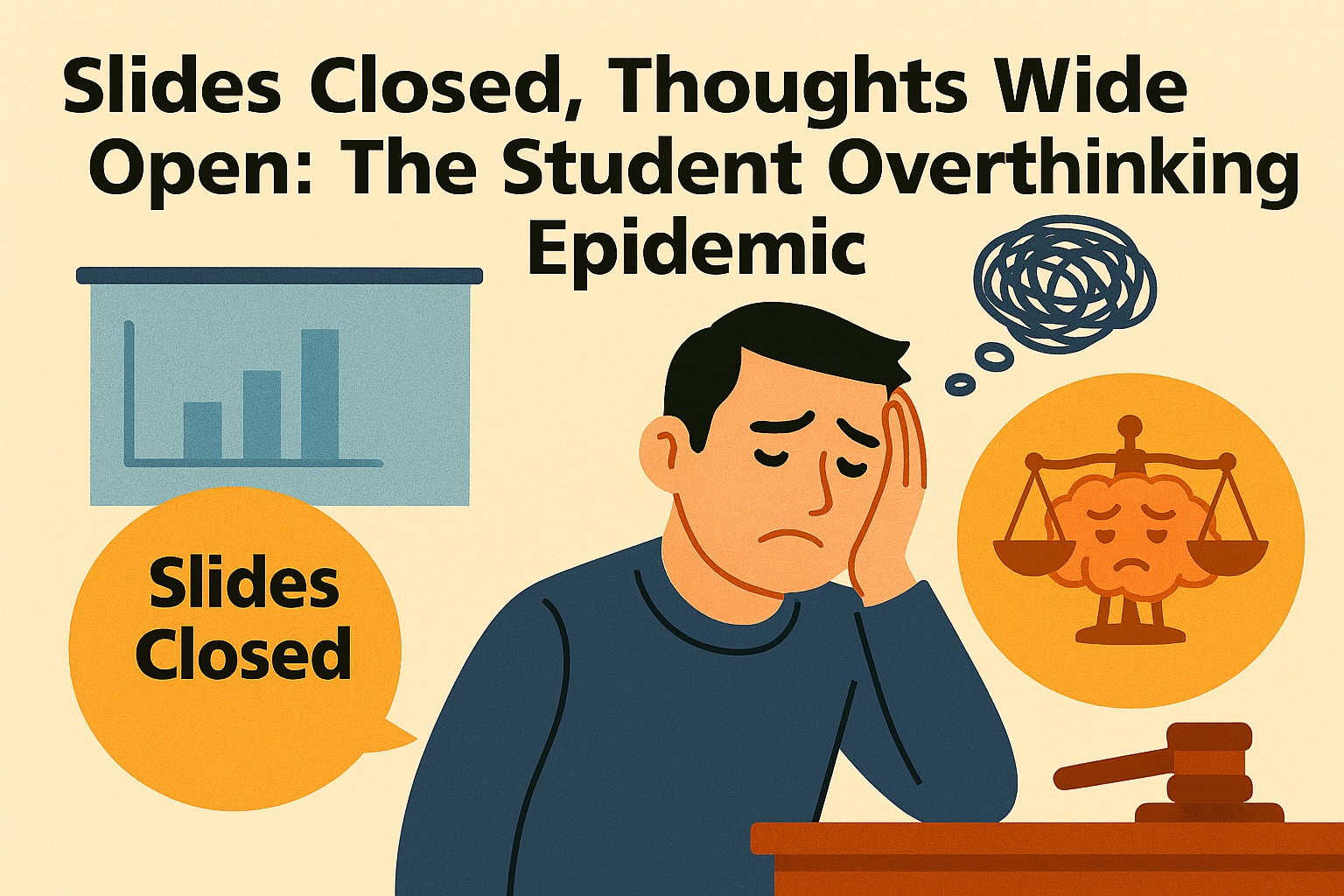
The slides are closed. The presentation is over. The classroom energy has shifted to the next topic. Yet inside your mind, nothing feels finished. The words you said echo back. The pauses feel longer than they were. The small mistakes grow larger with every replay.Welcome to what many students quietly experience: the overthinking epidemic. It does not appear on syllabi. It is not graded. But it spreads across campuses just the same.
THE SILENT PATTERN AFTER EVERY PRESENTATION
For many university students, the real stress begins after the presentation ends. While others seem relaxed, your brain starts reviewing everything:
- Did I explain that clearly?
- Was my voice shaking?
- Did the professor notice my hesitation?
- Did I look unprepared?
This mental replay feels automatic. You do not choose to press “replay.” It simply happens. What should be a brief reflection turns into an extended internal critique session.
Ironically, most classmates are doing the same thing about themselves.
WHY STUDENTS OVERTHINK SO MUCH
Overthinking is often driven by three powerful forces in academic life:
1. Performance Pressure
Students are constantly evaluated—grades, participation, assignments. This environment trains the brain to anticipate judgment.
2. Perfection Culture
Many students believe they must appear confident, articulate, and intelligent at all times. Small mistakes feel unacceptable.
3. Social Comparison
Seeing peers speak smoothly or answer quickly can create the illusion that everyone else is more capable.
These pressures combine to create a cycle: perform, replay, criticize, repeat.
WHEN REFLECTION TURNS INTO SELF-TRIAL
Reflection is healthy. It helps improve communication skills and academic performance. But overthinking crosses the line when feedback becomes personal attack.
Healthy reflection sounds like:
“I should organize my key points more clearly next time.”
Overthinking sounds like:
“I am terrible at presenting.”
The first builds skill. The second builds insecurity.
When thoughts remain “wide open” after the slides close, the mind shifts from learning mode to self-judgment mode. This is where confidence slowly erodes.
THE IMPACT ON STUDENT CONFIDENCE
Unchecked overthinking can lead to hesitation in future classes. Students may avoid raising their hands, volunteering, or taking leadership roles in group projects. The fear of replay becomes stronger than the desire to participate.
Over time, this pattern can limit growth. University is designed to be a space for experimentation and improvement—not perfection.
Making mistakes in presentations is normal. Learning from them is productive. Punishing yourself for them is not.
HOW TO BREAK THE OVERTHINKING CYCLE
Stopping overthinking does not mean ignoring improvement. It means structuring reflection in a healthier way.
Set a reflection window.
Allow yourself a short period to evaluate your performance, then consciously shift focus.
Identify one improvement only.
Choose one specific area to work on. Avoid rewriting the entire experience in your head.
Challenge catastrophic thoughts.
Ask yourself: “Is there real evidence that everyone judged me negatively?”
Practice balanced self-talk.
Replace “I failed” with “I am learning.”
With repetition, the brain learns that presentations are practice—not trials.
SLIDES MAY CLOSE, BUT GROWTH CONTINUES
The presentation may last ten minutes, but the confidence you build from it lasts much longer. Every time you speak up, you expand your comfort zone. Every imperfect delivery strengthens resilience.
The overthinking epidemic among students is real—but it is manageable. When you recognize that your mind is rehearsing more than necessary, you regain control.
Slides closed. Thoughts wide open. The key is learning how to gently close them too.
Tentang Penulis
Gusti Ayu Tita
Penulis — Universitas STEKOM
Penulis aktif yang berfokus pada isu-isu akademik, teknologi pendidikan, dan pengembangan sumber daya manusia di lingkungan kampus.