The world is home to countless extraordinary creatures, many of which remain unknown to the public. Unfortunately, some of the strangest and most fascinating animals on Earth are now facing the threat of extinction due to habitat destruction, climate change, pollution, and illegal hunting. Protecting these rare species is essential to maintaining biodiversity and preserving the balance of nature for future generations.
WHY UNIQUE ANIMALS ARE DISAPPEARING
Many rare animals live in isolated ecosystems such as rainforests, deep oceans, deserts, and polar regions. As human activity expands, these habitats are shrinking rapidly. Deforestation, industrial development, and environmental pollution are causing severe damage to ecosystems worldwide.
Climate change also plays a major role in the decline of wildlife populations. Rising temperatures, melting ice, and changing weather patterns affect animals that depend on stable environmental conditions to survive.
In addition, illegal wildlife trade continues to threaten many species. Exotic animals are often hunted for their fur, meat, horns, or to be sold as rare pets.
FASCINATING ANIMALS FACING EXTINCTION
AXOLOTL
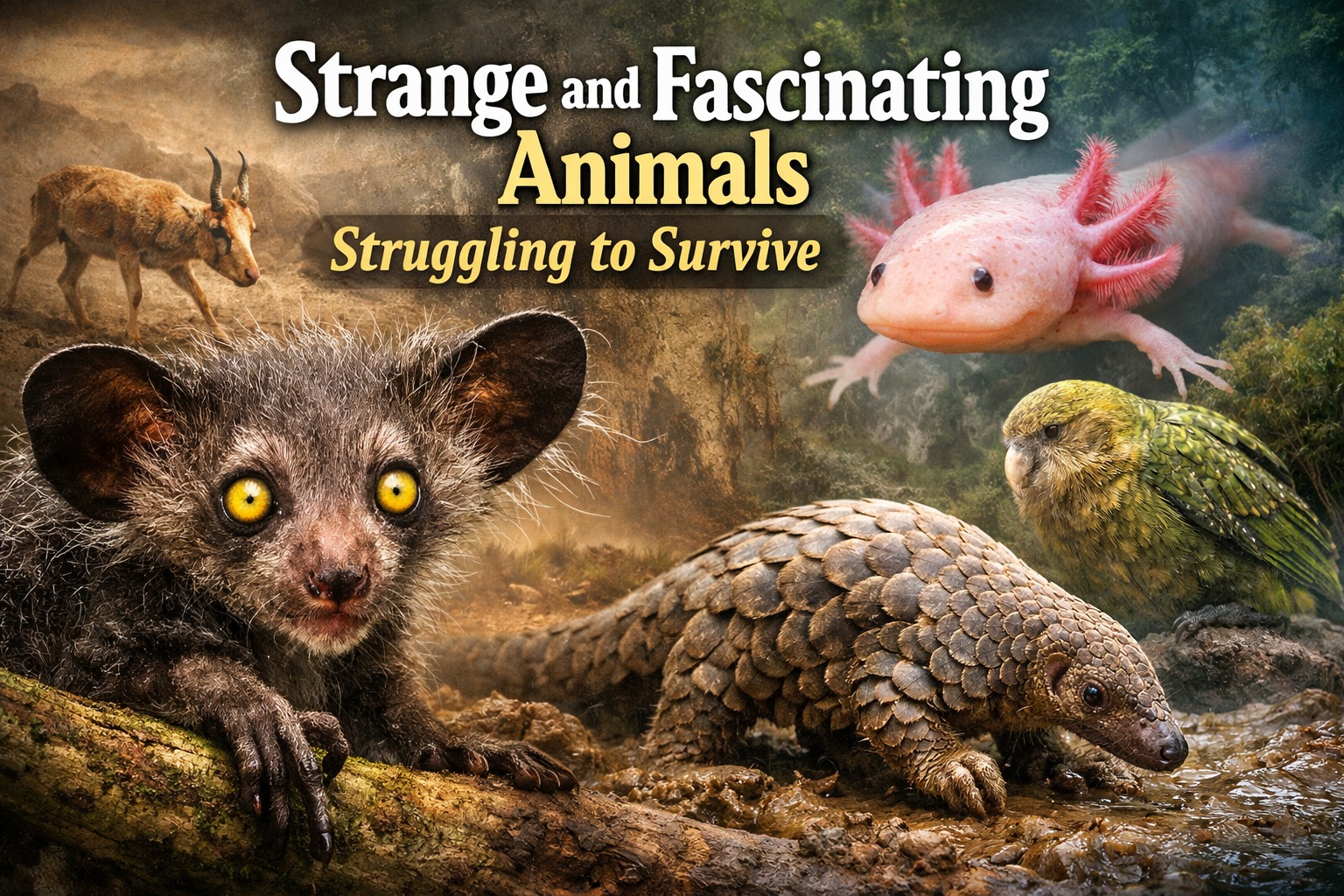
The axolotl is one of the world’s most unusual amphibians. Native to Mexico, this creature can regenerate lost body parts, including limbs and even parts of its heart and brain. Despite its incredible abilities, pollution and habitat loss have pushed the axolotl close to extinction in the wild.
SAOLA
Often called the “Asian unicorn,” the saola is an extremely rare mammal found in the forests of Laos and Vietnam. It was only discovered in 1992, making it one of the newest large mammals identified by science. Very few people have ever seen a saola in the wild.
PANGOLIN
Pangolins are unique mammals covered in protective keratin scales. They curl into a ball when threatened, similar to an armadillo. Sadly, pangolins are among the most trafficked animals in the world because of illegal demand for their scales and meat.
VAQUITA
The vaquita is the smallest and rarest marine mammal on Earth. This tiny porpoise lives only in the northern Gulf of California. Accidental capture in illegal fishing nets has reduced its population dramatically, leaving only a few individuals alive.
AYE-AYE
The aye-aye is a strange nocturnal primate from Madagascar known for its large eyes and long middle finger used to find insects inside trees. Although harmless, local myths often portray it as a bad omen, causing many people to kill it out of fear.
THE IMPORTANCE OF WILDLIFE CONSERVATION
Every species has a role in maintaining ecological balance. When one animal disappears, it can affect entire food chains and ecosystems. Protecting endangered animals also helps preserve forests, oceans, and natural resources that humans depend on.
Conservation programs, wildlife protection laws, and environmental education are important steps toward saving rare species. Many organizations around the world are working to rescue endangered animals through habitat restoration, breeding programs, and anti-poaching campaigns.
HOW PEOPLE CAN HELP
Protecting endangered animals is not only the responsibility of governments and scientists. Ordinary people can also contribute in meaningful ways, such as:
- Reducing plastic waste and pollution
- Supporting wildlife conservation organizations
- Avoiding products made from endangered animals
- Spreading awareness about biodiversity
- Supporting sustainable environmental practices
Small actions from millions of people can create a major positive impact on the survival of wildlife.
CONCLUSION
Strange and fascinating animals are an important part of Earth’s natural heritage. From the mysterious saola to the tiny vaquita, these creatures remind us of how diverse and extraordinary life on our planet truly is. Without serious conservation efforts, many of these species could disappear forever. Protecting wildlife today means preserving the beauty and balance of nature for future generations.
Tentang Penulis
Gusti Ayu Tita
Penulis — Universitas STEKOM
Penulis aktif yang berfokus pada isu-isu akademik, teknologi pendidikan, dan pengembangan sumber daya manusia di lingkungan kampus.