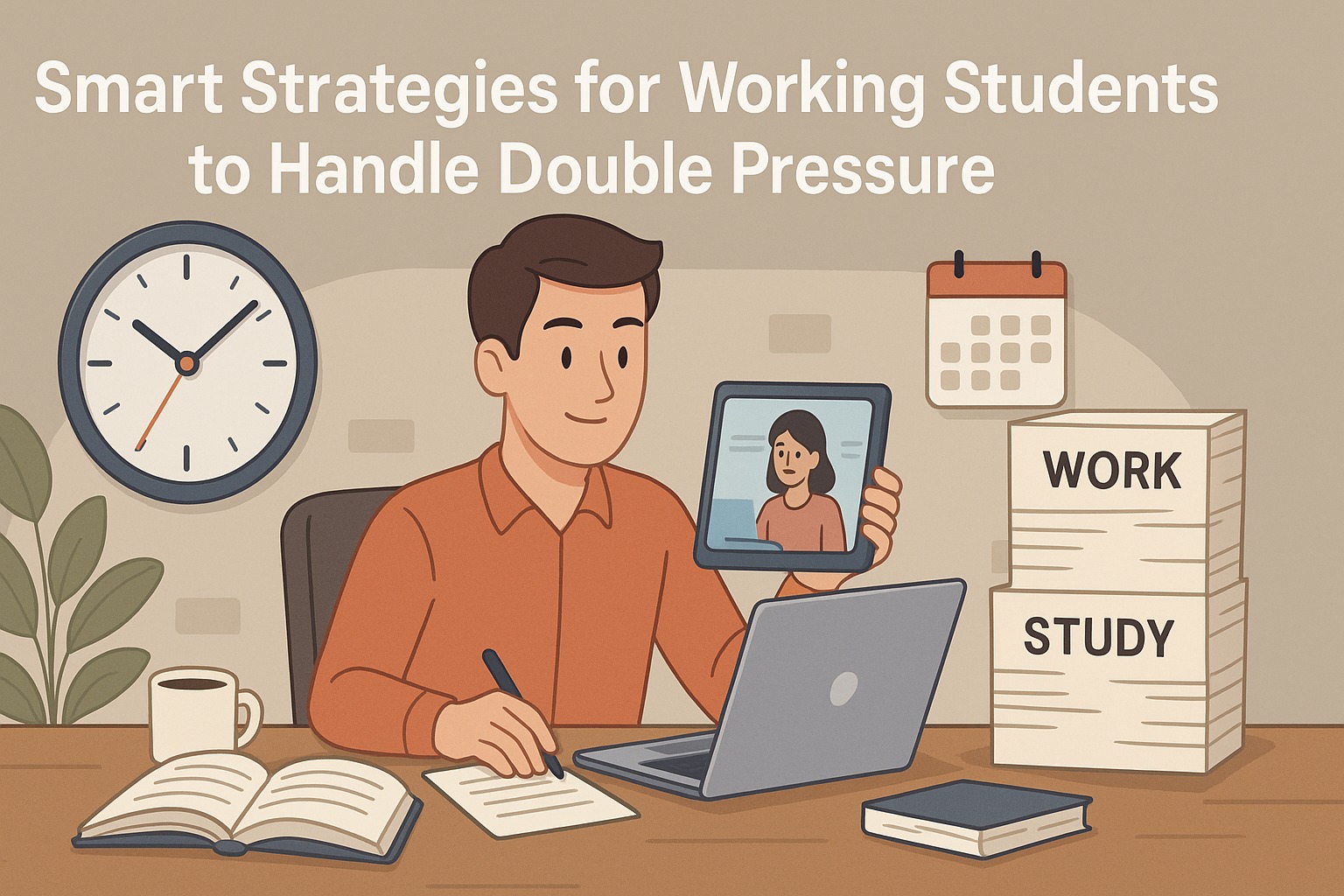
Smart Strategies for Working Students to Handle Double Pressure
Juggling both academic responsibilities and work duties is no easy task. For working students, the pressure from meeting deadlines, managing class schedules, and fulfilling job expectations often leads to mental, physical, and emotional strain. If left unmanaged, this dual burden can seriously impact academic performance, work productivity, and overall well-being. That’s why adopting the right strategies is essential to navigating this demanding journey.
1. Establish Clear Priorities
Working students must know how to differentiate between tasks that are urgent and those that can be postponed. For instance, if an important exam is coming up, you may need to reschedule work shifts or negotiate deadlines. Prioritizing based on urgency and potential consequences can reduce stress and sharpen focus.
Pro Tip: Use the Eisenhower Matrix to categorize tasks by urgency and importance.
2. Communicate Openly with Professors and Employers
Transparent communication is crucial in managing dual roles. Let your professors and supervisors know that you're balancing school and work. Most will understand and offer flexibility when you're honest, respectful, and proactive in explaining your situation.
Benefits: Minimizes schedule conflicts, builds trust, and reduces the risk of penalties or misunderstandings.
3. Practice Efficient Time Management
Time is a working student’s most valuable asset. Utilize tools like digital calendars, task trackers, or time-blocking apps to structure your daily routine. Avoid procrastination—unattended tasks can pile up quickly and lead to unnecessary stress.
Key: Stick to your schedule with discipline and intention.
4. Recognize Your Limits and Respect Them
Many students fall into the trap of overcommitting. Learning to say "no" to non-priority tasks or extra shifts is essential. Take breaks when needed—rest is a vital part of productivity.
Reminder: It's okay to take a semester break or reduce work hours if necessary.
5. Seek Emotional Support
Double pressure can affect your mental health. It’s important to build an emotional support system—be it family, close friends, or a university community. Sharing your experiences and challenges can provide emotional relief.
Alternative: If stress becomes overwhelming, seek help from a campus counselor or mental health professional.
6. Maintain a Healthy Lifestyle
Your body and mind need proper care to perform well under pressure. Ensure regular meals, quality sleep, and light physical activity. A healthy body is more resilient and better equipped to handle long hours and high demands.
Conclusion
Being a working student comes with a unique set of challenges, but it’s far from impossible. With the right strategies—from priority setting and open communication to effective time management and self-care—you can manage the pressure with confidence. The key lies in knowing your limits and being committed to learning and adapting along the way.
Tentang Penulis
Gusti Ayu Tita
Penulis — Universitas STEKOM
Penulis aktif yang berfokus pada isu-isu akademik, teknologi pendidikan, dan pengembangan sumber daya manusia di lingkungan kampus.