
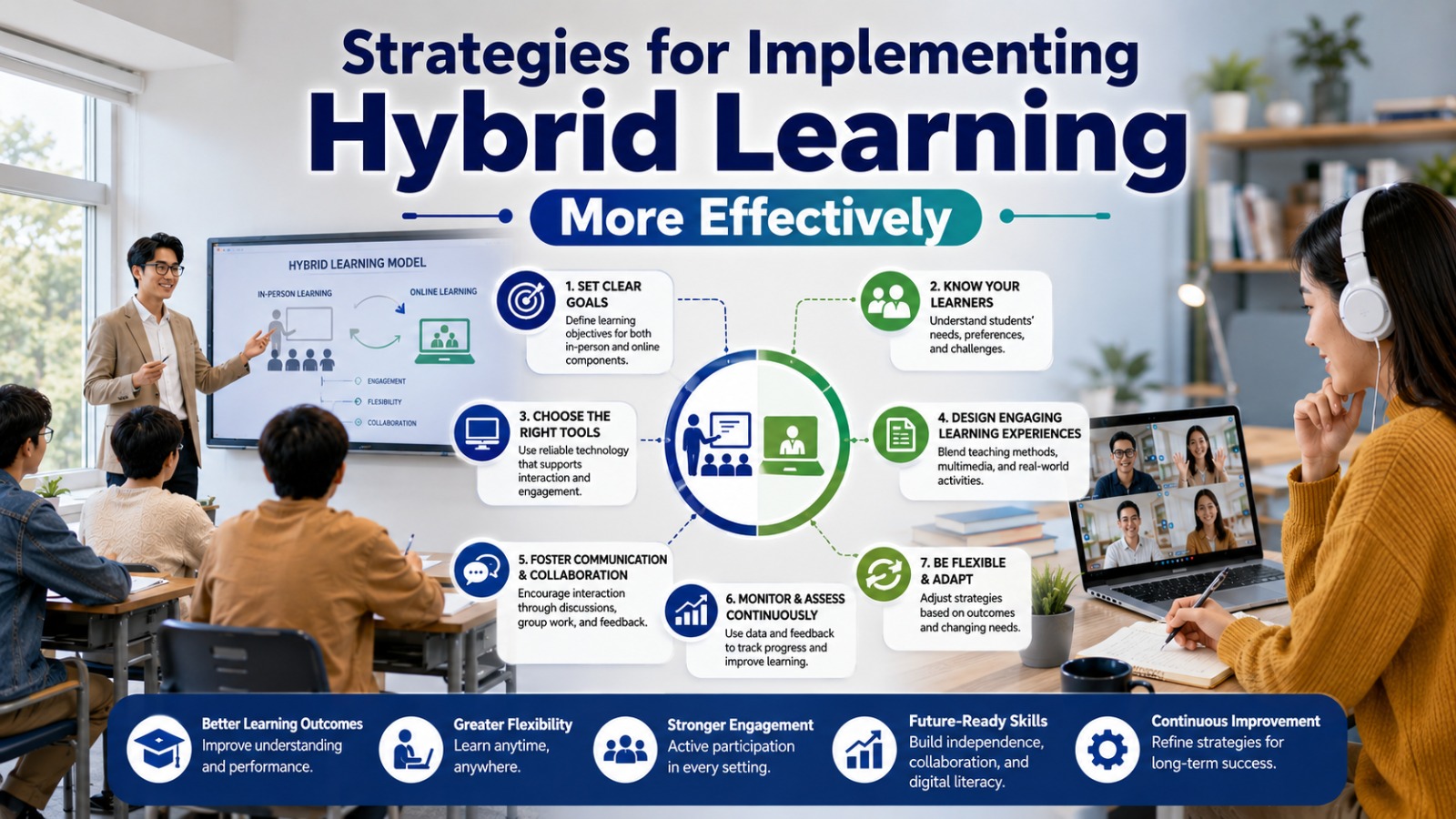
The education sector has changed significantly with the development of digital technology and modern teaching methods. One of the most widely adopted approaches today is hybrid learning. This learning model combines face-to-face classroom instruction with online learning activities, creating a flexible and interactive educational experience. However, implementing hybrid learning successfully requires proper planning, effective communication, and the right technological support.
Without a clear strategy, hybrid learning can create challenges for both students and lecturers. Therefore, educational institutions must apply effective methods to ensure the learning process remains productive, engaging, and accessible for everyone involved.
UNDERSTANDING THE CONCEPT OF HYBRID LEARNING
Hybrid learning is an educational method that integrates traditional classroom teaching with online learning systems. In this approach, some lessons are delivered directly in class, while others are conducted through digital platforms such as video conferences, learning management systems, and online discussion forums.
This combination allows students to enjoy the benefits of both physical interaction and flexible online learning. At the same time, lecturers can use various teaching tools to improve learning quality and student participation.
PREPARING A CLEAR LEARNING STRUCTURE
One of the most important strategies for effective hybrid learning is creating a clear learning structure. Students need to understand how the course is organized, including schedules, assignments, attendance policies, and communication methods.
Lecturers should explain which activities will take place online and which will be conducted in the classroom. Clear instructions help students manage their time more efficiently and reduce confusion during the learning process.
A well-organized learning structure also allows lecturers to monitor student progress more effectively.
USING RELIABLE TECHNOLOGY
Technology plays a central role in hybrid learning. Educational institutions should use reliable digital platforms that support communication, collaboration, and content sharing.
Learning management systems, video conferencing applications, and cloud-based storage platforms can simplify the learning process for both students and lecturers. Stable internet access and compatible devices are also essential to avoid disruptions during online sessions.
Choosing user-friendly technology can improve participation and make learning activities more efficient.
CREATING ENGAGING LEARNING CONTENT
One of the challenges of hybrid learning is maintaining student attention and motivation. To solve this issue, lecturers should create engaging and interactive learning materials.
Videos, animations, online quizzes, virtual discussions, and multimedia presentations can make lessons more interesting. Interactive content encourages students to participate actively rather than simply listening to lectures passively.
By combining visual, audio, and practical learning elements, lecturers can improve student understanding and learning outcomes.
ENCOURAGING ACTIVE COMMUNICATION
Effective communication is essential in hybrid learning environments. Students should feel comfortable asking questions, participating in discussions, and communicating with lecturers.
Lecturers can use online discussion forums, messaging platforms, and virtual consultation sessions to maintain communication outside classroom hours. Regular feedback is also important because it helps students identify their strengths and weaknesses.
Open communication creates a supportive learning atmosphere and increases student engagement.
PROVIDING FLEXIBLE LEARNING ACCESS
One of the biggest advantages of hybrid learning is flexibility. Educational institutions should maximize this advantage by providing easy access to learning materials.
Recorded lectures, downloadable resources, and online assignments allow students to study according to their own schedules. This flexibility is especially beneficial for students with different learning speeds or personal responsibilities.
Providing accessible learning resources also helps students review lessons whenever necessary, improving knowledge retention.
TRAINING LECTURERS AND STUDENTS
Successful hybrid learning requires digital competence from both lecturers and students. Educational institutions should provide training programs to improve technology skills and online learning management.
Lecturers need to understand how to use digital tools effectively, create engaging online content, and manage virtual classrooms. Students should also learn how to participate actively in online discussions, submit digital assignments, and use learning platforms efficiently.
Proper training can reduce technical difficulties and improve the overall learning experience.
BALANCING ONLINE AND OFFLINE ACTIVITIES
A balanced combination of online and offline learning activities is important for maintaining student motivation and academic effectiveness.
Practical activities, group discussions, and presentations can be conducted in physical classrooms to encourage direct interaction. Meanwhile, theoretical lessons, assignments, and independent study can be completed online.
This balance helps students benefit from social interaction while still enjoying the convenience of digital learning.
MONITORING AND EVALUATING LEARNING PROGRESS
Regular evaluation is necessary to measure the effectiveness of hybrid learning strategies. Lecturers should monitor student participation, assignment completion, and academic performance continuously.
Online quizzes, surveys, and feedback forms can help identify challenges faced by students during the learning process. Educational institutions can use this information to improve teaching methods and learning systems.
Continuous evaluation ensures that hybrid learning remains relevant, effective, and beneficial for students and lecturers.
OVERCOMING COMMON CHALLENGES
Although hybrid learning offers many benefits, several challenges may still occur. Internet connectivity problems, lack of digital devices, and reduced student motivation are some common issues.
Educational institutions can overcome these challenges by providing technical support, offering flexible deadlines, and encouraging interactive learning activities. Lecturers should also remain adaptable and responsive to student needs.
With proper solutions and support systems, hybrid learning can become more effective and sustainable.
CONCLUSION
Hybrid learning has become an important part of modern education because it combines flexibility, accessibility, and technological innovation. However, implementing this learning model effectively requires clear planning, reliable technology, active communication, and continuous evaluation.
By applying the right strategies, educational institutions can create engaging and productive learning environments that support student success. As technology continues to evolve, hybrid learning will likely play an even greater role in shaping the future of education.
Tentang Penulis
Gusti Ayu Tita
Penulis — Universitas STEKOM
Penulis aktif yang berfokus pada isu-isu akademik, teknologi pendidikan, dan pengembangan sumber daya manusia di lingkungan kampus.



