Lifestyle Changes to Reduce Stress and Improve Quality of Life
Stress is a common condition experienced by many people, especially in the modern era filled with constant demands and life pressures. If left unmanaged, stress can negatively affect both physical and mental health. However, by making lifestyle changes, stress can be reduced effectively. This article discusses lifestyle strategies that can help reduce stress and improve overall quality of life.
1. Managing Time More Effectively
One of the main causes of stress is poor time management. Many people feel overwhelmed by work, family responsibilities, and other commitments.
Improving time management can significantly reduce stress levels.
1.1. Prioritizing Tasks
Focus on tasks that are most important and urgent.
1.2. Creating a Daily Schedule
Setting a realistic daily schedule helps reduce feelings of overwhelm.
1.3. Avoiding Multitasking
Completing one task at a time improves focus and efficiency.
By managing time effectively, tasks can be completed more quickly, leaving more time for rest and recovery.
2. Regular Physical Exercise
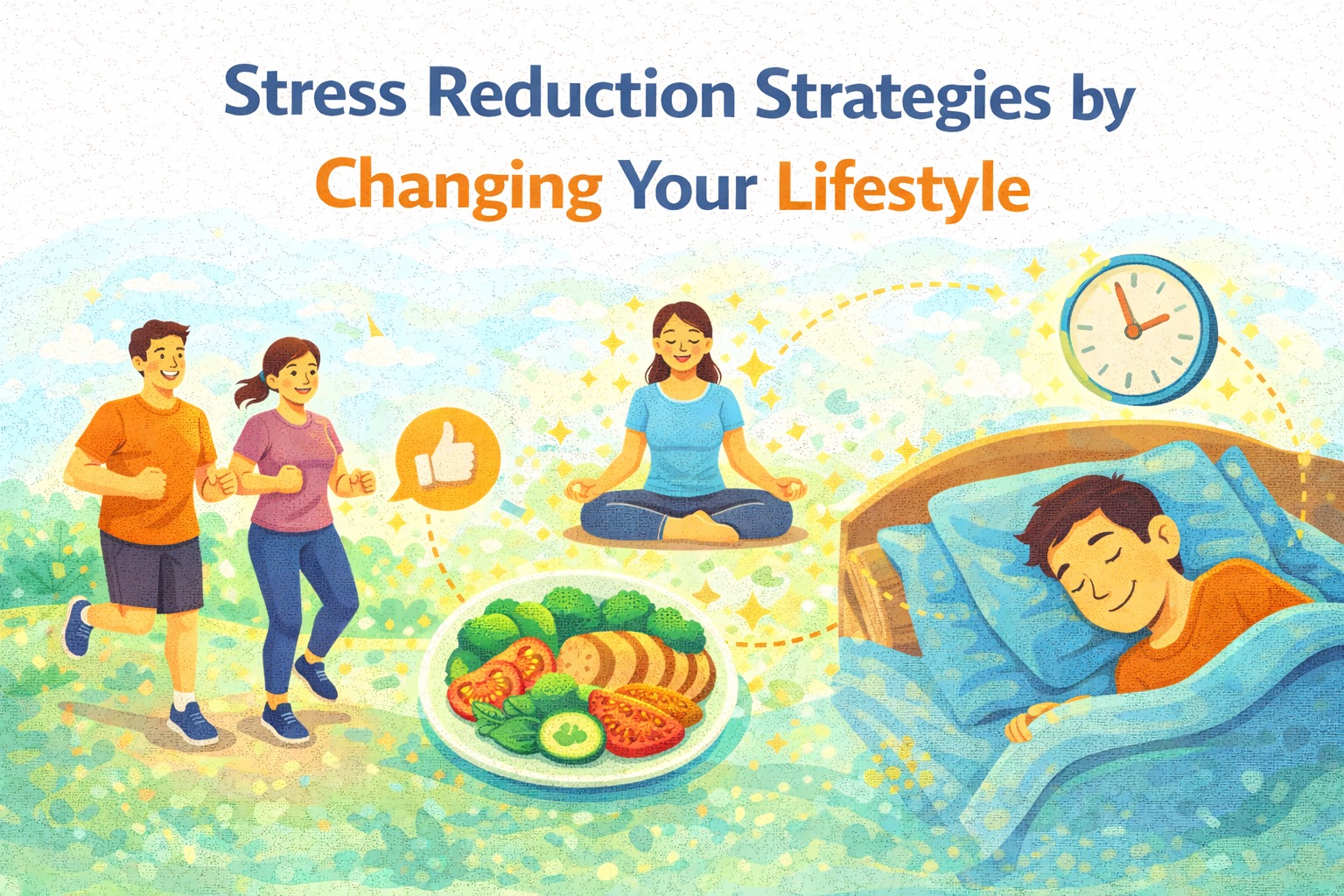
Physical activity plays a significant role in stress reduction. Activities such as running, yoga, or cycling stimulate the production of endorphins, hormones that help improve mood.
Regular exercise reduces muscle tension, improves sleep quality, and provides a sense of achievement.
2.1. Tips for Starting Exercise to Reduce Stress
* Start with light activities such as walking or stretching.
* Stay consistent—30 minutes of exercise per day is enough to gain benefits.
* Choose activities you enjoy to avoid feeling burdened.
3. Adopting a Healthy Diet
What we eat has a direct impact on stress levels. Consuming nutritious food helps maintain hormonal balance and physical health.
A balanced diet supports mental well-being and stress management.
3.1. Complex Carbohydrates
Foods like whole grains help increase serotonin levels, promoting relaxation.
3.2. Protein Intake
Adequate protein helps maintain energy levels and mental health.
3.3. Fruits and Vegetables
Rich in vitamins and minerals, they support brain function and strengthen the immune system.
It is also important to limit stress-triggering foods such as excessive caffeine, sugary snacks, and highly processed foods.
4. Getting Enough Sleep
Lack of sleep is one of the major triggers of stress.
Quality sleep allows the body and mind to recover and function optimally.
To improve sleep quality:
* Maintain a consistent sleep schedule.
* Create a comfortable sleep environment by reducing light and noise.
* Avoid gadgets before bedtime, as blue light disrupts melatonin production.
5. Practicing Mindfulness and Meditation
Mindfulness and meditation are effective techniques for stress reduction.
These practices help calm the mind, increase focus, and reduce anxiety.
5.1. Tips for Starting Mindfulness and Meditation
* Spend 10–15 minutes daily practicing meditation or deep breathing.
* Use guided meditation apps such as Headspace or Calm.
* Apply mindfulness during daily activities like eating or walking.
6. Limiting Technology Exposure
Modern technology, including social media and 24-hour news, can be a significant source of stress.
Managing technology use helps reduce information overload and anxiety.
Steps to limit exposure:
* Set screen-time limits.
* Disable unnecessary notifications.
* Take regular digital breaks to restore mental balance.
7. Maintaining Healthy Social Relationships
Positive social relationships play an important role in stress reduction.
Emotional support from family, friends, or communities improves well-being.
7.1. Ways to Maintain Social Connections
* Stay connected regularly through meetings, calls, or messages.
* Join social or community activities that match your interests.
* Seek professional support from a counselor or therapist when needed.
8. Engaging in Activities You Enjoy
Focusing on enjoyable activities is an effective way to reduce stress.
Hobbies such as painting, writing, cooking, or gardening provide relaxation and emotional release from daily pressures.
9. Conclusion
Reducing stress through lifestyle changes is a holistic and sustainable approach.
By practicing effective time management, exercising regularly, maintaining a healthy diet, getting enough sleep, practicing mindfulness, limiting technology use, nurturing social relationships, and engaging in enjoyable activities, individuals can significantly improve their quality of life.
Adopting a healthy lifestyle not only helps reduce stress but also enhances long-term physical and mental well-being.
Tentang Penulis
Gusti Ayu Tita
Penulis — Universitas STEKOM
Penulis aktif yang berfokus pada isu-isu akademik, teknologi pendidikan, dan pengembangan sumber daya manusia di lingkungan kampus.