
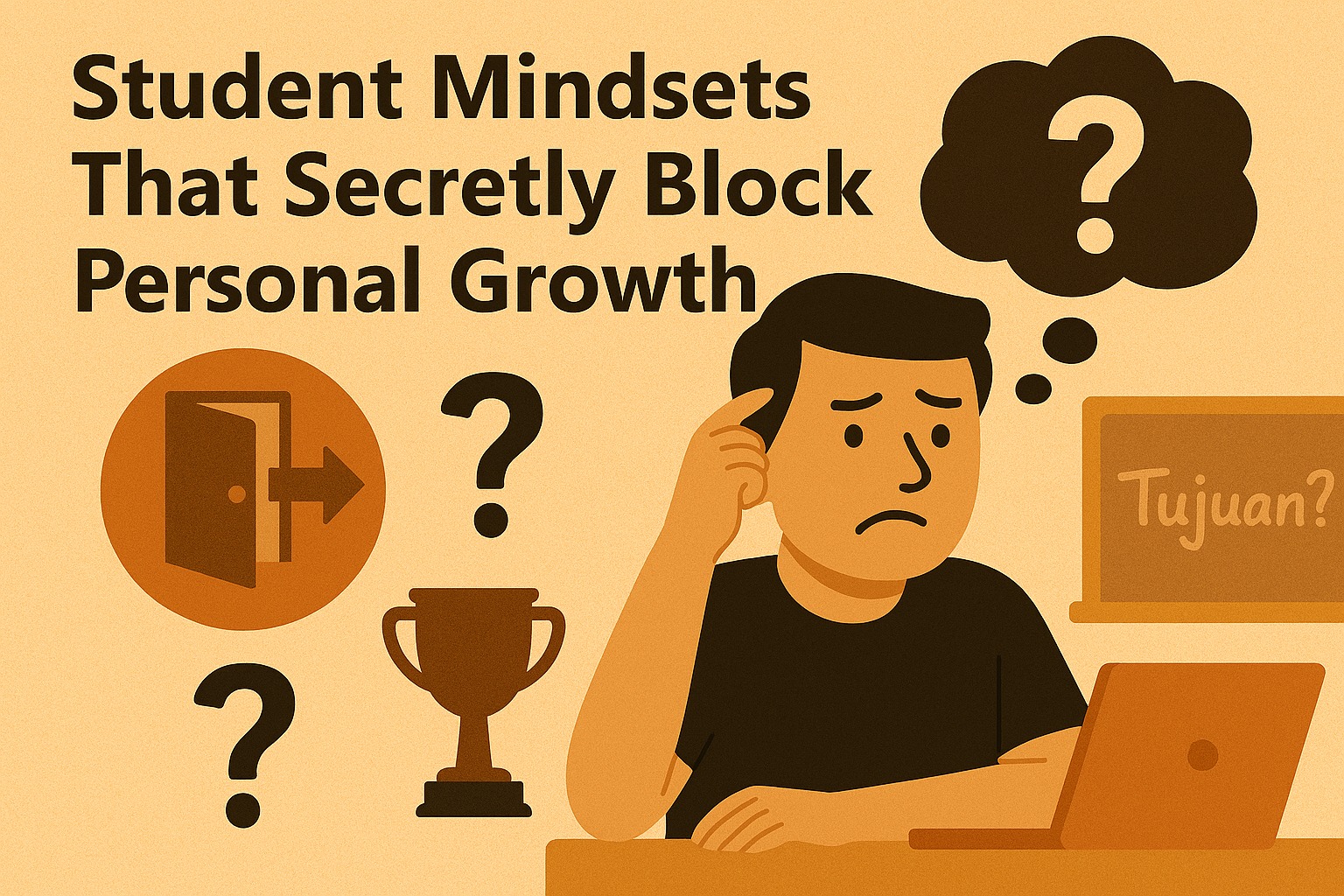
Personal growth during college years does not only depend on intelligence or academic resources. In many cases, the biggest obstacles come from within. Certain student mindsets quietly limit potential, reduce confidence, and prevent meaningful progress.
Understanding these hidden mental barriers is the first step toward overcoming them. This article explores student mindsets that secretly block personal growth and offers practical strategies to develop a healthier and more progressive way of thinking.
THE FIXED MINDSET TRAP
One of the most common barriers to personal growth is a fixed mindset. Students with this mindset believe that intelligence and talent are permanent traits. When they struggle, they assume they are simply “not good enough.”
This belief discourages effort and resilience. Instead of viewing challenges as opportunities to improve, they avoid difficult tasks to protect their self-image. Over time, this limits both academic achievement and personal development.
FEAR OF FAILURE AND PERFECTIONISM
Many students secretly fear failure. They hesitate to join competitions, apply for internships, or take leadership roles because they are afraid of making mistakes.
Perfectionism often intensifies this fear. Students set unrealistically high standards and delay action until everything feels “perfect.” Unfortunately, this habit leads to procrastination and missed opportunities. Growth requires action, and action often includes mistakes.
COMPARISON CULTURE AND SELF-DOUBT
Constantly comparing oneself to others can quietly erode confidence. In the digital era, social media highlights achievements without showing the struggles behind them. Students may feel left behind or inadequate.
This comparison culture shifts focus away from personal progress. Instead of improving their own skills, students become trapped in measuring their worth against others. True growth happens when attention is redirected toward self-improvement rather than competition.
COMFORT ZONE DEPENDENCY
Another mindset that blocks growth is the preference for comfort. Staying in familiar routines feels safe, but it prevents students from developing new skills.
Avoiding public speaking, leadership roles, or challenging projects may reduce short-term anxiety, but it limits long-term development. Personal growth begins outside the comfort zone, where learning becomes active and transformative.
LACK OF PURPOSE AND DIRECTION
Students who lack clear goals often struggle to stay motivated. Without direction, academic tasks feel like obligations rather than meaningful steps toward a future vision.
A clear purpose provides energy and focus. When students understand why they are studying and what they aim to achieve, they become more resilient and proactive.
HOW TO BUILD A GROWTH-ORIENTED MINDSET
Overcoming limiting mindsets requires intentional effort. Here are practical strategies students can apply:
- Embrace challenges as learning opportunities
- Redefine failure as feedback
- Focus on personal progress instead of comparison
- Set realistic, measurable goals
- Practice self-reflection regularly
By adopting these habits, students can gradually replace limiting beliefs with empowering perspectives.
CONCLUSION
Student mindsets play a crucial role in shaping personal growth. Fixed beliefs, fear of failure, constant comparison, comfort zone dependency, and lack of direction can quietly block development.
However, mindset is not permanent. With awareness and consistent effort, students can cultivate a growth-oriented perspective that unlocks new opportunities. Personal growth begins not with external changes, but with a shift in thinking.
Tentang Penulis
Gusti Ayu Tita
Penulis — Universitas STEKOM
Penulis aktif yang berfokus pada isu-isu akademik, teknologi pendidikan, dan pengembangan sumber daya manusia di lingkungan kampus.



