
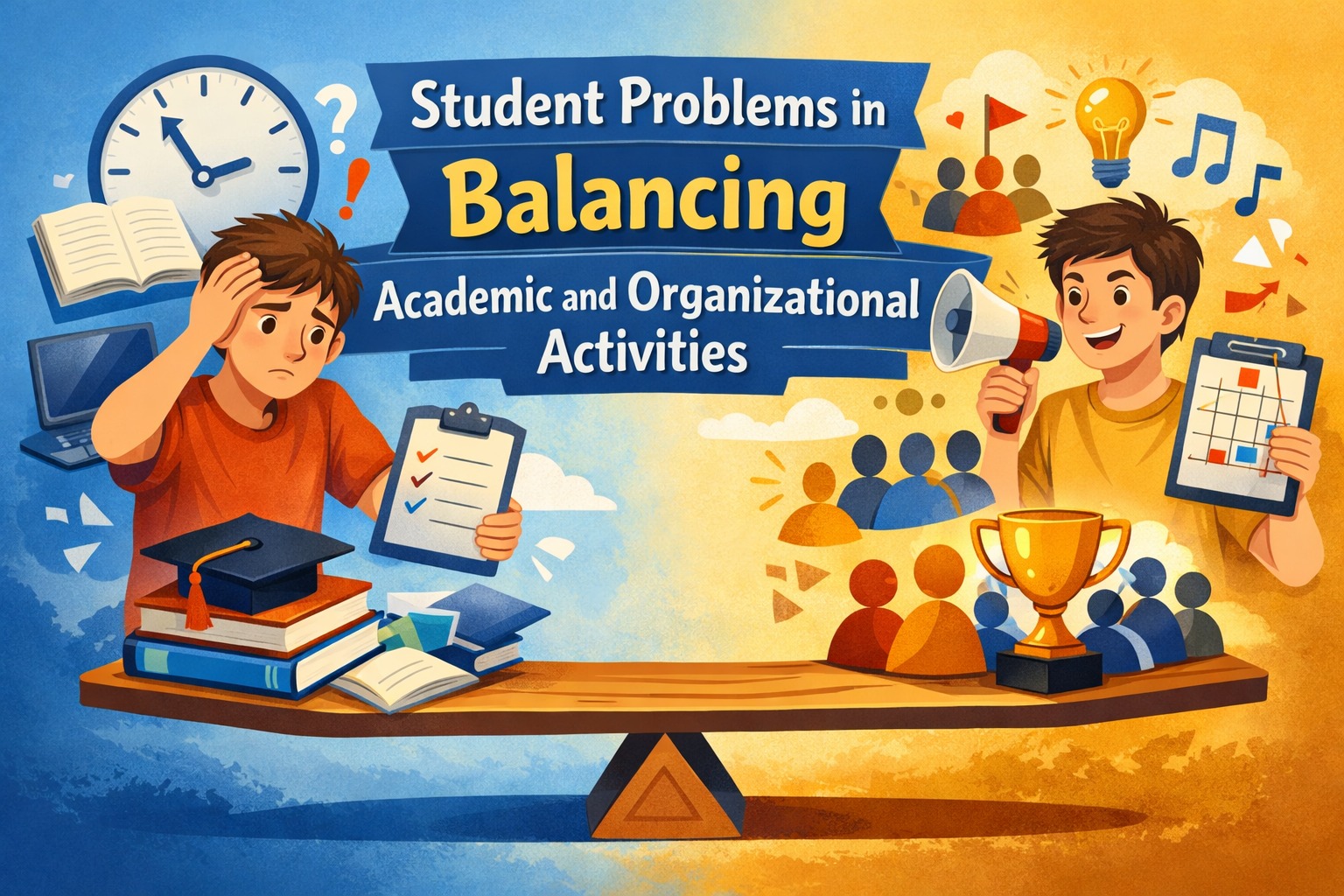
College life is not only about attending classes and completing assignments. Many students also join campus organizations to develop leadership, communication, and teamwork skills. While organizational activities provide valuable experiences, balancing them with academic responsibilities can become a major challenge. Without proper management, students may experience stress, declining academic performance, and exhaustion.
This article discusses the common problems students face in balancing academic and organizational activities, along with effective strategies to overcome them.
THE IMPORTANCE OF ORGANIZATIONAL ACTIVITIES FOR STUDENTS
Joining student organizations offers many benefits beyond classroom learning. Students can build networks, improve public speaking abilities, and gain practical leadership experience. Organizational involvement also helps students become more confident and adaptable in different situations.
However, excessive participation without proper planning can interfere with academic responsibilities. Many students struggle to divide their time between lectures, assignments, meetings, and organizational events.
COMMON PROBLEMS FACED BY STUDENTS
TIME MANAGEMENT DIFFICULTIES
One of the biggest problems students encounter is poor time management. Academic tasks often require significant focus and deadlines, while organizational activities demand active participation and commitment. Students who fail to create schedules may end up overwhelmed by both responsibilities.
PHYSICAL AND MENTAL FATIGUE
Busy schedules can cause students to experience fatigue and burnout. Attending classes during the day and organizational meetings at night may reduce rest time. Over time, this condition can negatively affect concentration, motivation, and overall health.
DECLINING ACADEMIC PERFORMANCE
Students who spend too much time on organizational activities sometimes neglect their academic obligations. Missed assignments, poor exam preparation, and low attendance can eventually decrease academic performance.
LACK OF PERSONAL TIME
Balancing academics and organizations often leaves little time for relaxation or social life. Students may feel emotionally exhausted because they rarely have opportunities to rest or spend time with family and friends.
EFFECTIVE STRATEGIES TO BALANCE ACADEMIC AND ORGANIZATIONAL ACTIVITIES
CREATE A PRIORITY SCALE
Students should determine which activities are most important and urgent. Academic responsibilities should remain the primary focus, while organizational tasks should be managed according to available time and energy.
MAKE A STRUCTURED SCHEDULE
Using planners or digital calendars can help students organize their daily activities effectively. A structured schedule allows students to allocate time for studying, meetings, rest, and personal activities.
LEARN TO SAY NO
Students do not need to participate in every organizational program. Choosing activities that truly provide benefits can prevent excessive workloads and reduce stress.
MAINTAIN PHYSICAL AND MENTAL HEALTH
Adequate sleep, healthy food, and regular exercise are essential for maintaining productivity. Students should also take short breaks to avoid mental exhaustion.
IMPROVE COMMUNICATION SKILLS
Good communication with lecturers, friends, and organization members can help students manage responsibilities more efficiently. Open communication also minimizes misunderstandings regarding deadlines or commitments.
THE POSITIVE IMPACT OF GOOD BALANCE
Students who successfully balance academic and organizational activities often develop stronger discipline and responsibility. They become more skilled in multitasking, problem-solving, and teamwork. These abilities are highly valuable for future careers and professional environments.
In addition, balanced students tend to have better emotional stability because they can manage stress and maintain healthy lifestyles. Organizational experiences combined with strong academic achievements can also improve career opportunities after graduation.
CONCLUSION
Balancing academic and organizational activities is not easy for many students. Time management difficulties, fatigue, and declining academic performance are common challenges faced during college life. However, with proper planning, clear priorities, and healthy habits, students can successfully manage both responsibilities.
Academic achievement and organizational experience should complement each other rather than create conflict. By maintaining balance, students can maximize their potential and prepare themselves for future success in both personal and professional life.
Tentang Penulis
Gusti Ayu Tita
Penulis — Universitas STEKOM
Penulis aktif yang berfokus pada isu-isu akademik, teknologi pendidikan, dan pengembangan sumber daya manusia di lingkungan kampus.



