
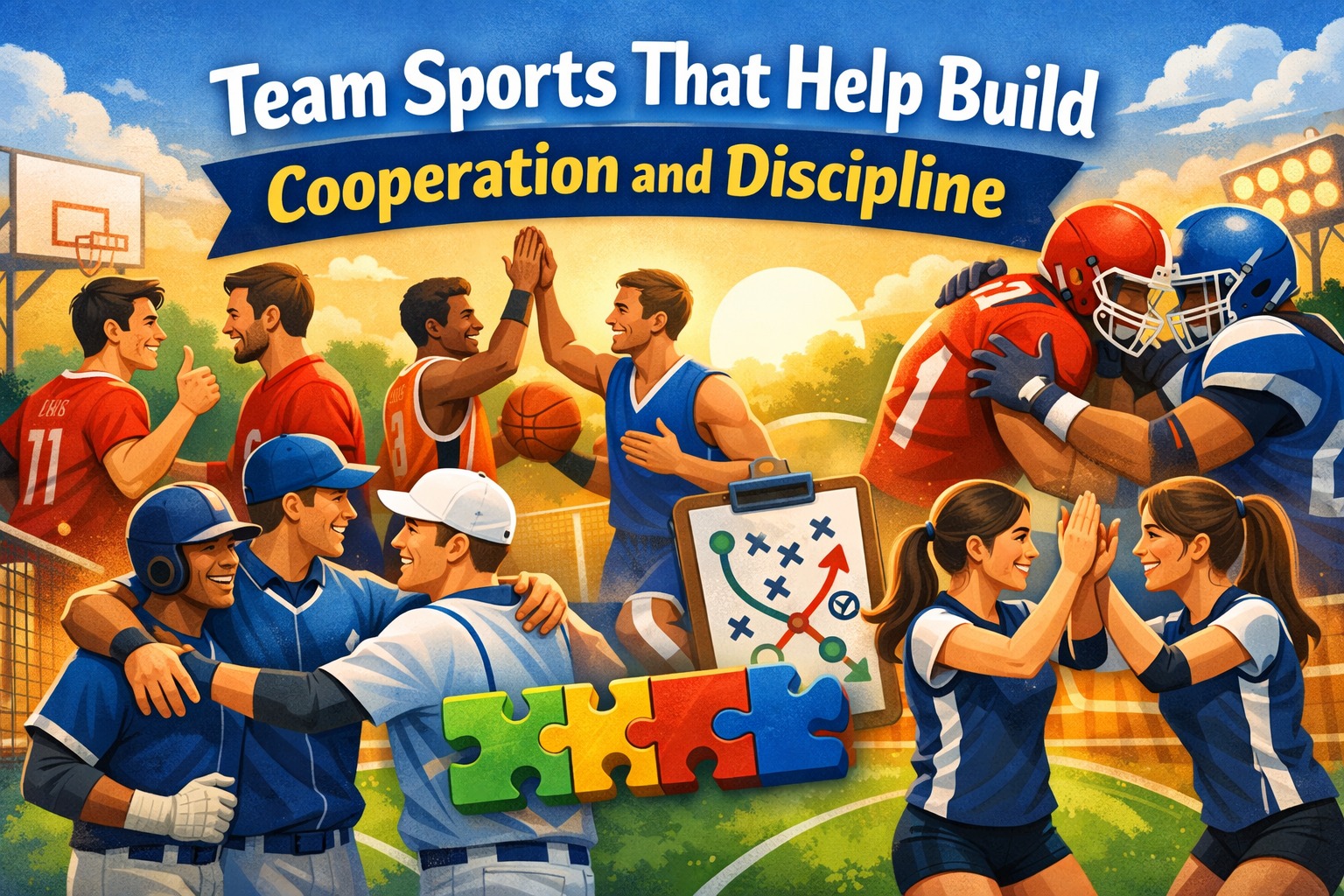
Team sports are more than just physical activities. They teach valuable life skills such as cooperation, discipline, communication, and responsibility. Whether played at school, in local communities, or professionally, team sports encourage individuals to work together toward a common goal. In today’s fast-paced world, these qualities are essential for both personal and professional success.
WHY TEAM SPORTS ARE IMPORTANT
Participating in team sports helps individuals develop social and emotional skills. Players learn how to communicate effectively, trust their teammates, and solve problems together. These experiences shape stronger character and improve confidence.
Team sports also promote healthy competition. Athletes understand the importance of following rules, respecting opponents, and maintaining discipline during practice and competition. These lessons can positively influence behavior in everyday life.
HOW TEAM SPORTS BUILD COOPERATION
Cooperation is one of the most important aspects of team sports. Every player has a specific role that contributes to the success of the team. Without teamwork, even the most talented athletes may struggle to win games.
IMPROVED COMMUNICATION
Sports like football, basketball, and volleyball require constant communication. Players must share strategies, give instructions, and support each other during matches. This improves listening skills and teamwork.
LEARNING TO TRUST OTHERS
In team sports, success depends on trust among teammates. Players learn to rely on each other and understand that teamwork is stronger than individual performance.
DEVELOPING PROBLEM-SOLVING SKILLS
During games, athletes often face unexpected challenges. Working together to overcome obstacles teaches players how to think quickly and make smart decisions as a team.
HOW TEAM SPORTS TEACH DISCIPLINE
Discipline is another important value gained from team sports. Athletes must follow schedules, practice regularly, and obey team rules.
BUILDING TIME MANAGEMENT
Players need to balance training sessions, school, work, and personal life. This helps improve time management and responsibility.
ENCOURAGING COMMITMENT
Team sports require dedication and consistency. Athletes who attend practice regularly and stay focused on goals learn the value of commitment.
RESPECTING RULES AND LEADERSHIP
Every sport has rules that players must follow. Coaches and team captains also provide guidance and leadership. Respecting these rules and authority figures helps develop discipline and maturity.
BEST TEAM SPORTS FOR COOPERATION AND DISCIPLINE
Several team sports are especially effective in teaching cooperation and discipline:
- Football encourages strategy, teamwork, and communication.
- Basketball develops quick decision-making and trust among players.
- Volleyball improves coordination and cooperation.
- Rugby teaches responsibility, strength, and respect.
- Baseball promotes patience, focus, and teamwork.
Each sport offers unique lessons that help individuals grow mentally and socially.
BENEFITS FOR CHILDREN AND ADULTS
Team sports benefit people of all ages. Children who participate in sports often become more confident and socially active. Adults can improve leadership skills, reduce stress, and maintain physical fitness through regular participation in team activities.
Companies and organizations also value people with sports experience because they often demonstrate teamwork, discipline, and strong communication abilities.
CONCLUSION
Team sports play a significant role in building cooperation and discipline. Through teamwork, communication, and shared goals, athletes learn valuable skills that can be applied in daily life. Whether for children, teenagers, or adults, participating in team sports is an excellent way to improve both physical health and personal development.
Tentang Penulis
Gusti Ayu Tita
Penulis — Universitas STEKOM
Penulis aktif yang berfokus pada isu-isu akademik, teknologi pendidikan, dan pengembangan sumber daya manusia di lingkungan kampus.



