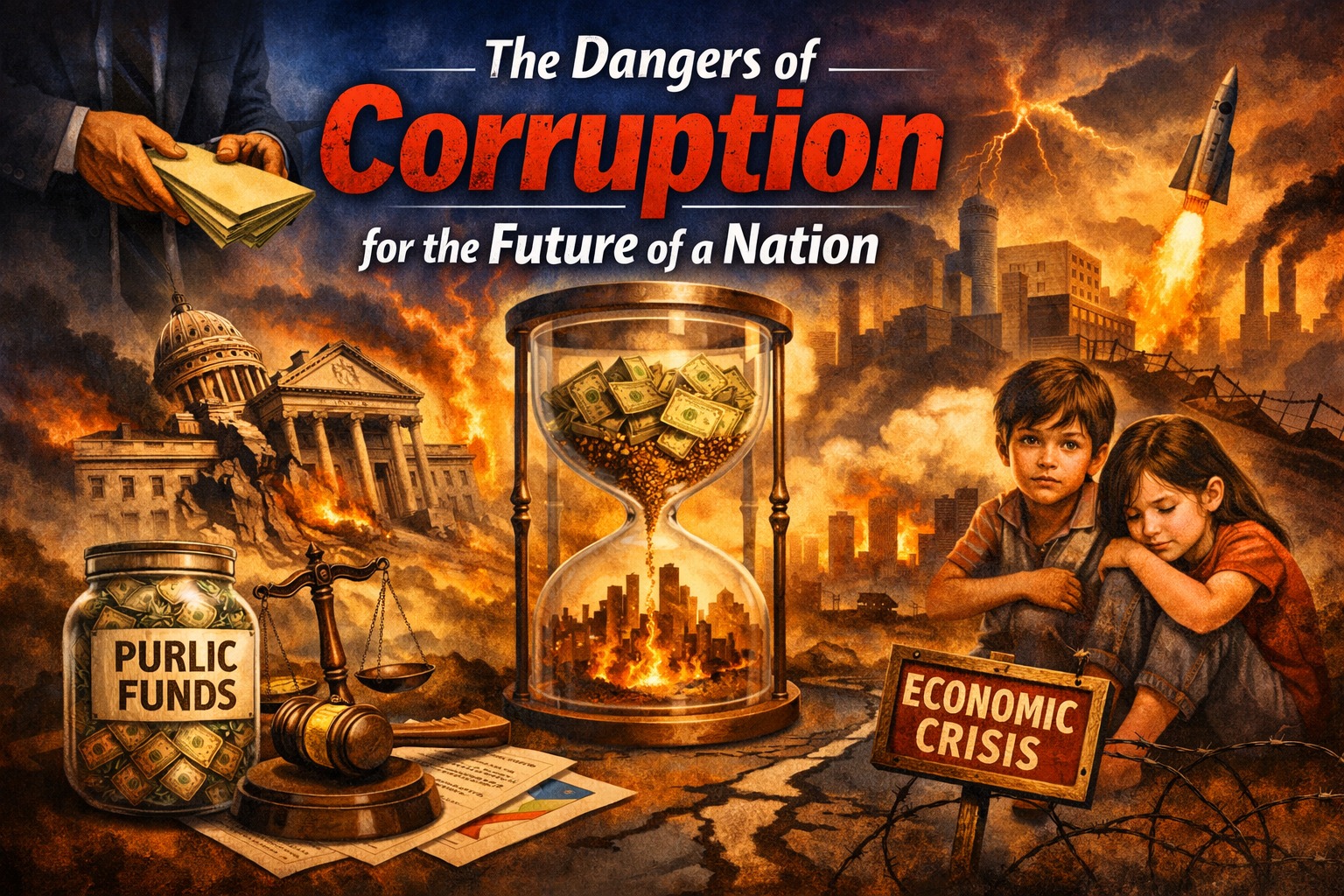
Corruption is one of the biggest challenges faced by many countries around the world. It affects governments, businesses, education systems, and even daily social life. When corruption becomes widespread, it weakens national development and destroys public trust. The future of a nation depends on honesty, justice, and transparency, but corruption threatens all of these important values.
WHAT IS CORRUPTION?
Corruption is the abuse of power for personal gain. It can happen in many forms, such as bribery, embezzlement, fraud, and favoritism. Corrupt practices often involve government officials, business leaders, or individuals who misuse their authority to gain money or advantages unfairly.
Although corruption may provide short-term benefits for certain individuals, it creates serious long-term problems for society as a whole.
ECONOMIC DAMAGE CAUSED BY CORRUPTION
One of the most dangerous effects of corruption is economic decline. When public funds are stolen or misused, important projects such as schools, hospitals, roads, and public transportation cannot develop properly. As a result, citizens suffer from poor infrastructure and limited public services.
Corruption also discourages foreign investment. Investors are less likely to trust countries where bribery and illegal business practices are common. This situation reduces job opportunities and slows economic growth.
In addition, corruption increases inequality because only a small group of people benefit while ordinary citizens face financial difficulties.
CORRUPTION DESTROYS PUBLIC TRUST
Trust is essential for a strong and stable nation. When government officials are involved in corruption scandals, people lose confidence in public institutions. Citizens may begin to believe that laws are unfair or that justice can be bought with money.
This loss of trust can create social conflict and political instability. People become less willing to cooperate with authorities, pay taxes, or participate in democratic processes. In severe cases, corruption can even trigger protests and civil unrest.
NEGATIVE IMPACT ON EDUCATION
Corruption can seriously damage the education sector. For example, school funds may be misused, scholarships may be given unfairly, or students may rely on cheating and bribery instead of hard work.
When young people grow up in an environment where dishonesty is considered normal, the moral values of society begin to weaken. This creates a dangerous cycle that can continue for generations.
A nation with a weak education system will struggle to compete globally and develop skilled human resources for the future.
CORRUPTION INCREASES POVERTY
Corruption often affects poor communities the most. Money intended for social welfare programs may never reach the people who truly need help. Healthcare services, food assistance, and housing programs can become ineffective because of dishonest practices.
As poverty increases, crime rates and unemployment may also rise. This situation makes national development even more difficult and creates deeper social problems.
THE IMPORTANCE OF ANTI-CORRUPTION EDUCATION
Fighting corruption should begin with education and strong moral values. Schools, families, and communities all play an important role in teaching honesty, responsibility, and integrity.
Young generations must understand that corruption harms everyone, not just the government. Anti-corruption education can help build a culture of transparency and accountability from an early age.
Governments should also strengthen law enforcement and ensure that corrupt individuals receive fair punishment regardless of their social status.
HOW SOCIETY CAN HELP PREVENT CORRUPTION
Preventing corruption is not only the responsibility of the government. Society also has an important role. Citizens can support anti-corruption efforts by refusing bribery, reporting illegal activities, and promoting honesty in everyday life.
The media and social organizations can also help by raising awareness about the dangers of corruption and encouraging transparency in public institutions.
When communities work together, it becomes easier to create a cleaner and more trustworthy society.
CONCLUSION
Corruption is a serious threat to the future of a nation. It damages the economy, destroys public trust, weakens education, and increases poverty. If corruption is allowed to continue, national progress will become difficult to achieve.
Therefore, every individual has a responsibility to fight corruption through honesty, education, and social awareness. Building a corruption-free society is essential for creating a better, fairer, and more prosperous future for the next generation.
Tentang Penulis
Gusti Ayu Tita
Penulis — Universitas STEKOM
Penulis aktif yang berfokus pada isu-isu akademik, teknologi pendidikan, dan pengembangan sumber daya manusia di lingkungan kampus.