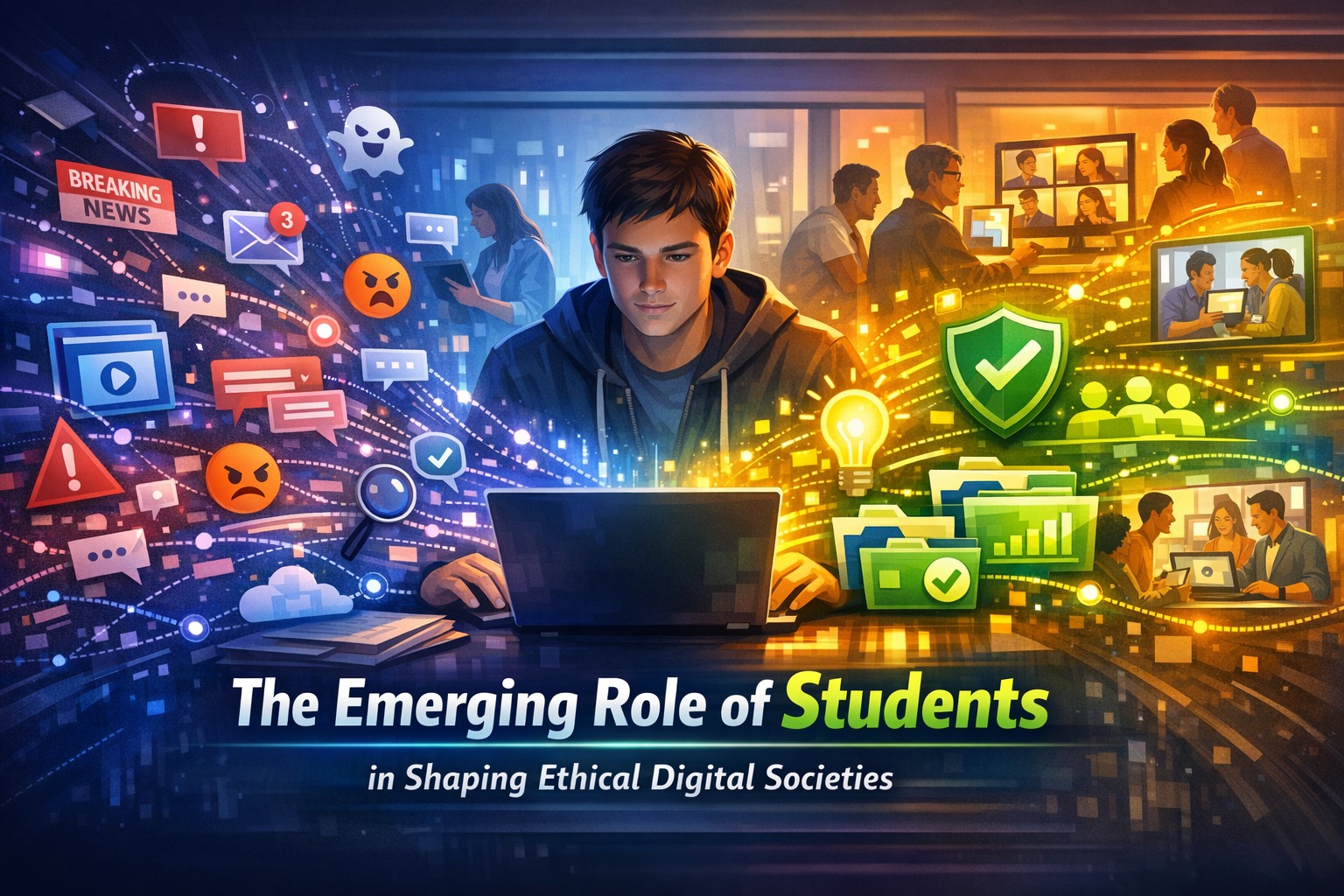
In the modern digital era, technology influences nearly every aspect of daily life, from communication and education to commerce and entertainment. While these advancements bring remarkable opportunities, they also introduce ethical challenges, such as data privacy concerns, misinformation, and online harassment. In response, students are increasingly taking on the role of ethical stewards in digital spaces, advocating for responsible behavior, digital literacy, and socially conscious technology use.
By combining their technical knowledge, critical thinking skills, and social awareness, students are shaping the development of digital societies that prioritize ethics, inclusivity, and accountability. Their contributions ensure that technological progress is aligned with human values and social responsibility.
THE DIGITAL ERA AND ETHICAL CHALLENGES
The rapid growth of digital technologies has transformed how information is shared, accessed, and consumed. While these platforms provide unprecedented access to knowledge, they also amplify ethical concerns. Misinformation spreads quickly, personal data is often misused, and online interactions can foster harmful behaviors.
Students, as digital natives, are well-positioned to recognize these challenges and promote ethical practices. They understand the intricacies of digital tools while being attuned to societal impacts, making them key players in building ethical digital communities.
STUDENTS AS ETHICAL LEADERS IN DIGITAL SPACES
Students act as ethical leaders by modeling responsible digital behavior and influencing their peers. They advocate for transparency, fairness, and accountability in online interactions, ensuring that digital platforms are used to benefit communities rather than cause harm.
Through initiatives such as awareness campaigns, online workshops, and peer mentoring programs, students educate others about issues like cyberbullying, digital privacy, and the ethical use of artificial intelligence. These efforts foster a culture of responsibility and respect across digital environments.
PROMOTING DIGITAL LITERACY AND ETHICAL AWARENESS
Digital literacy is central to fostering ethical digital societies. Students not only teach technical skills but also guide peers on evaluating information critically, understanding the implications of their online actions, and making informed decisions in digital spaces.
By integrating ethical principles with practical skills, students empower communities to navigate technology responsibly. Their work reduces the spread of misinformation, enhances digital citizenship, and promotes a more equitable online ecosystem.
COLLABORATION AND COMMUNITY ENGAGEMENT
Collaboration strengthens students’ impact on ethical digital societies. By working in interdisciplinary teams and engaging with local communities, students design solutions that address both technological and social dimensions.
Initiatives such as community tech workshops, digital ethics forums, and student-led online platforms allow participants to learn, discuss, and implement ethical digital practices. These collaborative efforts foster a sense of shared responsibility and reinforce the importance of ethical conduct in online interactions.
THE FUTURE OF ETHICAL DIGITAL SOCIETIES
As technology continues to evolve, the role of students in shaping ethical digital societies will become even more critical. Their ability to combine innovation, technical knowledge, and social consciousness ensures that digital tools are used responsibly and inclusively.
Students are paving the way for a future where technology serves humanity positively, promoting transparency, accountability, and ethical decision-making. By cultivating awareness, knowledge, and action, students help create digital spaces that are safe, fair, and socially beneficial for all.
Tentang Penulis
Gusti Ayu Tita P
Penulis — Universitas STEKOM
Penulis aktif yang berfokus pada isu-isu akademik, teknologi pendidikan, dan pengembangan sumber daya manusia di lingkungan kampus.