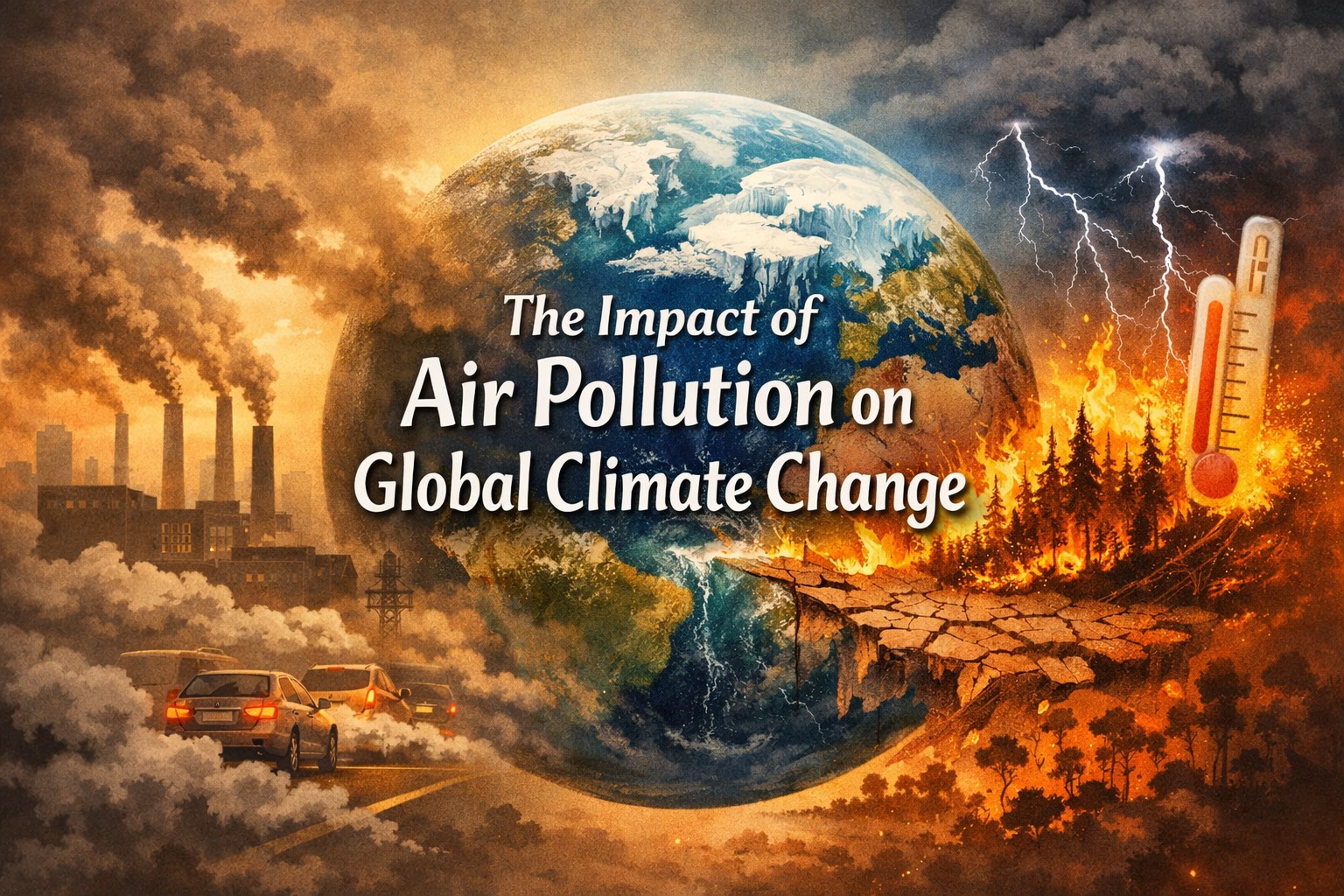
Air pollution has become one of the most serious environmental problems in the modern world. Rapid industrialization, increasing vehicle emissions, and excessive use of fossil fuels continue to release harmful substances into the atmosphere. These pollutants not only threaten human health but also accelerate global climate change. The connection between air pollution and climate change is becoming more visible as global temperatures continue to rise, weather patterns become unstable, and natural disasters occur more frequently.
Understanding how air pollution contributes to climate change is essential for creating effective solutions that protect both the environment and future generations.
UNDERSTANDING AIR POLLUTION
Air pollution refers to the presence of harmful substances in the atmosphere that can damage living organisms and the environment. Common pollutants include carbon dioxide (CO2), methane (CH4), sulfur dioxide (SO2), nitrogen oxides (NOx), and particulate matter.
These pollutants mainly come from:
- Industrial factories
- Motor vehicles
- Power plants
- Agricultural activities
- Burning of fossil fuels
- Forest fires
Many of these activities release greenhouse gases that trap heat in the Earth’s atmosphere and contribute directly to global warming.
THE CONNECTION BETWEEN AIR POLLUTION AND CLIMATE CHANGE
Air pollution and climate change are closely linked because many air pollutants also function as greenhouse gases. Carbon dioxide, for example, is one of the largest contributors to global warming. When fossil fuels such as coal, oil, and natural gas are burned, massive amounts of CO2 enter the atmosphere.
Methane emissions from agriculture and waste management are also highly dangerous because methane traps more heat than carbon dioxide over a shorter period. As greenhouse gases accumulate, the Earth’s temperature gradually increases, causing long-term climate changes.
In addition, black carbon or soot from vehicle exhaust and industrial smoke absorbs sunlight and warms the atmosphere. This process speeds up the melting of glaciers and polar ice caps.
EFFECTS OF CLIMATE CHANGE CAUSED BY AIR POLLUTION
The impact of climate change driven by air pollution can already be seen across the world. Some of the major effects include:
Rising Global Temperatures
Average global temperatures continue to increase each year. Heatwaves are becoming more intense and frequent, affecting millions of people worldwide.
Extreme Weather Events
Climate change contributes to stronger storms, floods, droughts, and hurricanes. These disasters damage infrastructure, agriculture, and local economies.
Melting Ice and Rising Sea Levels
Polar ice caps and glaciers are melting at alarming rates. As sea levels rise, coastal cities and island communities face greater risks of flooding.
Threats to Human Health
Air pollution causes respiratory diseases, heart problems, and other serious health conditions. Climate change also increases the spread of diseases and heat-related illnesses.
Damage to Ecosystems
Many animal and plant species struggle to adapt to changing temperatures and polluted environments. Some species face extinction due to habitat destruction and climate shifts.
HOW TO REDUCE AIR POLLUTION AND CLIMATE CHANGE
Reducing air pollution requires cooperation between governments, industries, and individuals. Several important actions can help minimize environmental damage:
Transition to Renewable Energy
Using solar, wind, and hydroelectric power can reduce dependence on fossil fuels and lower greenhouse gas emissions.
Promote Public Transportation
Encouraging people to use buses, trains, bicycles, and electric vehicles can reduce vehicle emissions significantly.
Increase Energy Efficiency
Industries and households can save energy by using efficient technologies and reducing unnecessary electricity consumption.
Plant More Trees
Trees absorb carbon dioxide and help improve air quality. Reforestation programs can support climate stability.
Strengthen Environmental Policies
Governments need stricter regulations to control industrial emissions and encourage sustainable development.
THE ROLE OF INDIVIDUALS IN PROTECTING THE ENVIRONMENT
Every individual has an important role in reducing air pollution and fighting climate change. Simple actions such as conserving energy, reducing plastic waste, recycling, and using environmentally friendly transportation can create positive environmental impacts.
Public awareness and environmental education are also essential. When people understand the dangers of air pollution, they are more likely to support sustainable lifestyles and environmental protection programs.
CONCLUSION
Air pollution and global climate change are interconnected environmental challenges that require urgent attention. Human activities that release greenhouse gases continue to damage the atmosphere and threaten ecosystems worldwide. Rising temperatures, extreme weather, and health problems are clear signs that climate change is already affecting everyday life.
By adopting cleaner energy sources, improving environmental policies, and increasing public awareness, society can reduce air pollution and slow down climate change. Protecting the planet today is essential for ensuring a healthier and safer future for generations to come.
Tentang Penulis
Gusti Ayu Tita
Penulis — Universitas STEKOM
Penulis aktif yang berfokus pada isu-isu akademik, teknologi pendidikan, dan pengembangan sumber daya manusia di lingkungan kampus.