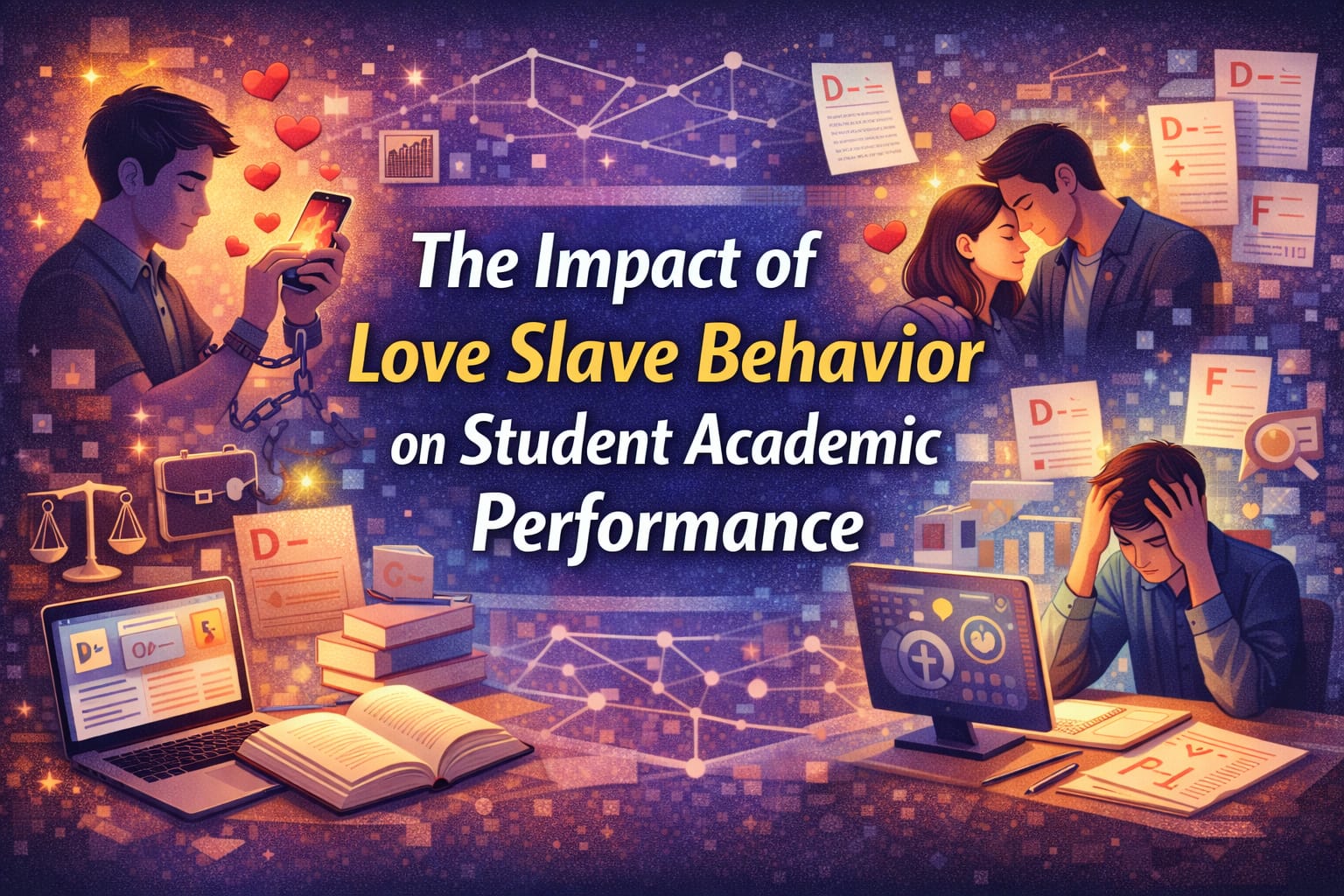
THE IMPACT OF EXCESSIVE ROMANTIC DEPENDENCE ON STUDENTS’ ACADEMIC PERFORMANCE
Love is one of the deepest emotions that influences human life. However, when love is experienced excessively and without control, it can develop into behavior commonly referred to as being a “love-dependent individual”. This behavior is characterized by extreme emotional dependence on a romantic partner, which often leads to life imbalance and neglect of academic responsibilities. This phenomenon is quite common among university students and can have serious consequences for their academic achievement.
TABLE OF CONTENTS
* Negative Impacts of Love Dependence on Students
* Strategies to Overcome the Negative Impacts
* Conclusion
NEGATIVE IMPACTS OF LOVE DEPENDENCE ON STUDENTS
Excessive emotional dependence in romantic relationships often brings negative consequences to students’ academic lives. The following are some of the most common effects:
1. Lack of Concentration
Excessive dependence on a partner can cause students to lose focus during study time. Constantly thinking about the relationship interferes with concentration and reduces learning effectiveness.
2. Decreased Motivation to Study
Romantic obsession frequently lowers students’ motivation to pursue academic excellence. Academic goals are often placed second to personal relationships.
3. Procrastination in Completing Assignments
Students who are overly involved in relationships tend to delay academic tasks. Spending time with a partner often takes priority over completing coursework.
4. Stress and Emotional Instability
Unhealthy relationships may trigger anxiety, excessive jealousy, and feelings of insecurity. These emotional issues negatively affect mental health and impair clear thinking.
5. Reduced Social Interaction
Over-focusing on a partner can lead students to withdraw from their social environment, limiting opportunities for group learning, collaboration, and friendship development.
STRATEGIES TO OVERCOME THE NEGATIVE IMPACTS OF LOVE DEPENDENCE
To prevent and reduce the harmful effects of excessive romantic dependence, students can apply the following strategies:
1. Increase Self-Awareness
The first step is recognizing unhealthy behavioral patterns. Understanding how excessive attachment affects academic performance is essential for initiating change.
2. Create Balance
Students should manage their time wisely between academic responsibilities and romantic relationships. A balanced schedule helps maintain optimal academic performance.
3. Set Clear Priorities
Determining academic priorities over emotional demands is crucial. Students should set clear study goals and develop strategies to achieve them.
4. Utilize Social Support
Sharing concerns with close friends, family members, or campus counselors can provide new perspectives and emotional relief.
5. Build Emotional Independence
Emotional independence allows students to maintain stability without excessive reliance on their partner. Developing personal interests and strengthening self-identity are important first steps.
CONCLUSION
Excessive romantic dependence can significantly harm students’ academic performance. Extreme emotional attachment may disrupt focus, reduce motivation, and create psychological pressure that negatively affects learning outcomes. However, with strong self-awareness and healthy relationship management, students can balance love and academic responsibilities effectively. The key lies in maintaining balance, setting priorities, and developing emotional independence to achieve both academic success and a harmonious personal life.
Tentang Penulis
Gusti Ayu Tita
Penulis — Universitas STEKOM
Penulis aktif yang berfokus pada isu-isu akademik, teknologi pendidikan, dan pengembangan sumber daya manusia di lingkungan kampus.