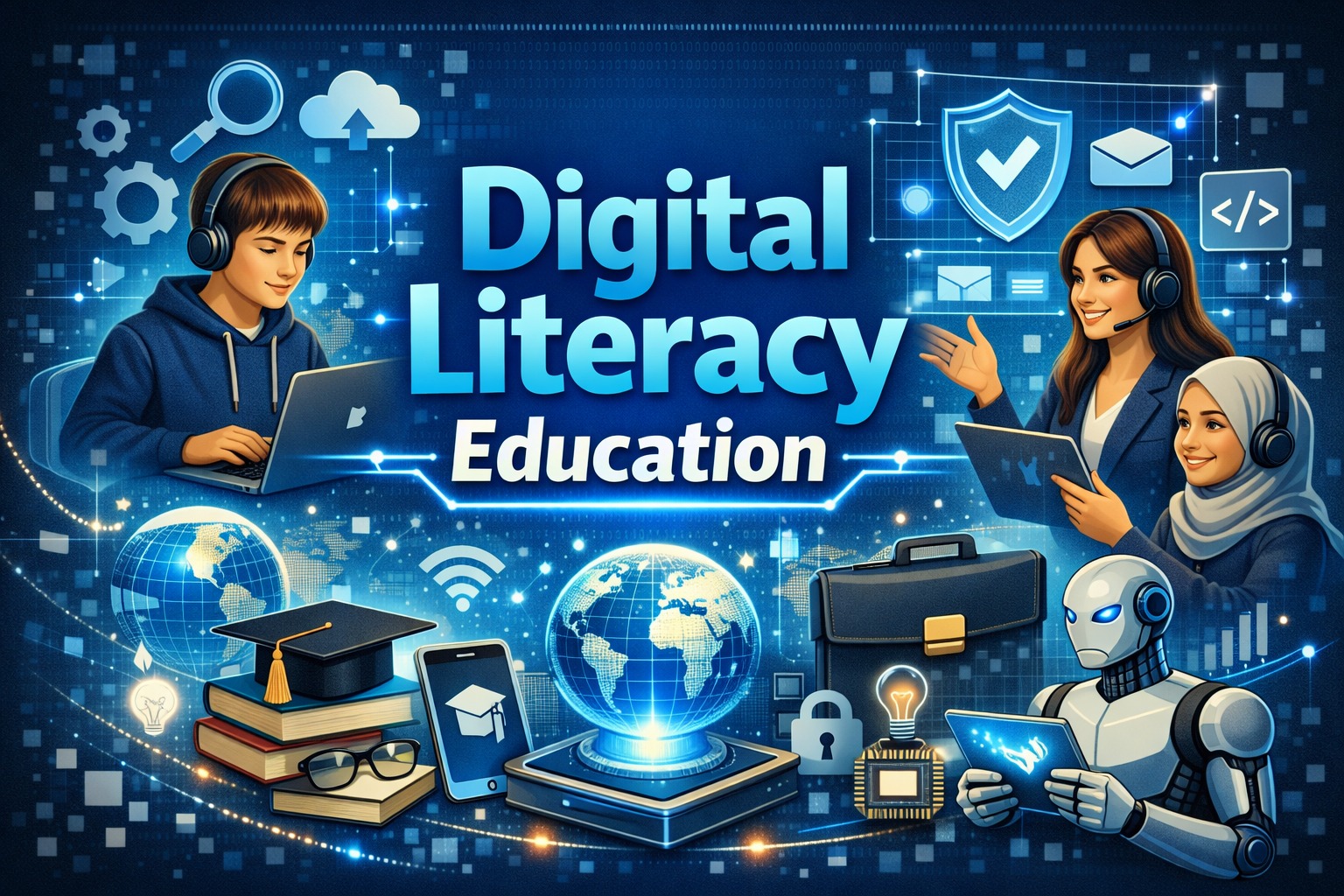
In the modern world, digital literacy has become one of the most essential skills for students and educators alike. As technology continues to shape how we learn, communicate, and work, education must evolve to ensure learners are equipped to navigate the digital landscape responsibly and effectively. Digital literacy is not just about using devices—it’s about understanding, analyzing, and creating information in a connected world.
UNDERSTANDING DIGITAL LITERACY
Digital literacy refers to the ability to use technology to find, evaluate, and communicate information. It includes skills such as online research, data analysis, and digital collaboration. In today’s education system, digital literacy empowers students to think critically, solve problems creatively, and engage with global communities through technology.
THE ROLE OF DIGITAL LITERACY IN MODERN LEARNING
Technology has transformed classrooms into interactive learning environments. Students can access online resources, participate in virtual discussions, and collaborate on projects across borders. Digital literacy ensures that learners use these tools effectively and ethically, fostering independent learning and innovation.
BENEFITS OF DIGITAL LITERACY FOR STUDENTS
- Enhanced Learning Opportunities: Students can explore diverse subjects through multimedia and online platforms.
- Improved Communication Skills: Digital tools help learners express ideas clearly and connect with peers worldwide.
- Career Readiness: Mastering digital skills prepares students for future jobs that demand technological proficiency.
- Critical Thinking: Evaluating online information teaches discernment and analytical reasoning.
CHALLENGES IN DEVELOPING DIGITAL LITERACY
Despite its importance, not all students have equal access to technology. Digital inequality remains a challenge, especially in developing regions. Schools must provide resources and training to ensure every learner can benefit from digital education. Teachers also need continuous professional development to integrate technology effectively into their teaching.
BUILDING A DIGITALLY LITERATE GENERATION
To prepare students for the future, education systems must prioritize digital literacy. This includes teaching cybersecurity, online ethics, and responsible digital behavior. By fostering these skills, schools can create empowered learners who use technology to innovate and contribute positively to society.
Conclusion
Digital literacy is the cornerstone of modern education. It bridges the gap between knowledge and technology, enabling students to learn, create, and lead in a digital world. As education continues to evolve, digital literacy will remain the key to unlocking opportunities and shaping a smarter, more connected future.
Tentang Penulis
Gusti Ayu Tita
Penulis — Universitas STEKOM
Penulis aktif yang berfokus pada isu-isu akademik, teknologi pendidikan, dan pengembangan sumber daya manusia di lingkungan kampus.