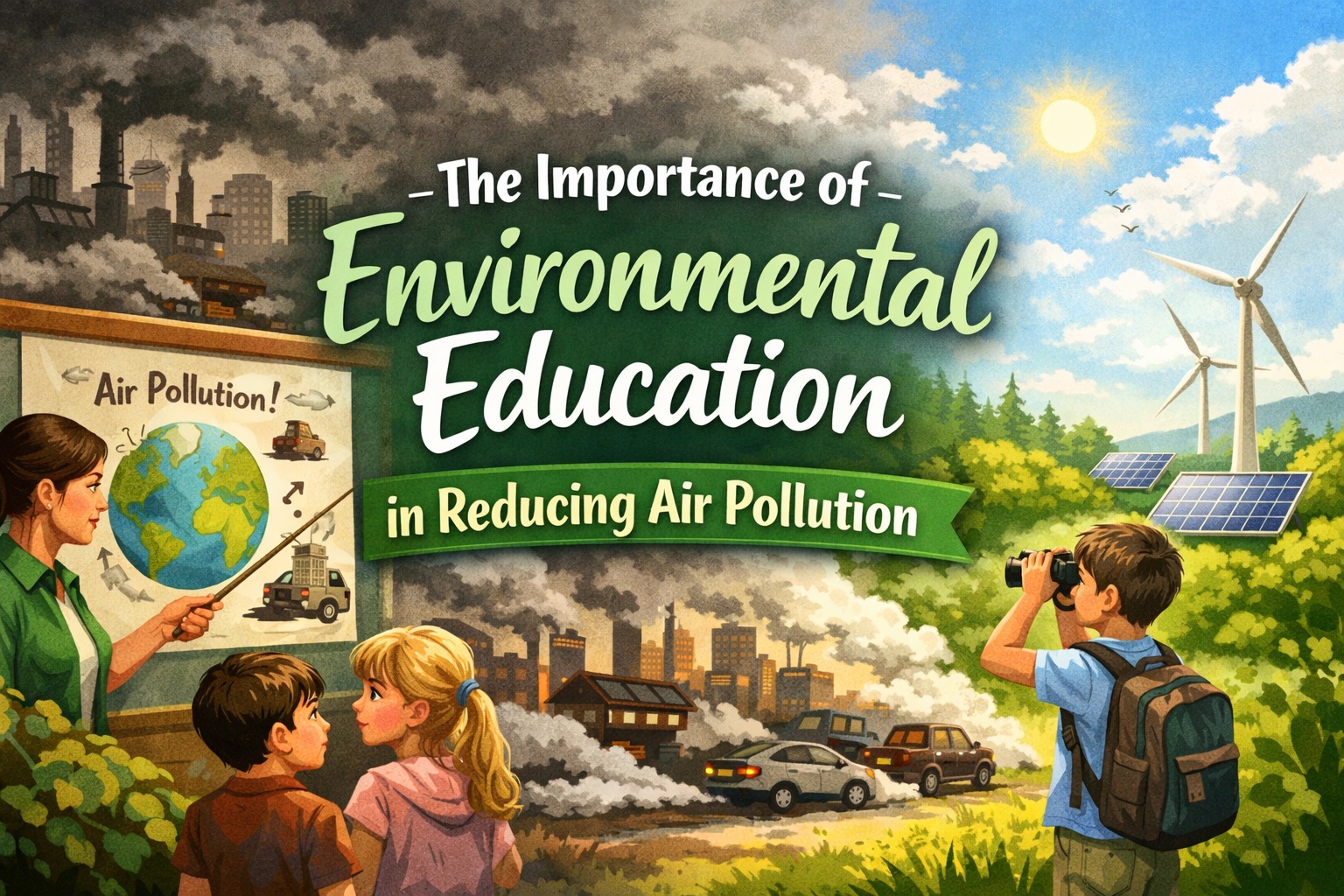
Air pollution has become one of the most serious environmental problems in the modern world. Rapid industrial growth, increasing vehicle emissions, and improper waste management continue to worsen air quality in many cities. Poor air conditions not only damage the environment but also threaten human health. Because of this, environmental education plays a crucial role in helping society understand the dangers of pollution and encouraging sustainable habits that can reduce its impact.
UNDERSTANDING AIR POLLUTION
Air pollution occurs when harmful substances such as smoke, chemicals, and toxic gases contaminate the atmosphere. Common sources of pollution include factories, motor vehicles, burning trash, and deforestation. These pollutants can cause respiratory diseases, climate change, and damage to ecosystems.
Many people contribute to air pollution without realizing it. For example, excessive use of private vehicles, burning household waste, and overconsumption of energy increase harmful emissions. Environmental education helps individuals recognize these everyday activities and teaches them how to make better choices.
THE ROLE OF ENVIRONMENTAL EDUCATION
Environmental education is a learning process that increases awareness about environmental issues and encourages responsible behavior. Through education, people can understand how their actions affect air quality and the planet as a whole.
Schools, communities, and governments can use environmental education programs to teach important topics such as recycling, renewable energy, tree planting, and waste reduction. When individuals are educated about environmental protection, they are more likely to participate in activities that help reduce pollution.
Children who learn environmental values at an early age often develop lifelong habits that support a cleaner and healthier environment. This makes education one of the most effective long-term solutions for reducing air pollution.
HOW EDUCATION ENCOURAGES POSITIVE ACTION
Environmental education motivates people to take practical actions that improve air quality. Some positive actions include:
- Using public transportation or bicycles instead of private vehicles
- Reducing plastic waste and recycling materials properly
- Conserving electricity and using energy-efficient devices
- Participating in tree-planting campaigns
- Avoiding open burning of garbage
When communities work together to apply these habits, the level of air pollution can decrease significantly. Public awareness campaigns and educational workshops can also inspire more people to join environmental movements.
THE IMPORTANCE OF COMMUNITY INVOLVEMENT
Environmental education becomes more effective when communities actively participate. Local organizations, schools, and environmental groups can organize clean-up events, seminars, and campaigns to spread awareness about air pollution.
Community involvement helps create a sense of responsibility among citizens. People become more motivated to protect their surroundings when they see others taking action. This collective effort can lead to cleaner neighborhoods and healthier living conditions.
Governments also play an important role by supporting environmental programs and creating policies that promote sustainable living. Cooperation between citizens and authorities is essential for achieving long-term environmental improvements.
BENEFITS OF REDUCING AIR POLLUTION
Reducing air pollution provides many benefits for both humans and nature. Cleaner air can lower the risk of respiratory illnesses such as asthma and lung disease. It also improves overall quality of life and creates healthier communities.
In addition, reducing pollution helps protect wildlife, forests, and water sources. It can also slow down climate change by decreasing greenhouse gas emissions. Environmental education encourages people to understand these benefits and motivates them to continue protecting the environment.
CONCLUSION
Environmental education is a powerful tool in the fight against air pollution. By increasing awareness and encouraging responsible behavior, education can inspire individuals and communities to adopt environmentally friendly habits. Teaching people about sustainability, conservation, and pollution prevention is essential for creating a cleaner and healthier future. With strong environmental education and community cooperation, reducing air pollution becomes a realistic and achievable goal.
Tentang Penulis
Gusti Ayu Tita
Penulis — Universitas STEKOM
Penulis aktif yang berfokus pada isu-isu akademik, teknologi pendidikan, dan pengembangan sumber daya manusia di lingkungan kampus.