INTRODUCTION
Human Resources (HR) plays a crucial role in shaping the long-term success of an organization by focusing on employee career development. In today’s competitive business environment, companies are no longer just hiring talent—they are also responsible for nurturing and developing that talent. Effective HR practices help employees grow their skills, improve performance, and build clear career pathways within the organization. This not only benefits employees but also strengthens overall company productivity and retention.
ROLE OF HR IN CAREER DEVELOPMENT
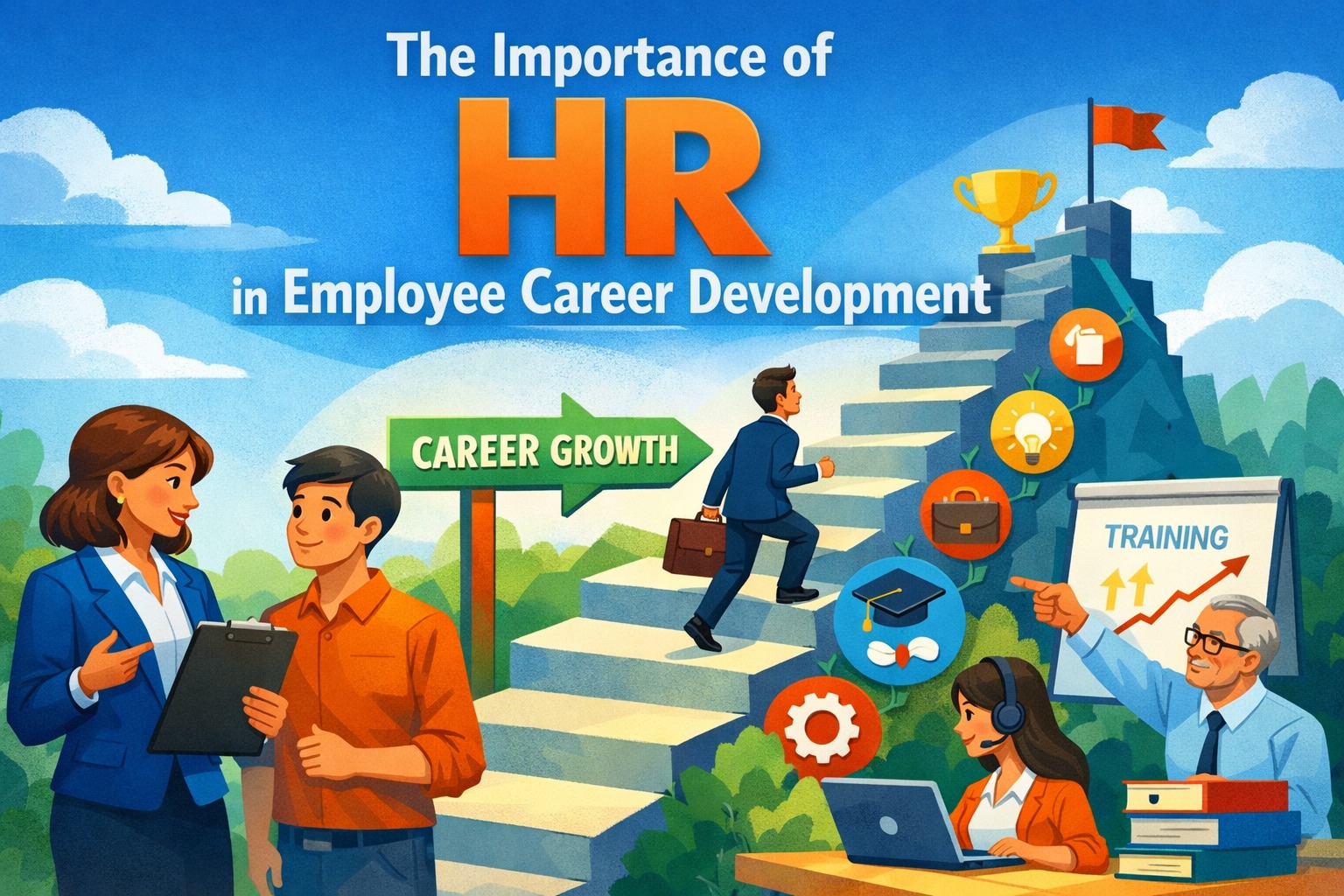
HR acts as a bridge between organizational goals and employee aspirations. One of its primary responsibilities is to identify employee strengths and align them with suitable career opportunities. Through performance evaluations, training programs, and mentoring systems, HR ensures that employees are continuously developing their competencies.
Additionally, HR helps design structured career paths so employees understand the steps needed to advance within the company. This clarity reduces uncertainty and increases motivation. HR professionals also play a key role in succession planning, ensuring that future leaders are prepared from within the organization.
By fostering a culture of continuous learning, HR contributes to both individual and organizational growth. Employees feel more valued when they are given opportunities to improve, which directly impacts job satisfaction and loyalty.
KEY STRATEGIES FOR EFFECTIVE CAREER DEVELOPMENT
To maximize employee growth, HR departments must implement strategic development programs. One effective approach is personalized training plans that match individual career goals. Instead of a one-size-fits-all model, tailored development ensures employees receive relevant skills training.
Another important strategy is regular performance feedback. Constructive feedback helps employees understand their strengths and areas for improvement. Mentorship programs are also highly effective, as experienced employees can guide junior staff through career challenges and decisions.
Furthermore, HR should encourage internal promotions and job rotations. These practices allow employees to gain broader experience and prepare for higher responsibilities. When employees see clear opportunities for advancement, their engagement and commitment naturally increase.
CONCLUSION
HR is a fundamental driver of employee career development and organizational success. By providing structured growth opportunities, continuous learning, and clear career pathways, HR helps employees reach their full potential. Companies that invest in strong HR development strategies are more likely to retain top talent and maintain a competitive advantage in the market. Ultimately, effective HR practices create a win-win situation for both employees and organizations.
Tentang Penulis
Gusti Ayu Tita
Penulis — Universitas STEKOM
Penulis aktif yang berfokus pada isu-isu akademik, teknologi pendidikan, dan pengembangan sumber daya manusia di lingkungan kampus.