Stunting remains one of the most serious health challenges affecting children worldwide. It occurs when children experience impaired growth and development due to chronic malnutrition, repeated infections, and inadequate care. One of the most effective ways to reduce stunting is by improving hygiene and sanitation practices. Clean environments and healthy habits play a major role in protecting children from diseases that interfere with nutrient absorption and physical growth.
UNDERSTANDING STUNTING AND ITS IMPACT
Stunting is not only about a child being shorter than average. It also affects brain development, learning ability, immune function, and future productivity. Children who suffer from stunting are more vulnerable to illness and may face long-term health complications later in life.
Poor sanitation and lack of hygiene contribute significantly to the spread of bacteria, viruses, and parasites. These harmful microorganisms can cause diarrhea and intestinal infections, which reduce the body’s ability to absorb essential nutrients. As a result, children may not receive the nutrition needed for healthy growth even when food intake is adequate.
THE ROLE OF HYGIENE IN STUNTING PREVENTION
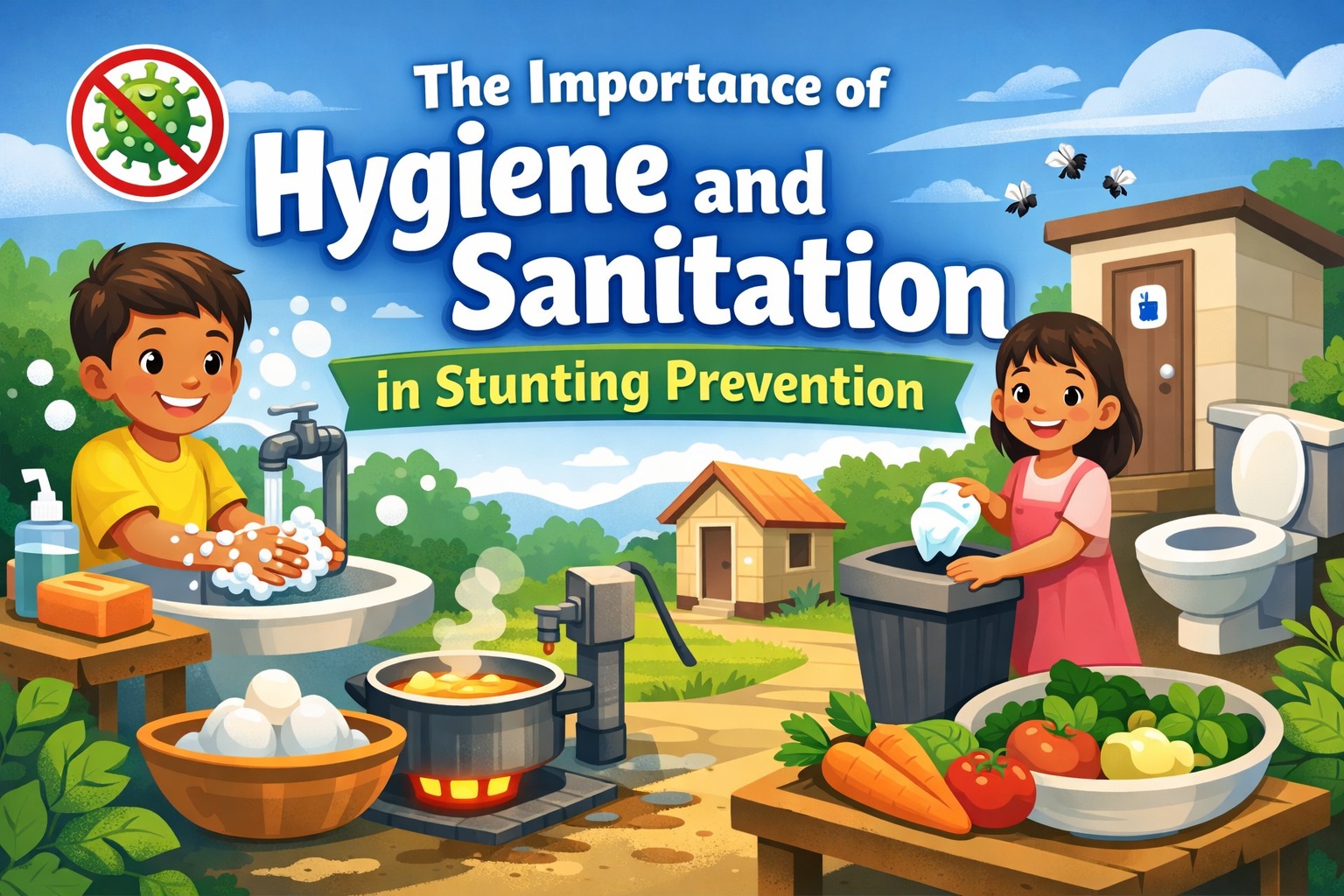
Good hygiene practices are essential in maintaining children’s health. Simple habits such as washing hands with soap before eating and after using the toilet can greatly reduce the risk of infections.
Parents and caregivers should also ensure that food preparation areas remain clean and that drinking water is safe for consumption. Contaminated food and water are major sources of disease transmission among young children.
Maintaining personal hygiene, including regular bathing and clean clothing, helps protect children from skin infections and other illnesses. Healthy children are more likely to absorb nutrients effectively and develop properly.
IMPORTANCE OF PROPER SANITATION
Sanitation refers to the availability of clean toilets, proper waste disposal systems, and safe water management. Communities with poor sanitation often experience higher rates of infectious diseases.
Open defecation and unmanaged waste can contaminate water sources and surrounding environments. This increases the risk of children being exposed to harmful germs that may lead to chronic illness and malnutrition.
Building proper sanitation facilities and encouraging communities to use them consistently can significantly lower infection rates. Governments and health organizations also play an important role in improving public sanitation infrastructure and education.
THE CONNECTION BETWEEN CLEAN WATER AND CHILD HEALTH
Access to clean water is a critical factor in preventing stunting. Safe drinking water reduces the likelihood of waterborne diseases that weaken children’s immune systems.
Families should boil or filter water before drinking if the water source is uncertain. In addition, storing water in clean containers helps prevent contamination.
Schools and healthcare centers must also provide adequate clean water facilities to support healthy environments for children and families.
COMMUNITY EDUCATION AND AWARENESS
Public awareness campaigns are necessary to educate communities about the importance of hygiene and sanitation. Many families may not fully understand how poor hygiene contributes to stunting.
Health workers, teachers, and community leaders can help spread information about healthy living habits. Educational programs focusing on handwashing, clean food preparation, and proper sanitation practices can create long-term positive changes.
Community participation is essential because preventing stunting requires cooperation from families, schools, healthcare providers, and local authorities.
CONCLUSION
Hygiene and sanitation are fundamental elements in preventing stunting among children. Clean water, proper sanitation facilities, and healthy hygiene habits help protect children from infections that interfere with growth and nutrition absorption.
By increasing public awareness and improving sanitation systems, communities can reduce stunting rates and support healthier future generations. Investing in hygiene and sanitation today means creating stronger, smarter, and healthier children for tomorrow.
Tentang Penulis
Gusti Ayu Tita
Penulis — Universitas STEKOM
Penulis aktif yang berfokus pada isu-isu akademik, teknologi pendidikan, dan pengembangan sumber daya manusia di lingkungan kampus.