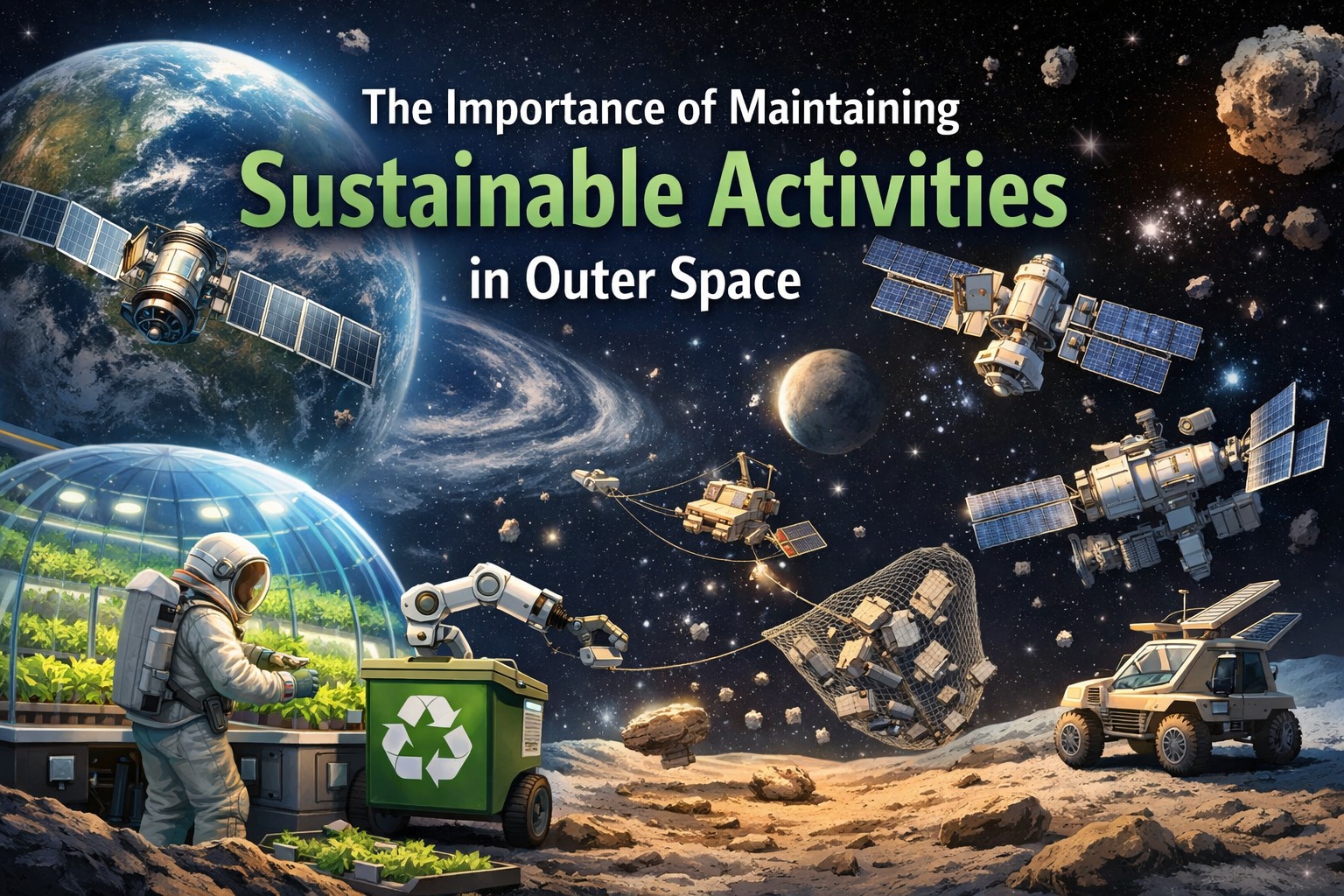
Outer space has become one of the most important frontiers for human development in the modern era. From communication satellites and weather monitoring systems to global navigation and scientific exploration, space-based technologies now play a critical role in everyday life on Earth. However, as human activity in space continues to expand, the need for sustainability has become increasingly urgent. Maintaining sustainable activities in outer space is no longer optional—it is essential to ensure that space remains safe, accessible, and useful for future generations.
WHY SUSTAINABILITY IN SPACE MATTERS
Sustainability in outer space refers to the responsible use and management of space resources and environments. Just like Earth’s natural ecosystems, space is a shared environment that can be damaged by overuse and negligence. Without proper management, the increasing number of satellites, spacecraft, and missions could lead to overcrowding and long-term risks.
One of the key reasons sustainability matters is the dependency of modern society on space infrastructure. Communication networks, GPS systems, climate monitoring, and even financial systems rely heavily on satellites. If space becomes congested or unsafe, these essential services could be disrupted, causing global consequences.
SPACE DEBRIS PROBLEM
One of the biggest challenges in maintaining sustainable space activities is the growing issue of space debris. Space debris includes defunct satellites, spent rocket stages, and fragments from collisions or explosions. These objects travel at extremely high speeds and can cause severe damage to operational satellites or spacecraft.
Even a small piece of debris can create a chain reaction of collisions, known as the Kessler Syndrome, which could make certain orbits unusable. This scenario highlights the importance of proactive measures, such as debris tracking systems, removal technologies, and stricter regulations for satellite launches and end-of-life disposal.
INTERNATIONAL COOPERATION
Sustainability in outer space cannot be achieved by a single country alone. Space is a global commons, and cooperation between nations is essential. International organizations and agreements play a vital role in establishing guidelines for responsible behavior in space.
Countries and private companies must work together to share data, coordinate satellite movements, and reduce unnecessary duplication of missions. Transparency and collaboration can help prevent conflicts and ensure that space remains a peaceful and sustainable environment for exploration and innovation.
TECHNOLOGICAL INNOVATIONS FOR SUSTAINABILITY
Advancements in technology are key to supporting sustainable space activities. Engineers and scientists are developing innovative solutions such as reusable rockets, which significantly reduce the waste generated from space missions. Companies are also designing satellites with built-in deorbiting systems that allow them to safely burn up in Earth’s atmosphere after their operational life ends.
Additionally, new technologies for space debris removal are being tested, including robotic arms, nets, and laser-based systems. These innovations aim to clean up existing debris and prevent future accumulation, ensuring long-term safety in orbit.
FUTURE OUTLOOK OF SPACE SUSTAINABILITY
As humanity continues to explore deeper into space, including missions to the Moon, Mars, and beyond, sustainability will become even more important. The growing interest in space tourism and commercial space industries also adds new challenges that must be carefully managed.
Future policies are expected to focus more on strict regulations, environmental considerations, and sustainable mission planning. The goal is to balance exploration and innovation with responsibility and preservation. If managed properly, outer space can remain a valuable resource for scientific discovery and technological progress for centuries to come.
CONCLUSION
Maintaining sustainable activities in outer space is essential for protecting both current and future space operations. As reliance on space-based technology continues to grow, so does the responsibility to manage it wisely. Through international cooperation, technological innovation, and responsible policies, humanity can ensure that space remains a safe and productive environment. Sustainability in space is not just a scientific concern—it is a global necessity for the future of civilization.
Tentang Penulis
Gusti Ayu Tita
Penulis — Universitas STEKOM
Penulis aktif yang berfokus pada isu-isu akademik, teknologi pendidikan, dan pengembangan sumber daya manusia di lingkungan kampus.