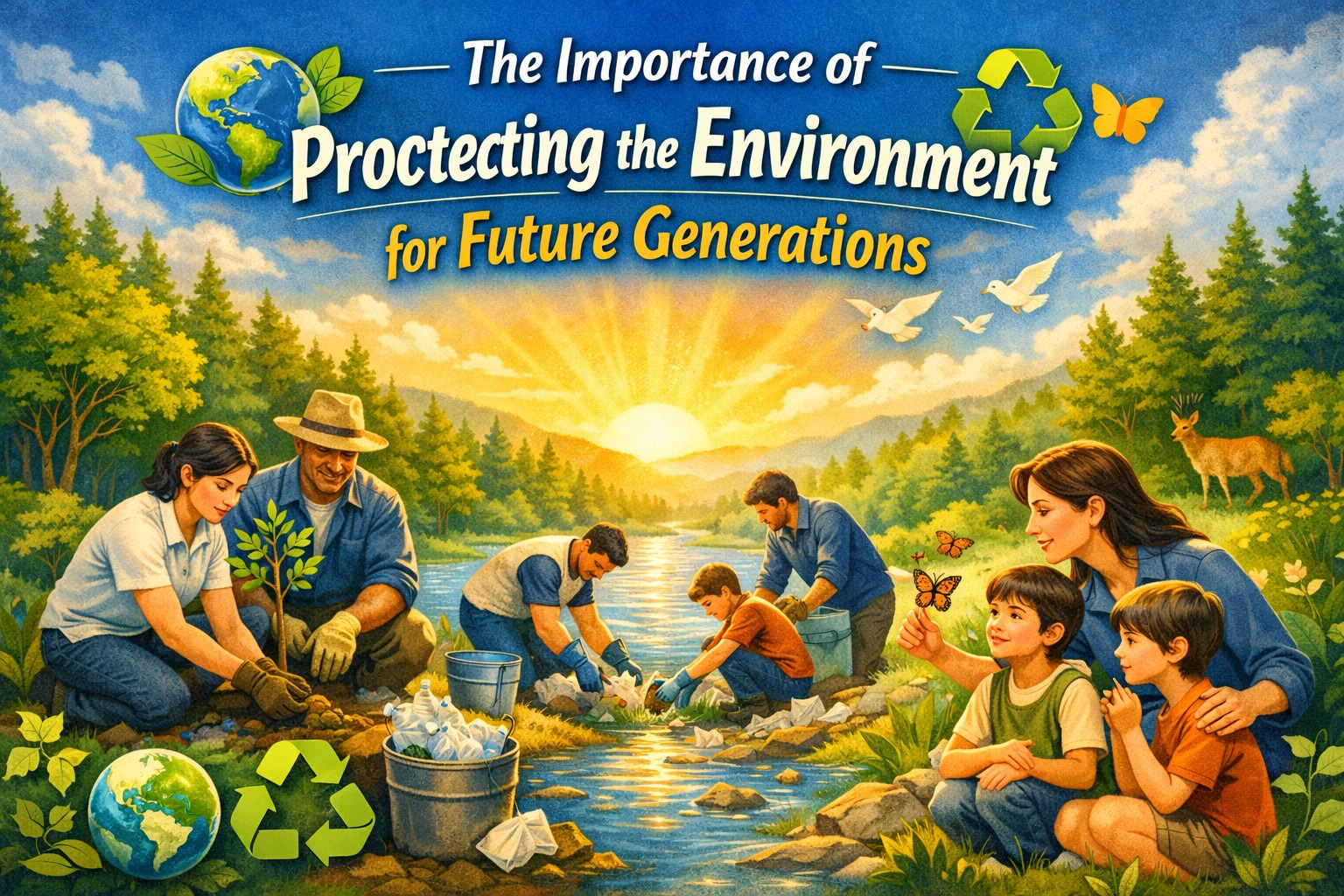
The environment is the foundation of human life. Clean air, fresh water, fertile soil, and stable climates allow societies to grow and thrive. However, rapid industrialization, deforestation, pollution, and climate change are placing enormous pressure on the planet. Protecting the environment is no longer a choice—it is a responsibility we must carry for the sake of future generations.
WHY ENVIRONMENTAL PROTECTION MATTERS
Environmental protection ensures that natural resources remain available and healthy for the long term. When ecosystems are damaged, the consequences affect not only wildlife but also human health, food production, and economic stability.
For example, polluted air increases respiratory diseases, while contaminated water threatens entire communities. Protecting nature today helps prevent serious health and economic crises tomorrow. By preserving forests, oceans, and biodiversity, we maintain the balance that supports life on Earth.
THE IMPACT OF CLIMATE CHANGE ON FUTURE GENERATIONS
Climate change is one of the biggest environmental challenges facing the world. Rising global temperatures lead to extreme weather, melting ice caps, rising sea levels, and disrupted ecosystems.
Future generations will face more severe natural disasters, water shortages, and food insecurity if climate change continues unchecked. Children born today may grow up in a world where coastal cities are flooded and agricultural land becomes less productive. Taking action now reduces these risks and gives the next generation a safer and more stable future.
THE ROLE OF INDIVIDUAL ACTIONS
Many people believe environmental protection is only the responsibility of governments and large organizations. In reality, individual actions play a powerful role.
Simple daily habits can create significant change, such as:
* Reducing plastic use
* Saving electricity and water
* Using public transportation or cycling
* Recycling and reusing materials
* Supporting eco-friendly products
When millions of people adopt sustainable habits, the cumulative impact becomes enormous.
THE IMPORTANCE OF EDUCATION AND AWARENESS
Education is key to long-term environmental protection. When people understand the consequences of pollution and climate change, they are more likely to make responsible choices.
Schools, universities, and communities must promote environmental awareness so young people grow up with sustainable values. Knowledge empowers individuals to advocate for change and hold leaders accountable for environmental policies.
THE ROLE OF GOVERNMENTS AND BUSINESSES
Governments and businesses play a crucial role in protecting the environment. Policies that promote renewable energy, reduce emissions, and protect natural habitats are essential.
Companies can contribute by adopting sustainable practices such as:
* Using renewable energy
* Reducing waste and emissions
* Designing eco-friendly products
* Supporting green innovation
When governments and businesses work together, they can create large-scale change that benefits both the planet and the economy.
BUILDING A SUSTAINABLE FUTURE TOGETHER
Protecting the environment is a shared responsibility. Every action—big or small—contributes to a healthier planet. By working together, society can reduce environmental damage and create a sustainable future.
Future generations deserve a world where they can breathe clean air, drink safe water, and enjoy thriving ecosystems. The choices we make today determine the world they will inherit tomorrow.
Tentang Penulis
Gusti Ayu Tita
Penulis — Universitas STEKOM
Penulis aktif yang berfokus pada isu-isu akademik, teknologi pendidikan, dan pengembangan sumber daya manusia di lingkungan kampus.