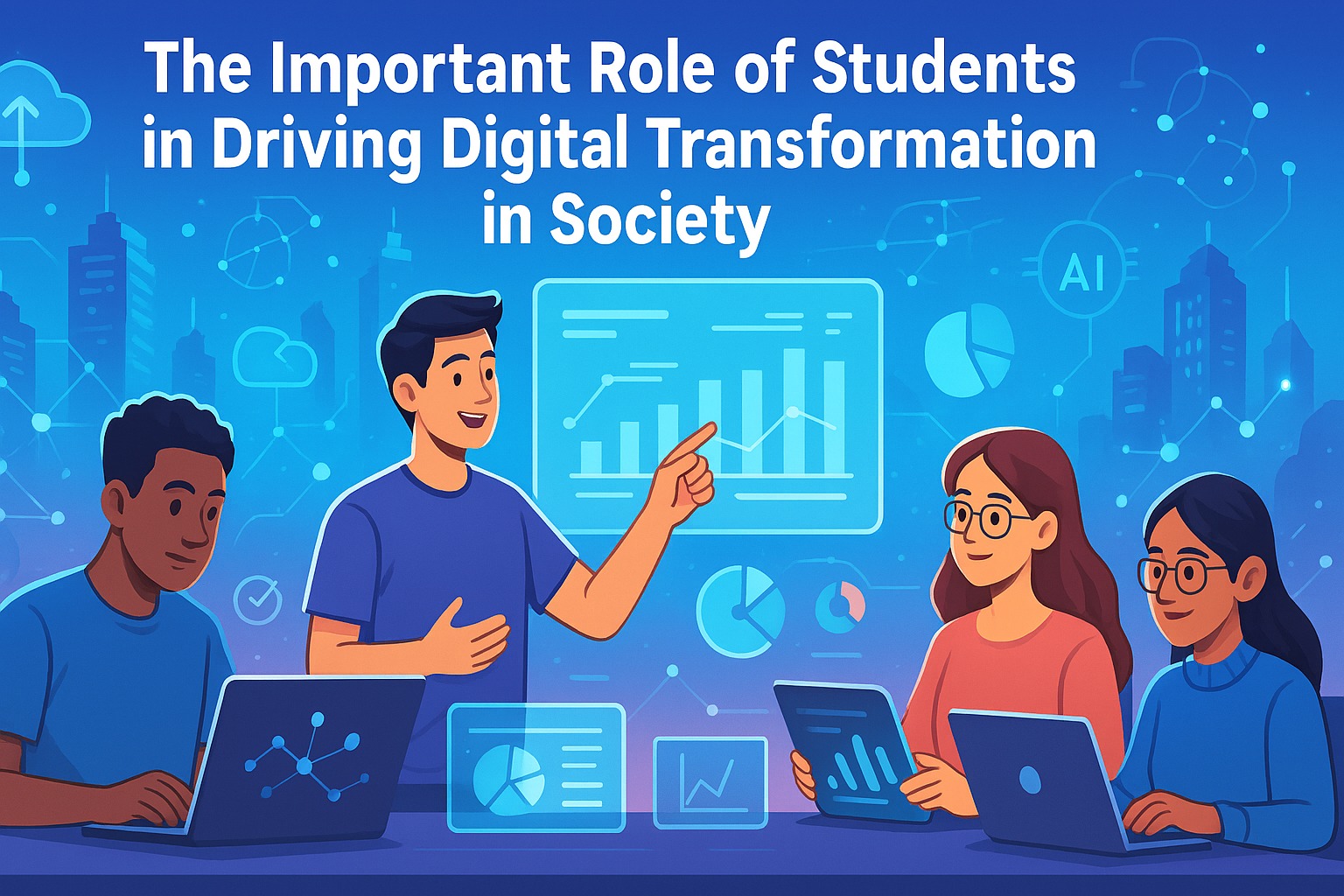
Digital transformation has become one of the most significant developments shaping modern society. Rapid advancements in technology have changed the way people communicate, learn, work, and solve problems. From education to business and government services, digital technology now plays a central role in improving efficiency and accessibility.
In this era of rapid technological change, students are among the most active participants in digital environments. They grow up surrounded by technology, making them naturally familiar with digital tools, online platforms, and innovative applications. This familiarity allows students to adapt quickly to new technological trends.
Students also represent the future workforce and leadership of society. Their ability to understand and utilize digital technologies can influence how communities adopt and benefit from digital transformation. By learning and experimenting with technology, students can introduce new ideas that contribute to societal progress.
Therefore, students should not only be seen as learners but also as important contributors to the digital transformation process. Their creativity, adaptability, and curiosity allow them to participate actively in shaping a more technologically advanced society.
STUDENTS AS DIGITAL NATIVES IN THE TECHNOLOGY ERA
One reason students play an important role in digital transformation is their status as digital natives. Unlike older generations who had to adapt to technology later in life, students have grown up in a digital environment where smartphones, the internet, and social media are part of everyday life.
This early exposure helps students develop strong digital literacy skills. They are able to explore new applications, navigate online platforms, and understand digital systems faster than many others. These skills make students valuable contributors in spreading digital knowledge within their communities.
Students often become informal technology guides for family members and local communities. Many people rely on students to help them use digital services such as online payments, e-learning platforms, or digital communication tools. Through this role, students indirectly support the digital transformation process.
As digital natives, students also tend to be more open to innovation. They are willing to experiment with new tools and platforms, which allows them to discover creative ways of solving problems through technology.
THE ROLE OF EDUCATION IN PREPARING DIGITAL CHANGE MAKERS
Education plays a crucial role in shaping students into agents of digital transformation. Schools and universities provide the environment where students can develop both technological knowledge and critical thinking skills.
Modern education systems increasingly integrate digital tools into the learning process. Online learning platforms, digital collaboration tools, and educational applications help students become more familiar with technology in academic settings. This experience prepares them to use technology effectively in real-world situations.
Teachers and educational institutions also encourage students to explore innovation. Assignments that involve research, digital projects, or technology-based solutions help students develop creativity and problem-solving abilities.
When education systems support digital literacy and innovation, students gain the confidence to participate in technological development. This preparation allows them to contribute meaningfully to digital transformation in society.
STUDENT INNOVATION IN THE DIGITAL ENVIRONMENT
Students are often a source of fresh ideas and innovation in the digital world. Their curiosity and willingness to experiment encourage them to create new solutions for everyday challenges using technology.
Many digital startups and innovative projects are initiated by young people, including students. From mobile applications to online learning platforms, student-driven innovations can address real problems in education, business, and community development.
Students also participate in technology competitions, hackathons, and digital entrepreneurship programs. These activities provide opportunities for them to apply their skills while collaborating with others who share similar interests in technology and innovation.
Through these initiatives, students not only develop their own skills but also contribute to the growth of the digital ecosystem. Their creativity helps accelerate the adoption of technology in various sectors of society.
DIGITAL RESPONSIBILITY AND ETHICAL TECHNOLOGY USE
While students play an important role in digital transformation, they must also understand the responsibility that comes with using technology. The digital world offers many benefits, but it also presents challenges such as misinformation, privacy concerns, and cyber security risks.
Students should develop digital ethics to ensure technology is used in positive and responsible ways. Understanding how to verify information, respect online privacy, and maintain respectful communication is essential in the digital age.
Educational institutions and communities must guide students in building responsible digital behavior. Through awareness and education, students can learn how to navigate the digital world safely while contributing to meaningful digital progress.
Responsible digital citizens help create a healthier digital environment. When students use technology ethically, they contribute to a more trustworthy and sustainable digital society.
COLLABORATION BETWEEN STUDENTS AND SOCIETY
Digital transformation cannot happen through individual efforts alone. Collaboration between students, communities, educational institutions, and industries is essential to ensure technological progress benefits everyone.
Students can collaborate with local communities to introduce digital literacy programs. For example, they may help small businesses adopt digital marketing strategies or assist community members in learning how to use digital services.
Partnerships between universities and industries also provide valuable opportunities for students. Internship programs, collaborative research, and innovation projects allow students to gain real-world experience while contributing to technological advancement.
Through collaboration, students become active participants in shaping digital transformation. Their involvement ensures that technological progress remains relevant to the needs of society.
CONCLUSION THE FUTURE IMPACT OF STUDENTS IN DIGITAL TRANSFORMATION
Students hold an important position in the ongoing process of digital transformation. Their familiarity with technology, creativity, and willingness to learn make them valuable contributors to the development of a digital society.
As digital natives, students can bridge the gap between technology and communities that are still adapting to digital systems. By sharing knowledge and introducing innovative solutions, they help accelerate the adoption of technology in everyday life.
However, their role must be supported by education, ethical awareness, and collaboration with various sectors of society. These factors ensure that digital transformation develops in a responsible and inclusive manner.
In the future, students will continue to shape the direction of technological progress. By empowering students with the right knowledge and opportunities, society can build a more innovative, connected, and sustainable digital world.
Tentang Penulis
Gusti Ayu Tita
Penulis — Universitas STEKOM
Penulis aktif yang berfokus pada isu-isu akademik, teknologi pendidikan, dan pengembangan sumber daya manusia di lingkungan kampus.