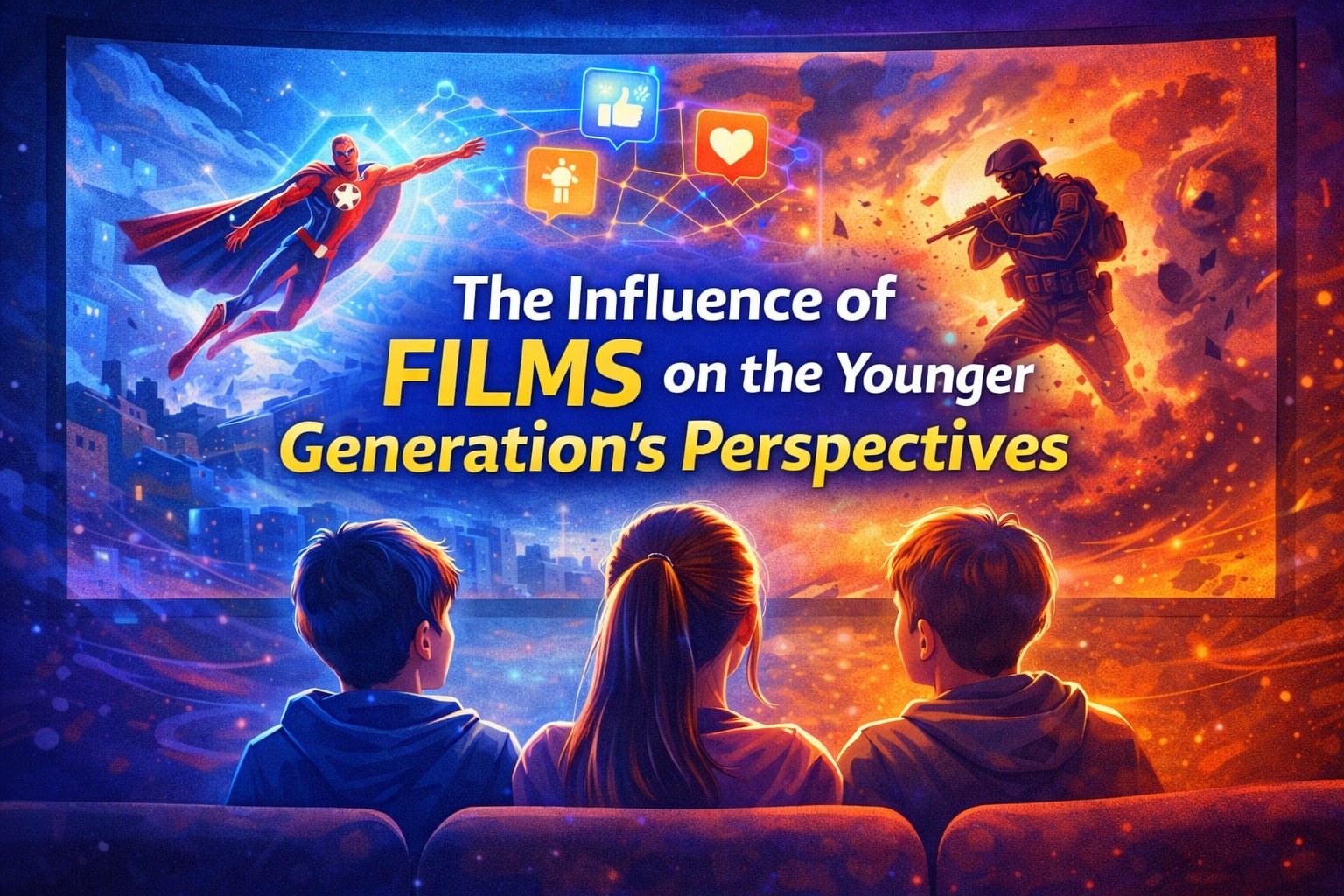
The Influence of Films on the Perspective of the Younger Generation
Films are not merely a form of entertainment; they have a significant influence on the perspectives and mindsets of the younger generation. As a visual medium rich in stories, emotions, and values, films can shape perceptions, beliefs, and ways of seeing the world. In the modern era, where access to various types of films is easier than ever, this influence has become even stronger. Below are several key aspects that illustrate how films affect the worldview of young people.
1. Identity and Lifestyle Formation
Films often present characters who become role models or sources of inspiration for young people.
The lifestyles, appearances, and behaviors of film characters can influence how young individuals shape their identities.
For example, superhero films may instill values such as courage and responsibility, while teen dramas can affect how young people view friendship and love. Films also introduce various lifestyles—from fashion choices to popular culture—which are eventually adopted as part of the younger generation’s identity.
2. The Internalization of Social Values and Norms
Many films contain moral messages or convey certain values, either explicitly or implicitly.
Young audiences who are still searching for their identity tend to absorb the values portrayed in films more easily.
Values such as justice, bravery, equality, and tolerance are often delivered through characters and storylines. However, films may also present norms that do not align with existing social values, depending on the message conveyed. Therefore, the influence of films on social values should be approached critically.
3. Shaping Perceptions of Social Reality
Films have the power to shape how young people perceive the world around them.
Through films, young audiences are exposed to social realities they may not experience directly.
Documentaries or social dramas, for instance, can broaden awareness of issues such as poverty, inequality, and discrimination. However, films often represent reality from a particular perspective, which may be biased or inaccurate. This makes it important for young people to critically evaluate the information they receive from films.
4. Influence on Political Tendencies and Global Views
Many films convey political or social messages, either directly or indirectly.
Exposure to such films can influence how young people perceive politics, government, and global issues.
Films that focus on environmental issues or human rights can raise awareness and encourage reflection. Stories depicting social injustice, conflict, or human rights struggles often inspire critical thinking and foster a desire for change among the younger generation.
5. Impact on Mental and Emotional Health
Films can have a deep emotional impact, especially on young people whose emotions are still developing.
Films with strong themes such as tragedy, depression, or loss can significantly affect viewers’ emotional states.
On the other hand, films that emphasize humor, happiness, and optimism can have a positive effect on mental health. Therefore, it is important for young people to choose films that not only entertain but also support emotional well-being.
6. A Source of Inspiration and Creativity
Films serve as a powerful source of inspiration for the younger generation, particularly for those interested in art and creativity.
Many young people are motivated to write, draw, or even create their own films after watching movies they admire.
Films introduce various artistic elements, such as cinematography, costume design, and unique storytelling techniques. This exposure can stimulate imagination and creativity, which are essential in an increasingly innovation-driven world.
Conclusion
Films have a strong influence on the perspectives of the younger generation.
Through identity formation, value internalization, perception of social reality, and influences on political views and mental health, films play a crucial role in shaping young people’s lives.
While this influence can be positive—enhancing creativity and social awareness—it also requires critical awareness when messages conflict with appropriate values. Therefore, young people should approach film content wisely in order to fully benefit from its positive impact.
Tentang Penulis
Gusti Ayu Tita
Penulis — Universitas STEKOM
Penulis aktif yang berfokus pada isu-isu akademik, teknologi pendidikan, dan pengembangan sumber daya manusia di lingkungan kampus.