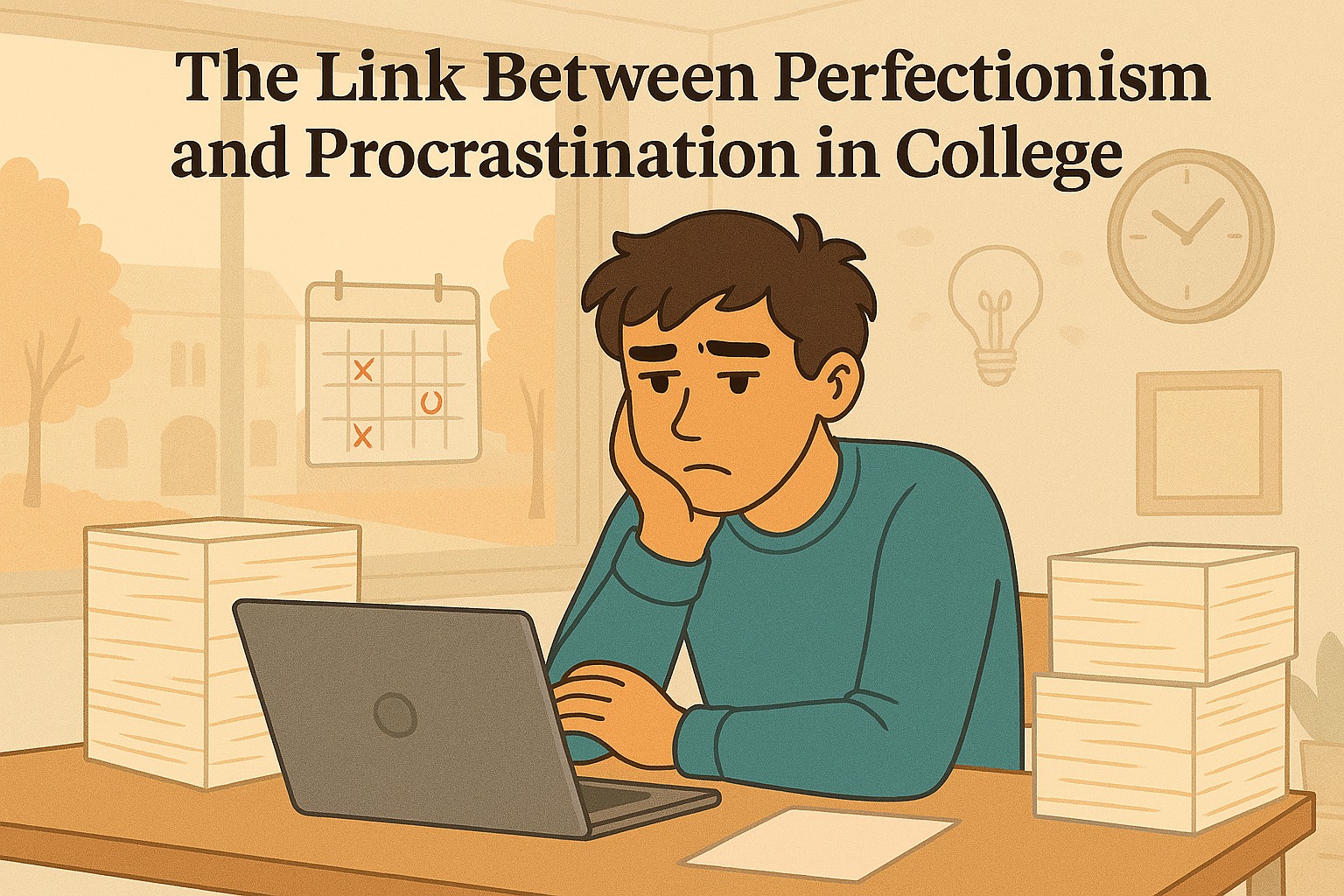
College life pushes students to balance deadlines, expectations, and personal goals. Many students assume procrastination comes from laziness or poor discipline. However, a hidden driver often sits beneath delayed action: perfectionism. The desire to produce flawless work can paradoxically cause hesitation, avoidance, and last-minute pressure. Understanding the connection between perfectionism and procrastination helps students break unproductive cycles and build healthier academic habits. When students learn to manage expectations realistically, productivity and confidence improve.
UNDERSTANDING PERFECTIONISM IN COLLEGE
Perfectionism is the tendency to set extremely high standards and judge oneself harshly when those standards are not met.
In college, this mindset may appear as:
- Fear of submitting imperfect assignments
- Excessive planning without execution
- Sensitivity to evaluation
- Constant comparison with peers
While striving for quality is beneficial, rigid perfectionism creates emotional pressure that interferes with action.
HOW PERFECTIONISM TRIGGERS PROCRASTINATION
At first glance, perfectionism and procrastination seem like opposites. One pushes for excellence, while the other delays work. In reality, they are closely connected.
FEAR OF FAILURE
Students avoid starting tasks to escape the risk of mistakes.
OVERTHINKING
Too much mental rehearsal replaces real progress.
ALL-OR-NOTHING THINKING
If the outcome cannot be perfect, students hesitate to begin.
PERFORMANCE PRESSURE
High expectations create anxiety that leads to avoidance.
This pattern transforms perfectionism into a productivity barrier.
THE ACADEMIC CONSEQUENCES
When perfectionism-driven procrastination becomes habitual, students may experience:
- Missed or rushed deadlines
- Increased stress and anxiety
- Reduced learning efficiency
- Declining motivation
- Mental exhaustion
Ironically, delaying tasks often results in work that feels far from perfect — reinforcing frustration.
SIGNS YOU ARE CAUGHT IN THE CYCLE
Recognizing the pattern is essential for change.
Warning signs include:
- Waiting for the “perfect time” to start
- Spending more time planning than doing
- Fear of feedback
- Repeated task avoidance
Awareness helps students shift from hesitation to intentional action.
BREAKING THE PERFECTIONISM–PROCRASTINATION LOOP
Students can maintain high standards without sacrificing progress by adopting practical strategies:
START BEFORE YOU FEEL READY
Action reduces fear more effectively than waiting.
SET REALISTIC EXPECTATIONS
Aim for improvement, not flawlessness.
USE TIME BOUNDARIES
Limit overthinking by committing to focused work sessions.
NORMALIZE IMPERFECT DRAFTS
Revision is part of academic growth.
Small, consistent steps weaken the cycle of avoidance.
BUILDING A HEALTHIER PRODUCTIVITY MINDSET
College success is not defined by instant perfection but by steady effort. Students who accept mistakes as part of learning build resilience and confidence. When perfectionism becomes flexible rather than rigid, productivity improves naturally.
The key is recognizing that progress creates clarity — and clarity reduces fear.
CONCLUSION
Perfectionism and procrastination are deeply connected in college life. Excessive standards can fuel hesitation, avoidance, and stress. By reframing expectations and focusing on consistent action, students can break this cycle and develop sustainable productivity habits. Academic growth comes from movement, not perfection.
Tentang Penulis
Gusti Ayu Tita P
Penulis — Universitas STEKOM
Penulis aktif yang berfokus pada isu-isu akademik, teknologi pendidikan, dan pengembangan sumber daya manusia di lingkungan kampus.