Child stunting remains one of the most serious health problems affecting children worldwide. Stunting occurs when a child experiences impaired growth and development due to chronic malnutrition, repeated infections, and inadequate psychosocial stimulation. While nutrition plays a major role in preventing stunting, parenting style also has a significant impact on a child’s physical and emotional development. The way parents care for, guide, and interact with their children can influence eating habits, health practices, and overall well-being.
UNDERSTANDING CHILD STUNTING
Stunting is a condition where a child’s height is lower than the standard height for their age. This issue usually develops during the first 1,000 days of life, starting from pregnancy until a child reaches two years old. Children who experience stunting may face long-term consequences such as poor cognitive development, weakened immune systems, reduced academic performance, and lower productivity in adulthood.
Several factors contribute to stunting, including limited access to nutritious food, poor sanitation, low family income, and inadequate healthcare. However, parenting practices are equally important because parents directly influence children’s nutrition, hygiene, emotional support, and daily routines.
THE ROLE OF PARENTING STYLE IN CHILD DEVELOPMENT
Parenting style refers to the approach parents use when raising their children. Experts generally classify parenting into four main types: authoritative, authoritarian, permissive, and neglectful parenting. Each style can affect a child’s growth and health differently.
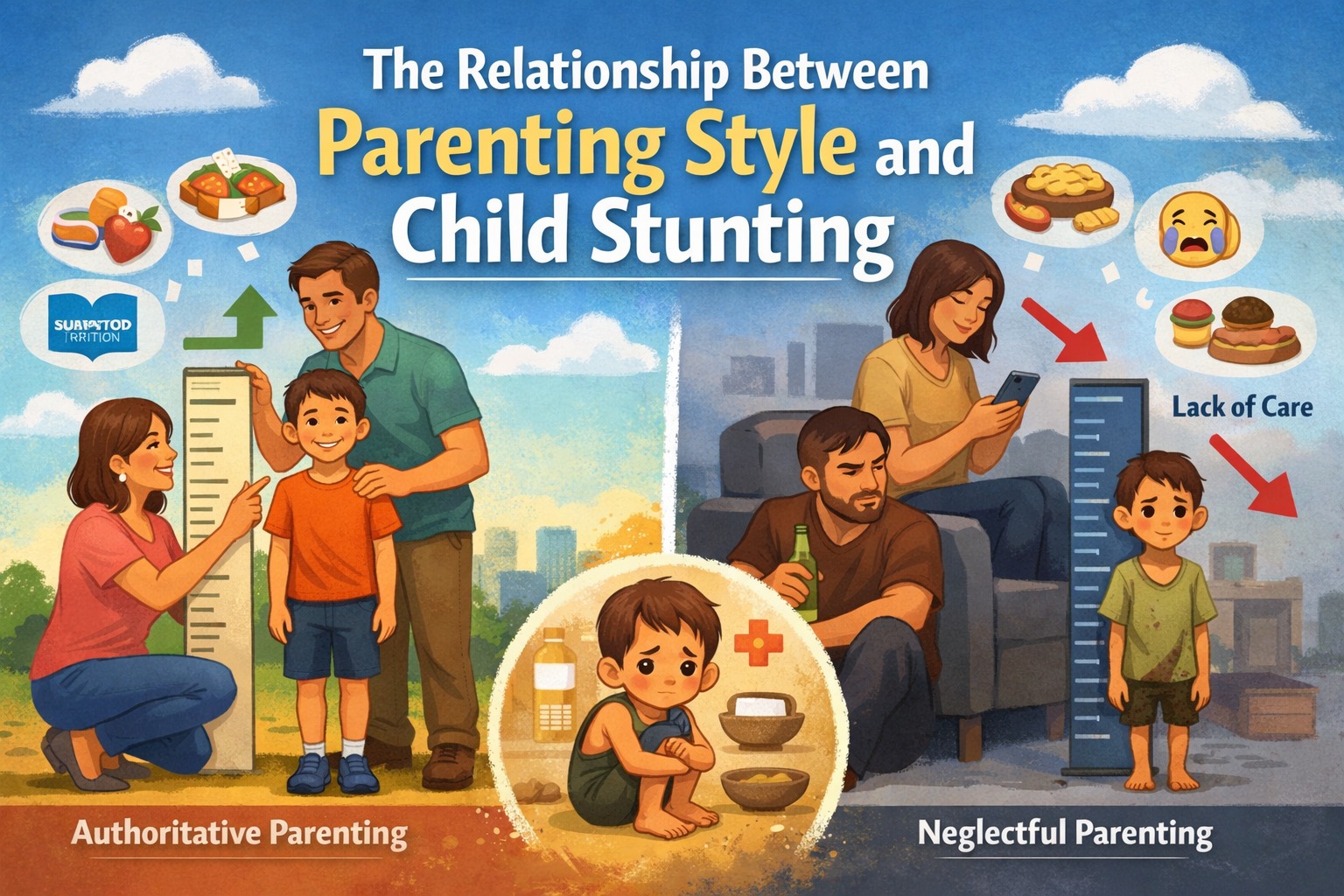
Authoritative parenting is considered the most balanced approach. Parents provide love, support, discipline, and open communication. Children raised in this environment often develop healthy eating habits and emotional stability, which support proper growth and reduce the risk of stunting.
Authoritarian parenting focuses heavily on strict rules and punishment. In some cases, children may experience stress or fear, which can negatively affect appetite and emotional well-being. This condition may indirectly contribute to poor nutritional intake.
Permissive parenting allows children to make many decisions without sufficient guidance. Parents may fail to regulate unhealthy eating habits or daily routines, increasing the risk of nutritional imbalance.
Neglectful parenting is the most harmful style because parents provide minimal emotional and physical care. Children may not receive enough food, healthcare, hygiene attention, or emotional support, making them highly vulnerable to stunting.
HOW PARENTING AFFECTS NUTRITIONAL STATUS
Parents are responsible for ensuring children receive balanced nutrition. Proper feeding practices, breastfeeding, meal schedules, and food choices are strongly influenced by parenting behavior. Parents who understand nutritional needs are more likely to provide healthy meals rich in protein, vitamins, and minerals.
In contrast, poor parenting practices can lead to unhealthy eating patterns. For example, some parents may rely too heavily on instant food or fail to encourage children to eat vegetables and fruits. Lack of supervision during mealtime may also cause children to consume insufficient nutrients.
In addition, emotional bonding between parents and children affects appetite and psychological health. Children who feel safe and loved are generally more cooperative during feeding and more likely to develop positive eating behaviors.
THE IMPORTANCE OF EDUCATION AND FAMILY SUPPORT
Parental education plays a crucial role in preventing stunting. Parents with better knowledge about child nutrition, hygiene, and health are usually more capable of providing proper care. Health education programs can help families understand the importance of exclusive breastfeeding, immunization, clean water, and balanced nutrition.
Family support also contributes to healthy child development. Cooperation between fathers, mothers, grandparents, and other family members creates a supportive environment for children. When families work together to maintain healthy habits, the risk of stunting can be significantly reduced.
STRATEGIES TO PREVENT STUNTING THROUGH POSITIVE PARENTING
There are several effective ways parents can help prevent stunting in children:
- Provide exclusive breastfeeding during the first six months.
- Introduce nutritious complementary foods after six months of age.
- Maintain proper hygiene and sanitation at home.
- Monitor child growth regularly at healthcare centers.
- Build positive communication and emotional support for children.
- Encourage healthy eating habits from an early age.
- Ensure children receive enough sleep and physical activity.
Positive parenting not only improves nutritional intake but also supports emotional and mental development. Children raised in caring and supportive environments tend to grow healthier and more confidently.
CONCLUSION
The relationship between parenting style and child stunting is closely connected. Parenting influences children’s nutrition, emotional health, hygiene, and overall development. Supportive and responsible parenting can significantly reduce the risk of stunting by ensuring children receive adequate nutrition and proper care. Therefore, improving parenting knowledge and promoting positive family environments are essential steps in creating healthier future generations.
Tentang Penulis
Gusti Ayu Tita
Penulis — Universitas STEKOM
Penulis aktif yang berfokus pada isu-isu akademik, teknologi pendidikan, dan pengembangan sumber daya manusia di lingkungan kampus.