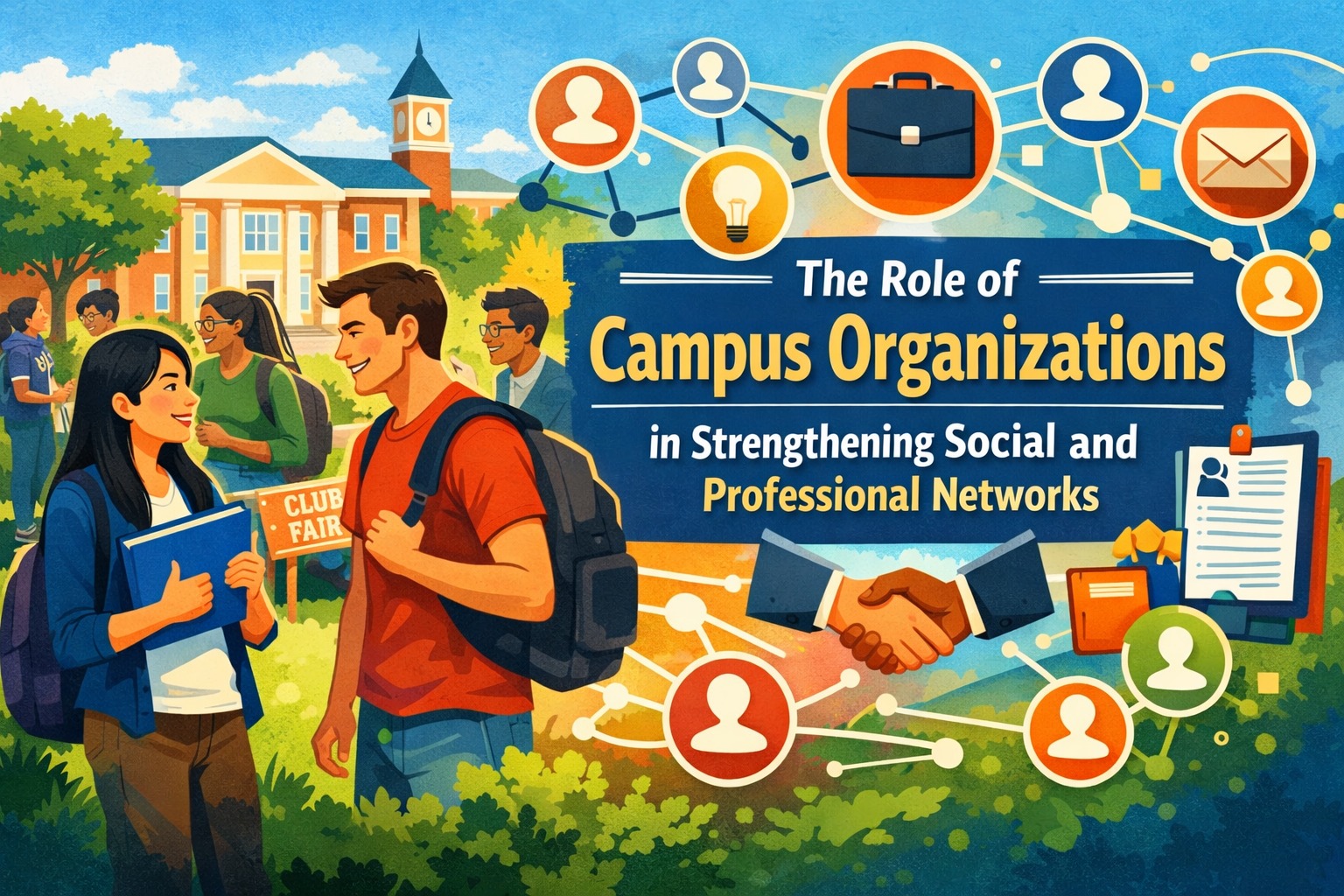
Campus life is more than lectures, assignments, and exams. It is a dynamic environment where students can grow both personally and professionally. One of the most effective ways to maximize this experience is by joining campus organizations. These groups serve as a bridge that connects students with diverse individuals, ideas, and opportunities.
Being part of a campus organization is not just about filling spare time. It is about building meaningful relationships and gaining experiences that can shape your future career. Through active involvement, students can transform simple interactions into valuable connections.
WHY CAMPUS ORGANIZATIONS MATTER
Campus organizations provide a structured space for students to interact beyond the classroom. They bring together individuals with shared interests, whether in academics, arts, leadership, or social causes. This common ground makes it easier to form genuine connections.
In addition, these organizations often host events, workshops, and collaborative projects. Such activities allow students to meet new people and expand their social circles. Over time, these interactions help build a strong and supportive network.
Being involved also enhances communication skills. Students learn how to express ideas, listen to others, and work as part of a team. These soft skills are essential for both personal growth and professional success.
BUILDING SOCIAL CONNECTIONS THROUGH ORGANIZATIONS
Joining a campus organization opens the door to friendships that go beyond casual знакомства. Members often spend significant time together, working toward shared goals. This creates a sense of belonging and trust.
Through regular meetings and activities, students develop deeper relationships. These connections can provide emotional support, motivation, and encouragement during challenging times in college life.
Moreover, interacting with people from different backgrounds broadens perspectives. It helps students become more adaptable and culturally aware, qualities that are highly valued in today’s global environment.
DEVELOPING PROFESSIONAL NETWORKS EARLY
Campus organizations are also powerful platforms for building professional networks. Many groups collaborate with external partners, alumni, and industry professionals. This exposure allows students to connect with people who can influence their career paths.
Leadership roles within organizations add even more value. Serving as a committee member or leader demonstrates responsibility, initiative, and teamwork. These experiences not only strengthen resumes but also expand professional connections.
In some cases, opportunities such as internships, mentorships, or job offers arise from these networks. A simple introduction through an organization can lead to significant career advancements.
TIPS TO MAXIMIZE YOUR NETWORKING EXPERIENCE
To get the most out of campus organizations, active participation is key. Attending meetings alone is not enough. Students should engage in discussions, volunteer for tasks, and contribute ideas.
Consistency also plays an important role. Building strong relationships requires time and effort. Staying involved and maintaining communication helps ensure that connections remain meaningful.
Another important tip is to be authentic. Genuine interest and sincerity make a lasting impression. People are more likely to connect with someone who is approachable and trustworthy.
Lastly, do not hesitate to step out of your comfort zone. Meeting new people and trying new roles can open unexpected opportunities.
CONCLUSION
Campus organizations play a vital role in strengthening both social and professional networks. They offer a unique space where students can build relationships, develop skills, and explore opportunities. By actively participating and nurturing connections, students can turn their campus experience into a foundation for long-term success.
Tentang Penulis
Gusti Ayu Tita
Penulis — Universitas STEKOM
Penulis aktif yang berfokus pada isu-isu akademik, teknologi pendidikan, dan pengembangan sumber daya manusia di lingkungan kampus.