
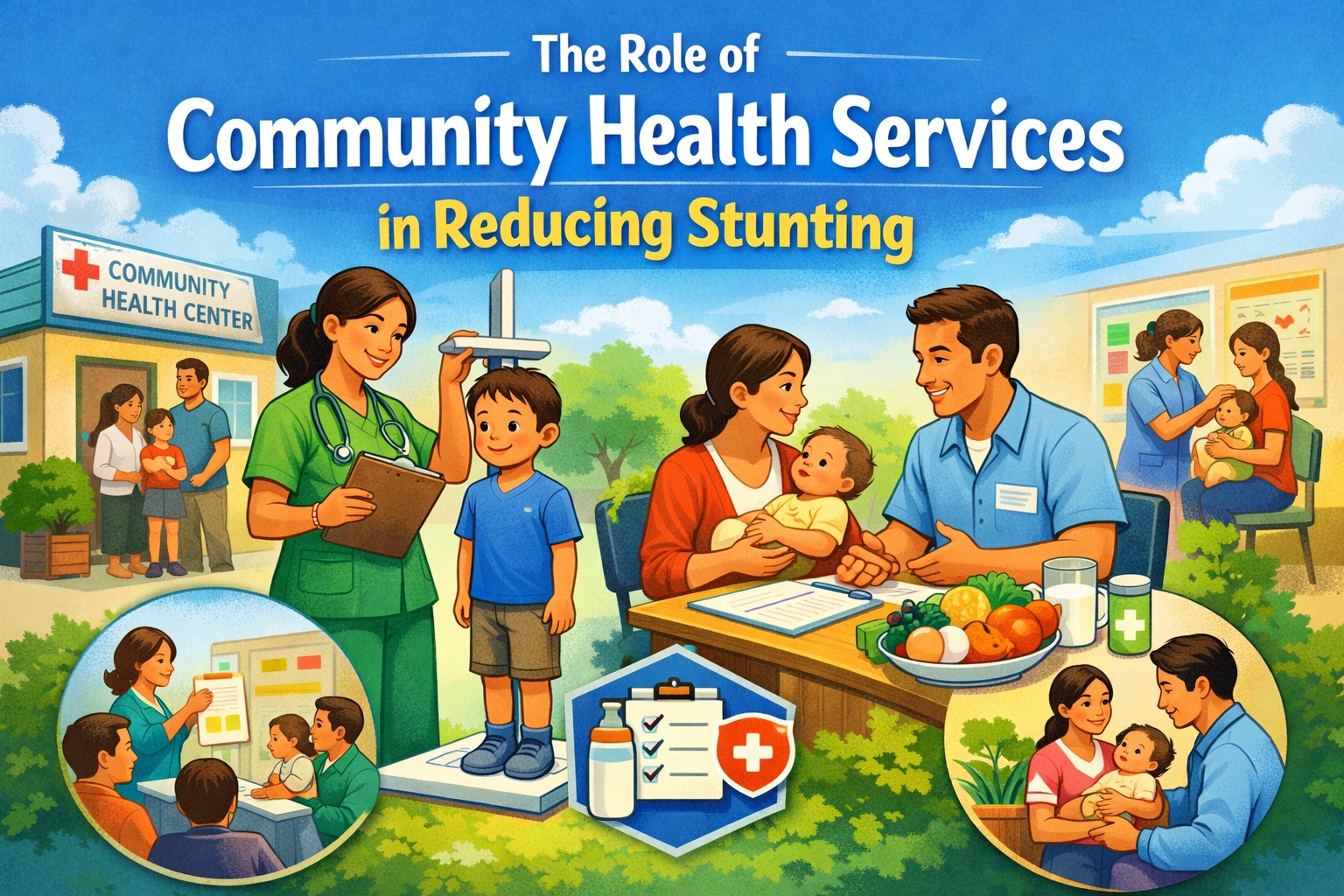
Stunting remains one of the biggest health challenges affecting children worldwide. It occurs when children experience impaired growth and development due to poor nutrition, repeated infections, and inadequate healthcare during the early stages of life. Stunting not only affects physical growth but also impacts cognitive development, learning ability, and future productivity. In many developing countries, community health services play a critical role in preventing and reducing stunting through education, nutrition programs, and accessible healthcare support.
UNDERSTANDING STUNTING AND ITS IMPACT
Stunting is a condition where a child’s height is significantly below the average for their age. This problem usually develops during the first 1,000 days of life, beginning from pregnancy until a child reaches two years old. Poor maternal nutrition, lack of breastfeeding, limited access to healthy food, and poor sanitation are among the leading causes of stunting.
Children who suffer from stunting often face long-term consequences. They may experience delayed brain development, weakened immune systems, and reduced academic performance. In adulthood, stunted individuals are also more likely to encounter economic difficulties because of lower productivity and health complications.
THE IMPORTANCE OF COMMUNITY HEALTH SERVICES
Community health services are essential in reaching families at the local level. These services provide preventive healthcare, maternal support, child nutrition monitoring, immunization, and public health education. By working directly within communities, healthcare workers can identify children at risk of stunting and offer early intervention.
Local health centers, village health posts, and outreach programs help families access medical care without traveling long distances. These services are especially important in rural and underserved areas where healthcare facilities may be limited.
NUTRITION EDUCATION FOR PARENTS
One of the most effective ways community health services reduce stunting is through nutrition education. Many parents may not fully understand the importance of balanced nutrition during pregnancy and early childhood. Healthcare workers educate mothers and caregivers about breastfeeding, complementary feeding, and healthy eating habits.
Exclusive breastfeeding during the first six months of life is strongly encouraged because breast milk provides essential nutrients and antibodies. After six months, children require additional nutritious foods such as vegetables, fruits, protein sources, and fortified foods to support healthy growth.
Community health campaigns also help parents recognize signs of malnutrition and encourage regular health check-ups for children.
MATERNAL HEALTH SUPPORT
Healthy mothers are more likely to give birth to healthy babies. Community health services provide prenatal care, nutritional supplements, and health monitoring for pregnant women. Regular medical examinations help detect complications during pregnancy and ensure mothers receive proper guidance.
Iron and folic acid supplementation are commonly distributed to prevent anemia among pregnant women. Healthcare workers also educate mothers about maintaining a nutritious diet and avoiding harmful behaviors during pregnancy.
By improving maternal health, communities can significantly lower the risk of low birth weight and stunting in children.
IMMUNIZATION AND DISEASE PREVENTION
Frequent infections can interfere with nutrient absorption and contribute to stunting. Community health services play an important role in disease prevention through vaccination programs, sanitation campaigns, and hygiene education.
Immunization protects children from dangerous illnesses such as measles, polio, and tuberculosis. In addition, healthcare workers encourage proper handwashing, safe drinking water, and clean living environments to reduce the spread of infectious diseases.
When children stay healthy, their bodies can absorb nutrients more effectively and support normal growth.
COMMUNITY PARTICIPATION AND COLLABORATION
Reducing stunting requires cooperation from multiple sectors, including healthcare providers, local governments, schools, and families. Community health services often collaborate with local organizations to organize nutrition programs, growth monitoring activities, and educational workshops.
Community participation is essential because sustainable change can only happen when people actively support healthy lifestyles and child development programs. Volunteers and local leaders can help spread awareness about the importance of nutrition and healthcare access.
CONCLUSION
Community health services have a major role in reducing stunting by providing accessible healthcare, nutrition education, maternal support, and disease prevention programs. Through early intervention and strong community collaboration, children can receive the care and nutrition they need to grow healthy and reach their full potential.
Preventing stunting is not only about improving child health but also about building a stronger and more productive future generation. With continued support from governments, healthcare workers, and communities, the fight against stunting can achieve meaningful progress worldwide.
Tentang Penulis
Gusti Ayu Tita
Penulis — Universitas STEKOM
Penulis aktif yang berfokus pada isu-isu akademik, teknologi pendidikan, dan pengembangan sumber daya manusia di lingkungan kampus.



