
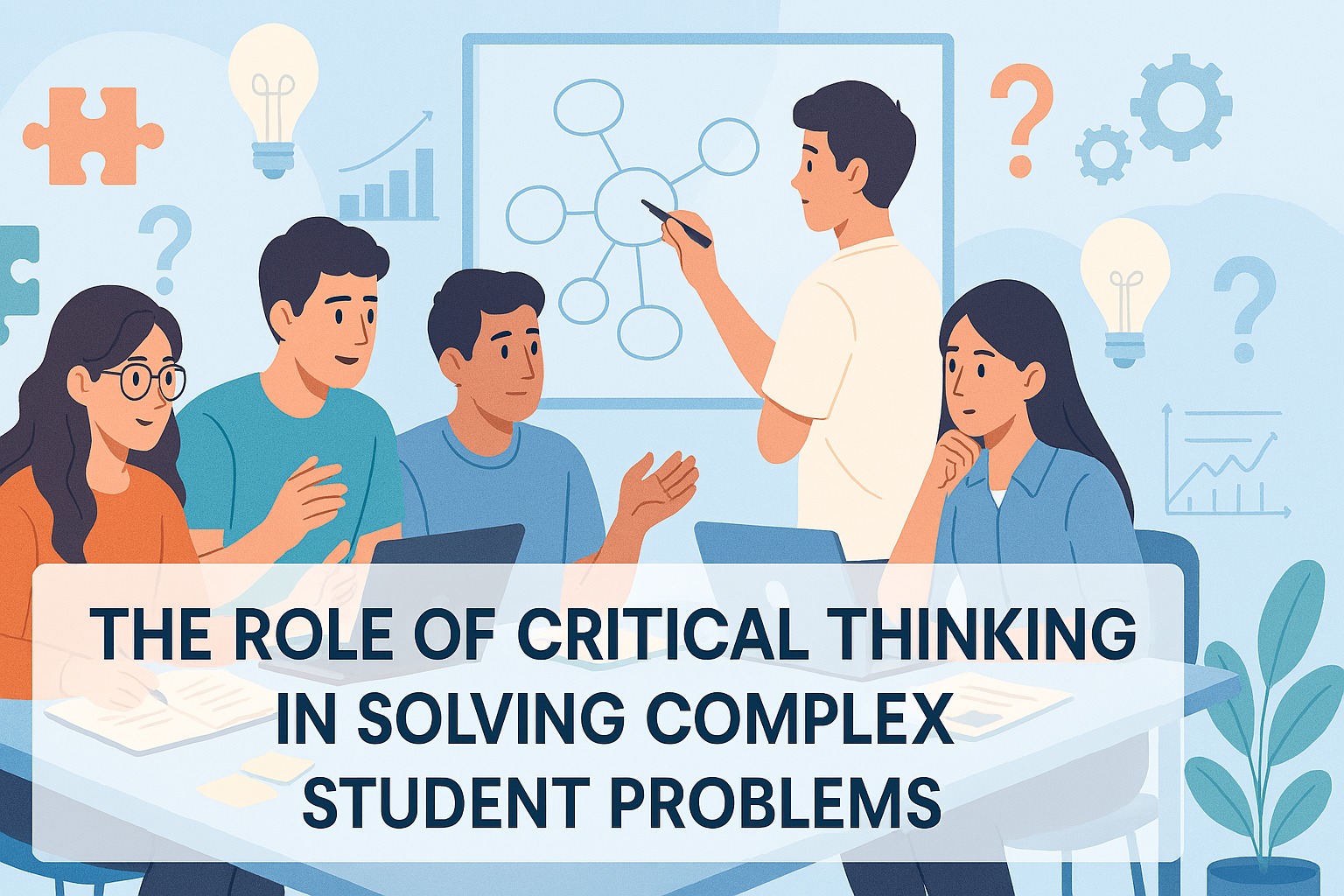
In today’s academic environment, students face increasingly complex challenges. These challenges are not only related to coursework but also involve decision-making, information analysis, and adapting to rapid technological changes. As a result, students need more than just memorization skills; they must develop the ability to think critically.
Critical thinking allows students to analyze problems from different perspectives. Instead of accepting information at face value, students learn to question, evaluate, and interpret the information they encounter. This skill is particularly important in an era where digital information spreads quickly and not all sources are reliable.
For university students, complex problems may arise in academic tasks, research projects, or even collaboration with peers. Critical thinking helps them navigate these situations with logic and clarity. By applying thoughtful analysis, students can make informed decisions and find effective solutions.
Furthermore, critical thinking strengthens intellectual independence. Students who practice this skill are more capable of forming their own opinions based on evidence rather than simply following assumptions. This independence is essential for academic success and long-term personal development.
UNDERSTANDING THE CONCEPT OF CRITICAL THINKING
Critical thinking is often described as the ability to analyze information objectively and make reasoned judgments. It involves evaluating evidence, recognizing assumptions, and identifying logical connections between ideas. In academic settings, this skill helps students approach learning more effectively.
Students who understand critical thinking learn to question the reliability of sources and the validity of arguments. Rather than relying solely on textbooks or lectures, they explore multiple viewpoints before forming conclusions. This process encourages deeper understanding of complex topics.
Another aspect of critical thinking is reflection. Students reflect on their own thoughts, biases, and reasoning processes. By doing this, they become more aware of how they interpret information and how their perspectives may influence their decisions.
Developing critical thinking also requires curiosity. When students actively seek explanations and ask meaningful questions, they expand their knowledge and improve their analytical abilities. This mindset transforms learning from a passive activity into an engaging intellectual process.
THE IMPORTANCE OF CRITICAL THINKING IN ACADEMIC LIFE
In academic life, critical thinking plays a fundamental role in helping students manage complex learning tasks. Assignments, research projects, and presentations often require students to analyze large amounts of information and identify relevant insights.
When students apply critical thinking, they become more capable of distinguishing between strong and weak arguments. This ability is essential when writing essays, conducting research, or participating in academic discussions. It allows students to build well-supported conclusions based on evidence.
Critical thinking also helps students avoid misinformation. With the vast amount of content available online, not every source provides accurate or trustworthy information. Students who think critically evaluate the credibility of sources before accepting them as valid references.
Additionally, this skill improves academic confidence. When students understand how to analyze problems and develop logical solutions, they become more confident in expressing their ideas. Confidence in reasoning is an important factor in academic growth and intellectual maturity.
IDENTIFYING COMPLEX STUDENT PROBLEMS
Students encounter many types of complex problems during their academic journey. These problems may involve time management, academic pressure, research difficulties, or challenges in group collaboration. Without strong analytical skills, these issues can become overwhelming.
One common problem is information overload. Students are often exposed to vast amounts of data from books, journals, and digital platforms. Critical thinking helps them filter relevant information and focus on what truly supports their academic objectives.
Another challenge involves making academic decisions. Students frequently need to choose research topics, evaluate sources, and determine the best approach for completing assignments. These decisions require careful analysis and logical reasoning.
Complex problems may also arise from conflicting perspectives in discussions or debates. Students must evaluate arguments objectively while maintaining respect for different viewpoints. Critical thinking enables them to engage in constructive dialogue rather than emotional disagreement.
HOW CRITICAL THINKING HELPS SOLVE STUDENT CHALLENGES
Critical thinking provides a structured approach to solving problems. Students first identify the issue clearly, then gather relevant information, analyze possible solutions, and evaluate the outcomes. This systematic process leads to more effective decision-making.
When students analyze a problem critically, they avoid rushing into conclusions. Instead, they consider multiple possibilities and examine the potential consequences of each option. This careful evaluation reduces the risk of making poor decisions.
Another benefit is the ability to recognize patterns and relationships between ideas. Students who practice critical thinking can connect concepts from different subjects and apply them to real-life situations. This interdisciplinary understanding enhances problem-solving skills.
Moreover, critical thinking encourages persistence. Complex problems rarely have immediate solutions, but students who approach challenges analytically are more likely to remain patient and continue exploring possible answers.
DEVELOPING CRITICAL THINKING SKILLS AMONG STUDENTS
Developing critical thinking skills requires continuous practice. Students can strengthen this ability through activities that encourage analysis, discussion, and reflection. Academic environments that promote open dialogue often support the growth of these skills.
One effective method is engaging in classroom discussions. When students exchange ideas with peers, they are exposed to diverse perspectives. This interaction encourages them to evaluate arguments and refine their own reasoning.
Academic research also plays an important role. By examining scholarly sources and comparing different viewpoints, students learn how to analyze information systematically. Research activities teach them to support their conclusions with credible evidence.
Reading critically is another essential practice. Instead of simply absorbing information, students analyze the structure of arguments, identify key ideas, and question underlying assumptions. This approach strengthens their analytical thinking over time.
THE LONG-TERM BENEFITS OF CRITICAL THINKING
Critical thinking does not only benefit students during their academic years; it also prepares them for professional and personal challenges in the future. Employers often value individuals who can analyze problems and develop innovative solutions.
In professional environments, employees frequently encounter complex situations that require thoughtful decision-making. Students who have developed strong critical thinking skills are better equipped to handle these responsibilities effectively.
Critical thinking also contributes to responsible citizenship. Individuals who analyze information carefully are less likely to be influenced by misinformation or biased narratives. This awareness supports informed participation in society.
Ultimately, critical thinking shapes independent learners. Students who cultivate this skill become more adaptable, curious, and capable of lifelong learning. These qualities are essential for navigating an increasingly complex and interconnected world.
Tentang Penulis
Gusti Ayu Tita
Penulis — Universitas STEKOM
Penulis aktif yang berfokus pada isu-isu akademik, teknologi pendidikan, dan pengembangan sumber daya manusia di lingkungan kampus.



