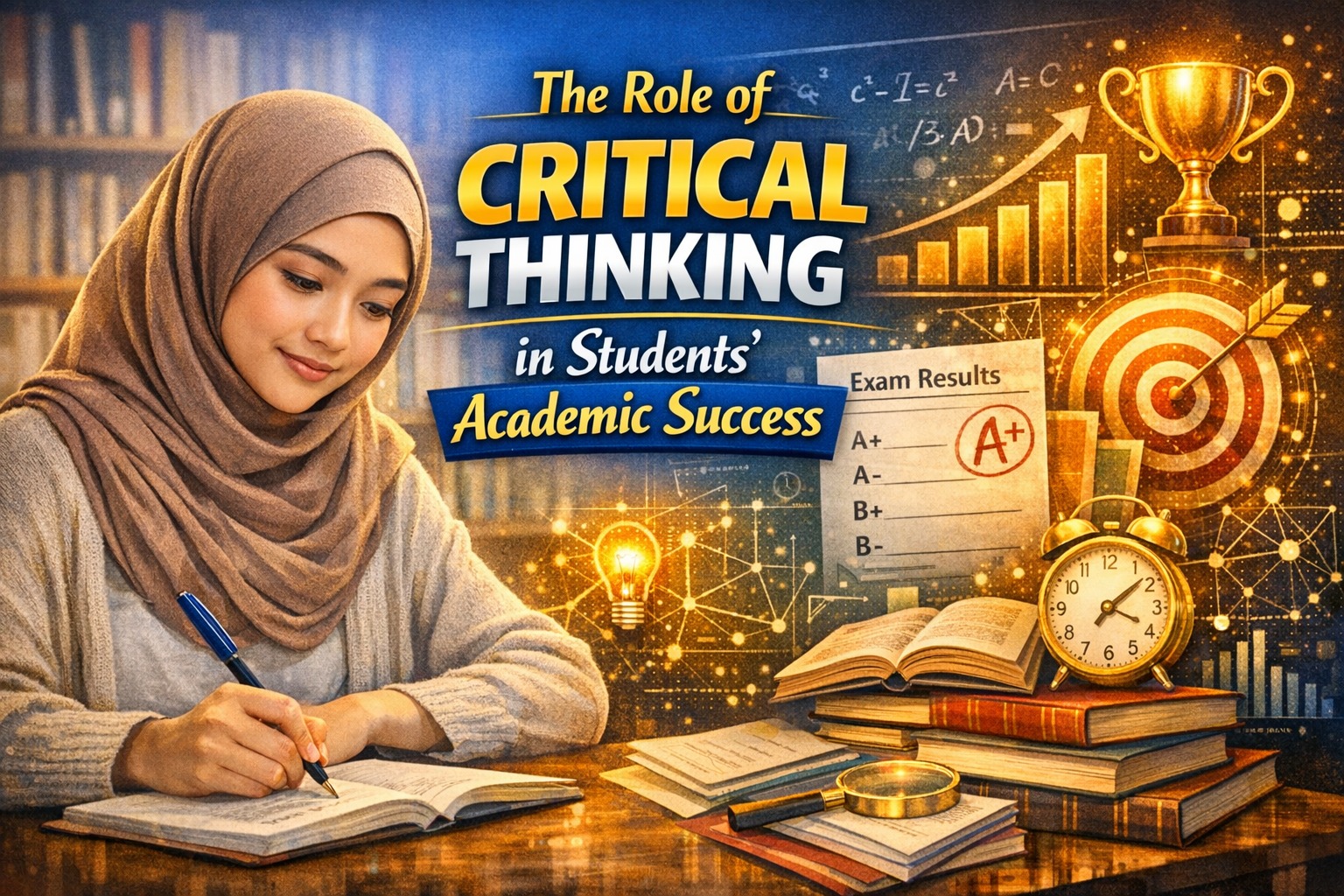
Academic success in higher education is not determined solely by how much information students memorize, but by how well they understand, analyze, and apply knowledge. Universities encourage students to think independently, question ideas, and develop logical arguments. For this reason, critical thinking has become one of the most important skills for students who want to succeed academically. Critical thinking allows students to evaluate information carefully, connect different concepts, and develop deeper insights into the subjects they study. Critical thinking refers to the ability to analyze information objectively, assess arguments logically, and form conclusions based on evidence rather than assumptions. In the academic environment, this skill helps students move beyond surface-level understanding and develop a more comprehensive view of knowledge. Instead of simply repeating information from textbooks or lectures, students who think critically explore ideas more deeply and question the reasoning behind them.
CRITICAL THINKING AND DEEPER UNDERSTANDING OF KNOWLEDGE
One of the most significant contributions of critical thinking to academic success is its ability to deepen students’ understanding of complex concepts. In many university courses, students are required to analyze theories, interpret research findings, and evaluate different perspectives on a topic. These activities demand more than memorization; they require careful reasoning and thoughtful reflection.
Students who apply critical thinking in their studies tend to develop a stronger grasp of academic material because they actively engage with the content. They analyze the relationships between ideas, identify patterns, and question the assumptions behind certain theories. This approach encourages intellectual curiosity and helps students build a more meaningful connection with the subjects they study.
Moreover, critical thinking allows students to integrate knowledge from multiple disciplines. Many real-world problems cannot be solved using knowledge from only one field. By thinking critically, students learn to combine ideas from different academic areas and develop broader perspectives that enhance their overall understanding.
THE ROLE OF CRITICAL THINKING IN ACADEMIC TASKS
Critical thinking is also essential when students complete academic tasks such as writing essays, conducting research, and presenting arguments. In these activities, students must evaluate various sources of information, compare different viewpoints, and organize their ideas logically. Without critical thinking skills, it becomes difficult to create well-structured arguments or analyze complex topics effectively.
For example, when writing a research paper, students must examine academic literature, identify key arguments, and determine how those arguments relate to their own research question. This process requires careful evaluation of evidence and logical reasoning. Students who possess strong critical thinking abilities are better equipped to synthesize information and present their ideas clearly.
Critical thinking also improves classroom participation and discussion. Students who think critically tend to ask insightful questions, challenge ideas respectfully, and contribute meaningful perspectives during academic conversations. These interactions not only enhance their own learning but also enrich the learning experience for other students in the classroom.
CRITICAL THINKING AS A FOUNDATION FOR LIFELONG LEARNING
Another important aspect of critical thinking is its role in supporting lifelong learning. Education does not end when students graduate from university. In a world where knowledge and technology evolve rapidly, individuals must continue learning and adapting throughout their lives. Critical thinking enables students to approach new information with curiosity and analytical thinking.
Students who develop critical thinking skills are better prepared to evaluate new ideas, learn from different experiences, and adjust their understanding when presented with new evidence. This ability makes them more adaptable and open-minded in both academic and professional environments.
Furthermore, critical thinking encourages intellectual independence. Instead of relying solely on authority or popular opinion, critically minded individuals examine evidence and develop their own informed perspectives. This habit of thoughtful analysis is essential for making responsible decisions in both personal and professional contexts.
CONCLUSION
Critical thinking plays a crucial role in students’ academic success by enabling them to analyze information, evaluate arguments, and develop deeper understanding of the subjects they study. In higher education, where students are expected to think independently and engage with complex ideas, this skill becomes an essential component of effective learning.
By cultivating critical thinking abilities, students not only improve their academic performance but also develop the intellectual tools needed for lifelong learning and professional growth. As universities continue to prepare students for an increasingly complex world, critical thinking remains one of the most valuable skills that students can develop during their academic journey.
Tentang Penulis
Gusti Ayu Tita
Penulis — Universitas STEKOM
Penulis aktif yang berfokus pada isu-isu akademik, teknologi pendidikan, dan pengembangan sumber daya manusia di lingkungan kampus.