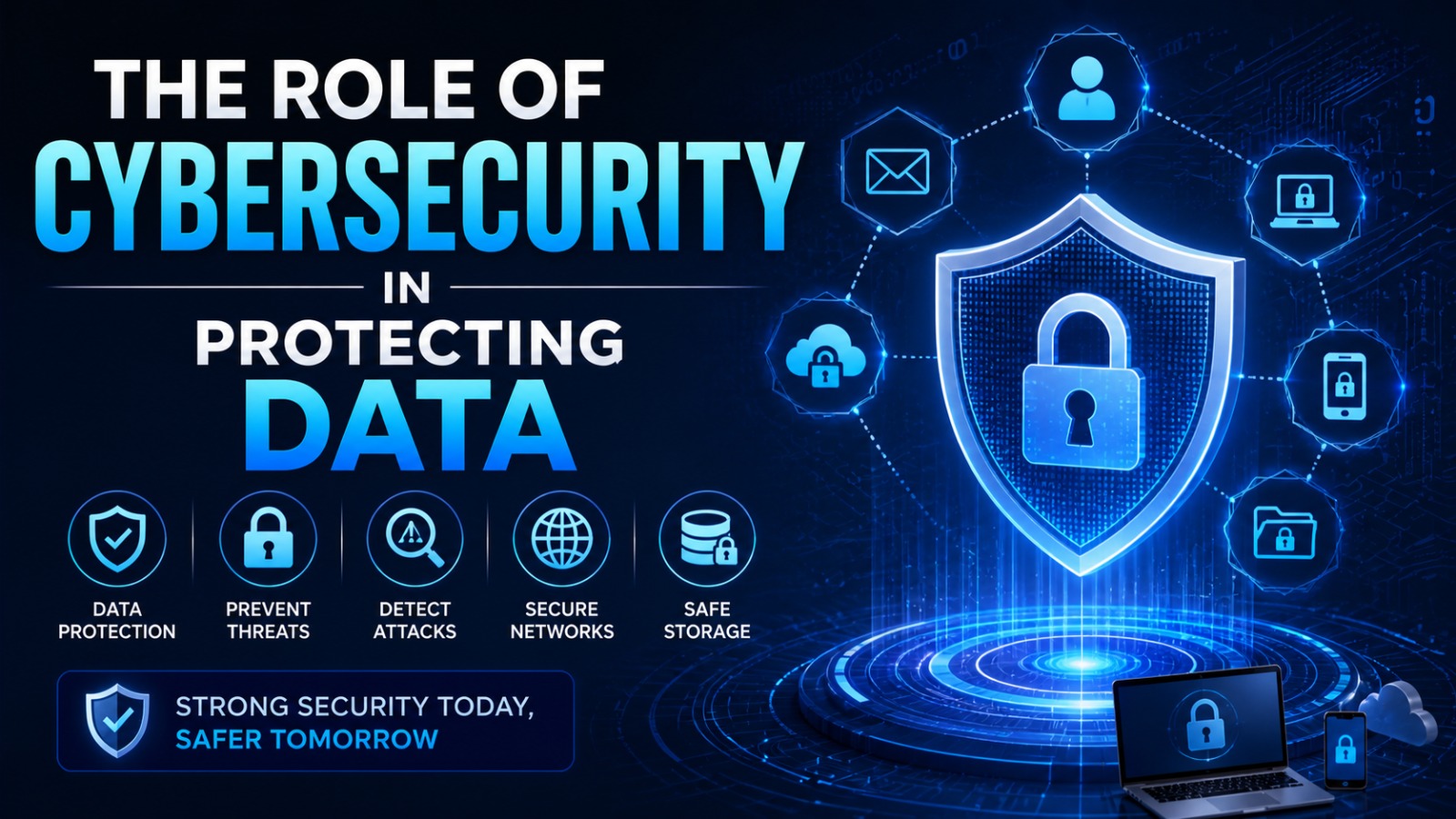
In an increasingly connected world, data has become one of the most valuable assets for individuals and organizations alike. As digital transformation accelerates, the risk of cyber threats continues to grow. Cybersecurity plays a critical role in safeguarding sensitive information, ensuring privacy, and maintaining trust in digital systems.
WHAT IS CYBERSECURITY?
Cybersecurity refers to the practice of protecting systems, networks, and data from digital attacks. These attacks often aim to access, alter, or destroy sensitive information, disrupt operations, or exploit vulnerabilities for financial gain.
Cybersecurity involves a combination of technologies, processes, and practices designed to defend against threats such as malware, phishing, ransomware, and unauthorized access.
IMPORTANCE OF DATA PROTECTION
Data protection is essential for maintaining business continuity and protecting user privacy. Organizations handle vast amounts of sensitive data, including personal information, financial records, and intellectual property.
A data breach can result in significant financial losses, reputational damage, and legal consequences. Therefore, implementing strong cybersecurity measures is not just a technical necessity but also a strategic priority.
COMMON CYBER THREATS
Understanding common cyber threats is the first step in building an effective defense strategy:
- Malware: Malicious software designed to damage or disrupt systems.
- Phishing: Fraudulent attempts to obtain sensitive information through deceptive emails or websites.
- Ransomware: Attacks that lock data and demand payment for its release.
- DDoS Attacks: Overwhelm systems with traffic, causing service disruptions.
These threats continue to evolve, making cybersecurity an ongoing challenge.
KEY CYBERSECURITY MEASURES
To protect data effectively, organizations must implement comprehensive security strategies:
- Encryption: Converts data into secure formats that cannot be easily read.
- Firewalls: Act as barriers between trusted and untrusted networks.
- Multi-Factor Authentication (MFA): Adds an extra layer of security beyond passwords.
- Regular Updates: Ensures systems are protected against known vulnerabilities.
These measures help reduce the risk of unauthorized access and data breaches.
ROLE IN BUSINESS CONTINUITY
Cybersecurity is essential for maintaining business operations. A successful cyberattack can disrupt services, halt production, and lead to significant downtime.
By implementing proactive security measures, organizations can detect threats early, respond quickly, and minimize damage. This resilience is crucial in maintaining customer trust and operational stability.
CYBERSECURITY IN DIFFERENT INDUSTRIES
Different sectors face unique cybersecurity challenges:
- Healthcare: Protects sensitive patient data and medical records.
- Finance: Secures transactions and prevents fraud.
- Retail: Safeguards customer payment information.
- Government: Protects national data and critical infrastructure.
Each industry must tailor its cybersecurity approach to address specific risks.
CHALLENGES IN CYBERSECURITY
Despite advancements, cybersecurity faces several challenges. The increasing sophistication of cyberattacks makes detection more difficult. Additionally, the shortage of skilled cybersecurity professionals creates gaps in defense capabilities.
Organizations must also balance security with usability, ensuring that protective measures do not hinder productivity.
FUTURE OF CYBERSECURITY
The future of cybersecurity will be shaped by emerging technologies such as artificial intelligence and machine learning. These tools can help identify patterns, detect anomalies, and respond to threats in real time.
As cyber threats continue to evolve, cybersecurity strategies must adapt to stay ahead. Continuous innovation and awareness will be key to protecting data in the digital age.
CONCLUSION
Cybersecurity is a fundamental component of modern digital infrastructure. It plays a vital role in protecting data, ensuring privacy, and maintaining trust in online systems.
By understanding potential threats and implementing robust security measures, organizations can safeguard their data and operate with confidence in an increasingly complex digital environment.
Tentang Penulis
Gusti Ayu Tita
Penulis — Universitas STEKOM
Penulis aktif yang berfokus pada isu-isu akademik, teknologi pendidikan, dan pengembangan sumber daya manusia di lingkungan kampus.