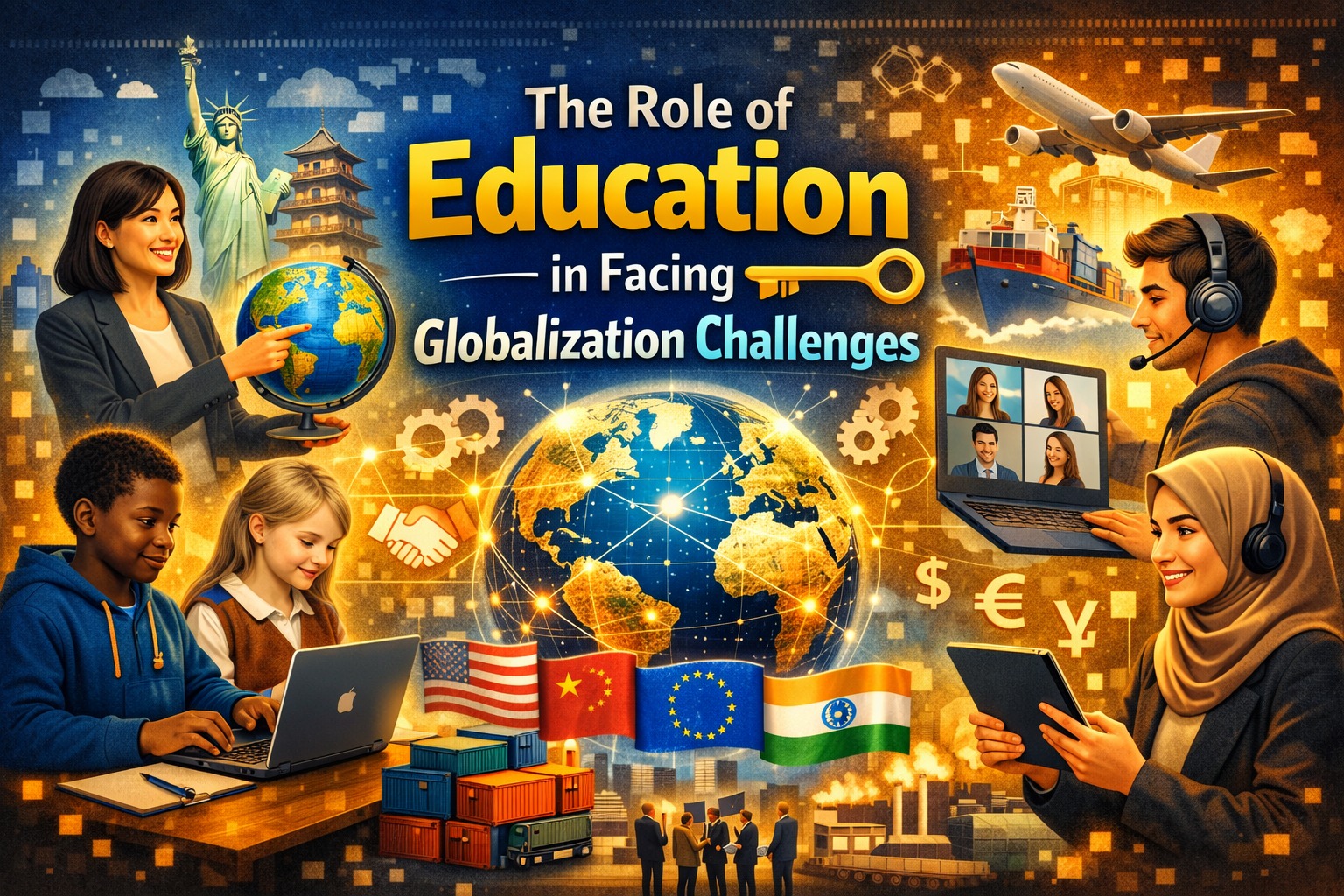
In today’s interconnected world, globalization has transformed how societies operate, communicate, and compete. Education stands as the most powerful tool to help individuals and nations adapt to these changes. It equips people with the knowledge, skills, and values needed to thrive in a global environment that demands innovation, collaboration, and cultural understanding.
UNDERSTANDING GLOBALIZATION AND ITS IMPACT
Globalization connects economies, cultures, and technologies across borders. While it offers opportunities for growth and exchange, it also presents challenges such as economic inequality, cultural erosion, and job displacement. Education helps individuals understand these dynamics and prepares them to respond effectively through critical thinking and global awareness.
EDUCATION AS A BRIDGE BETWEEN CULTURES
One of the most significant roles of education in globalization is fostering intercultural understanding. Schools and universities encourage students to appreciate diversity, learn foreign languages, and engage in international collaboration. This cultural competence builds tolerance and empathy—qualities essential for peaceful coexistence in a global society.
DEVELOPING SKILLS FOR THE GLOBAL WORKFORCE
The modern workforce requires more than technical expertise; it demands adaptability, communication, and problem-solving skills. Education systems must evolve to include digital literacy, entrepreneurship, and global citizenship. By doing so, learners become capable of navigating complex global markets and contributing to sustainable development.
EDUCATION AND TECHNOLOGY IN THE GLOBAL ERA
Technology plays a crucial role in connecting people worldwide. Online learning platforms, virtual classrooms, and digital resources make education accessible to all. Through technology, students can collaborate internationally, share ideas, and innovate together—breaking barriers that once limited global participation.
PREPARING FUTURE GENERATIONS FOR GLOBAL RESPONSIBILITY
Education instills a sense of responsibility toward global issues such as climate change, poverty, and inequality. By integrating global perspectives into curricula, educators empower students to become proactive problem-solvers who contribute positively to humanity’s shared future.
Conclusion
Education is not just a means of personal advancement—it is the foundation for global progress. In facing the challenges of globalization, education enables individuals to think critically, act ethically, and collaborate across cultures. It is the key to building a world that values unity, innovation, and sustainability.
Globalization, Education, Cultural Understanding, Global Workforce, Technology
Tentang Penulis
Gusti Ayu Tita
Penulis — Universitas STEKOM
Penulis aktif yang berfokus pada isu-isu akademik, teknologi pendidikan, dan pengembangan sumber daya manusia di lingkungan kampus.