
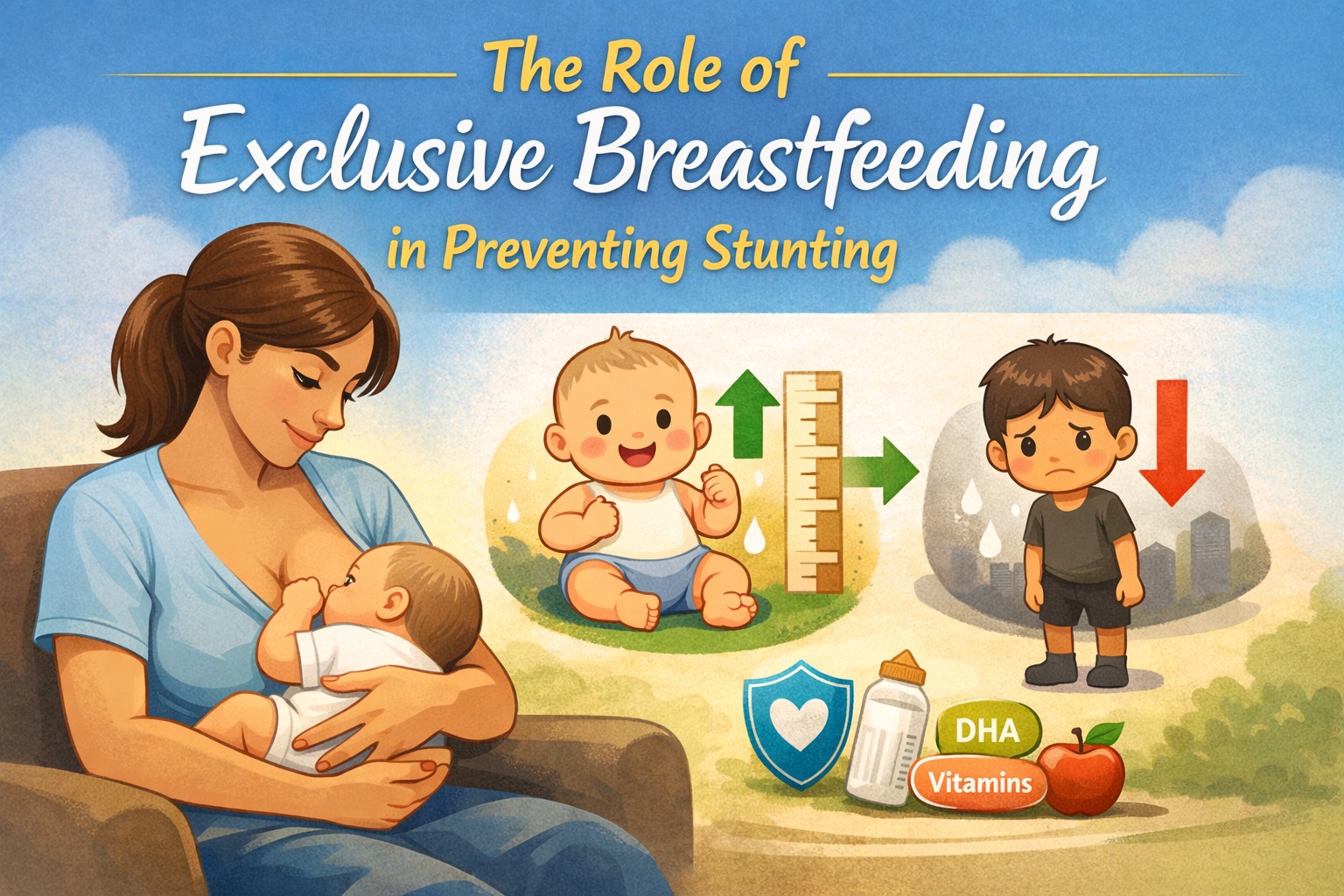
Stunting remains one of the most serious health challenges affecting children worldwide. This condition occurs when a child experiences impaired growth and development due to chronic malnutrition, repeated infections, and inadequate care during the early stages of life. One of the most effective ways to reduce the risk of stunting is through exclusive breastfeeding. Providing only breast milk for the first six months of life gives infants the essential nutrients needed for optimal growth and development.
Exclusive breastfeeding not only supports physical growth but also strengthens the immune system, improves cognitive development, and lowers the risk of various diseases. As awareness about child nutrition continues to grow, the importance of breastfeeding in preventing stunting becomes increasingly clear.
UNDERSTANDING STUNTING IN CHILDREN
Stunting is a condition where a child has a height that is below the standard for their age. This problem usually develops during the first 1,000 days of life, starting from pregnancy until the child reaches two years old. Poor nutrition during this critical period can have long-term effects on physical growth, brain development, and future productivity.
Children affected by stunting may experience learning difficulties, weaker immune systems, and a higher risk of chronic diseases later in life. Therefore, preventing stunting is essential for creating a healthier and more productive generation.
THE IMPORTANCE OF EXCLUSIVE BREASTFEEDING
Exclusive breastfeeding means giving babies only breast milk for the first six months without additional food or drinks, including water. Breast milk contains complete nutrients that are perfectly designed to meet an infant’s needs.
Breast milk provides proteins, vitamins, fats, and antibodies that support healthy growth. It is also easier to digest compared to formula milk, making it ideal for newborns and infants. Mothers who exclusively breastfeed their babies help ensure that children receive balanced nutrition during their most important growth stage.
HOW BREASTFEEDING HELPS PREVENT STUNTING
Exclusive breastfeeding plays a major role in preventing stunting in several ways:
PROVIDING COMPLETE NUTRITION
Breast milk contains all the nutrients required for a baby’s growth and development. Proper nutrition helps babies gain weight and height according to their age standards.
STRENGTHENING THE IMMUNE SYSTEM
Babies who receive breast milk are less likely to suffer from infections such as diarrhea and respiratory diseases. Frequent illness can interfere with nutrient absorption and contribute to stunting.
SUPPORTING BRAIN DEVELOPMENT
Breast milk contains essential fatty acids that help improve brain function and cognitive development. Children who are properly nourished during infancy often perform better academically in the future.
IMPROVING DIGESTIVE HEALTH
Exclusive breastfeeding promotes healthy digestion and supports the development of beneficial gut bacteria. A healthy digestive system allows nutrients to be absorbed more effectively.
CHALLENGES IN EXCLUSIVE BREASTFEEDING
Although breastfeeding provides many benefits, some mothers face difficulties in maintaining exclusive breastfeeding for six months. Common challenges include lack of knowledge, limited maternity leave, social pressure, and health problems.
Support from family members, healthcare workers, and workplaces is very important in helping mothers continue breastfeeding successfully. Education programs and breastfeeding-friendly environments can also increase awareness and confidence among new mothers.
THE ROLE OF FAMILY AND COMMUNITY
Preventing stunting is not only the responsibility of mothers. Families and communities also play an important role in supporting child nutrition. Fathers can assist mothers emotionally and physically during the breastfeeding period. Communities can provide educational programs about maternal and child health.
Healthcare services should continue promoting breastfeeding campaigns and regular health monitoring for children. Strong collaboration between families, communities, and health institutions can significantly reduce stunting rates.
CONCLUSION
Exclusive breastfeeding is one of the most effective and natural ways to prevent stunting in children. By providing complete nutrition, strengthening immunity, and supporting healthy development, breast milk helps children grow stronger and healthier during their critical early years.
Increasing awareness about the importance of exclusive breastfeeding can help create a healthier future generation. With proper support from families, communities, and healthcare providers, the risk of stunting can be greatly reduced, allowing children to reach their full potential.
Tentang Penulis
Gusti Ayu Tita
Penulis — Universitas STEKOM
Penulis aktif yang berfokus pada isu-isu akademik, teknologi pendidikan, dan pengembangan sumber daya manusia di lingkungan kampus.



