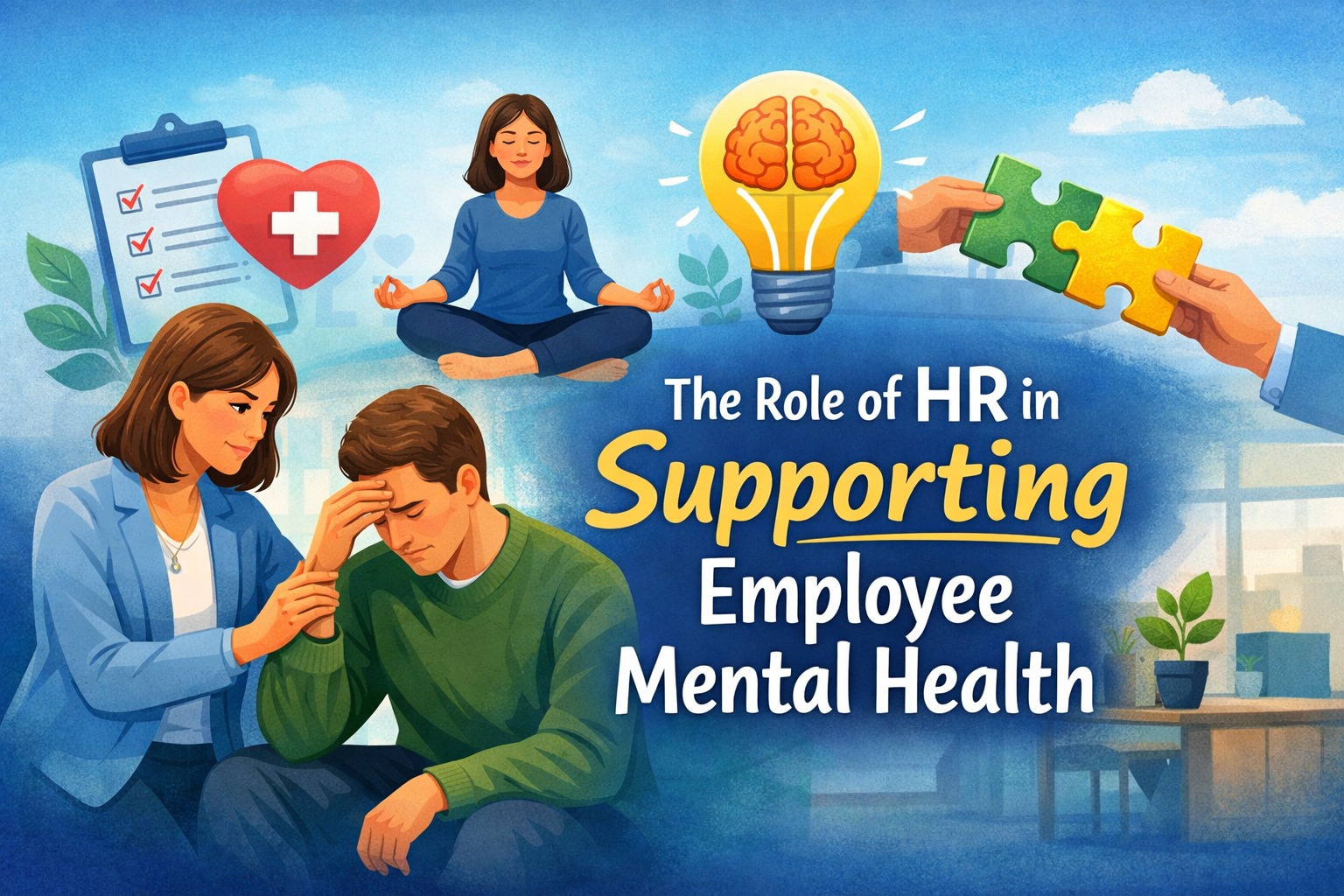
Employee mental health has become a critical factor in modern organizational success. In today’s fast-paced and highly competitive work environment, employees often face pressure, long working hours, and increasing expectations. These conditions can lead to stress, burnout, and decreased productivity if not properly managed.
Human Resources (HR) plays a key role in creating a healthy work environment where employees feel supported both professionally and emotionally. By prioritizing mental health, companies can build stronger, more engaged, and more resilient teams.
HR RESPONSIBILITIES IN SUPPORTING EMPLOYEE WELL-BEING
HR departments are not only responsible for recruitment and administrative tasks but also for ensuring employee well-being. One of their main responsibilities is to create policies that promote psychological safety in the workplace.
This includes developing anti-bullying policies, ensuring fair workload distribution, and encouraging open communication between employees and management. HR also acts as a bridge between employees and leadership, helping to identify early signs of stress or mental health challenges before they become serious issues.
STRATEGIES HR CAN IMPLEMENT FOR MENTAL HEALTH SUPPORT
To effectively support employee mental health, HR can implement various practical strategies. One of the most effective approaches is providing access to counseling services or Employee Assistance Programs (EAPs). These programs give employees a safe space to seek professional help when needed.
Additionally, HR can organize wellness programs such as stress management workshops, mindfulness training, and flexible working arrangements. Encouraging work-life balance is also essential, as it helps employees reduce burnout and maintain productivity over time. Creating a culture of openness where mental health discussions are normalized is another powerful strategy.
BENEFITS OF PRIORITIZING MENTAL HEALTH IN ORGANIZATIONS
When companies invest in employee mental health, they experience significant long-term benefits. A supportive environment leads to higher job satisfaction, increased employee retention, and improved overall performance. Employees who feel valued and supported are more likely to stay loyal to the organization.
Moreover, a strong focus on mental health reduces absenteeism and workplace conflicts. It also enhances creativity and collaboration, allowing teams to perform more effectively and innovate with confidence.
CONCLUSION
The role of HR in supporting employee mental health is essential in building a sustainable and productive workplace. By implementing supportive policies, offering mental health resources, and fostering an open culture, HR can significantly improve both employee well-being and organizational performance. Companies that prioritize mental health are more likely to thrive in the long run and maintain a competitive advantage in their industry.
Tentang Penulis
Gusti Ayu Tita
Penulis — Universitas STEKOM
Penulis aktif yang berfokus pada isu-isu akademik, teknologi pendidikan, dan pengembangan sumber daya manusia di lingkungan kampus.