
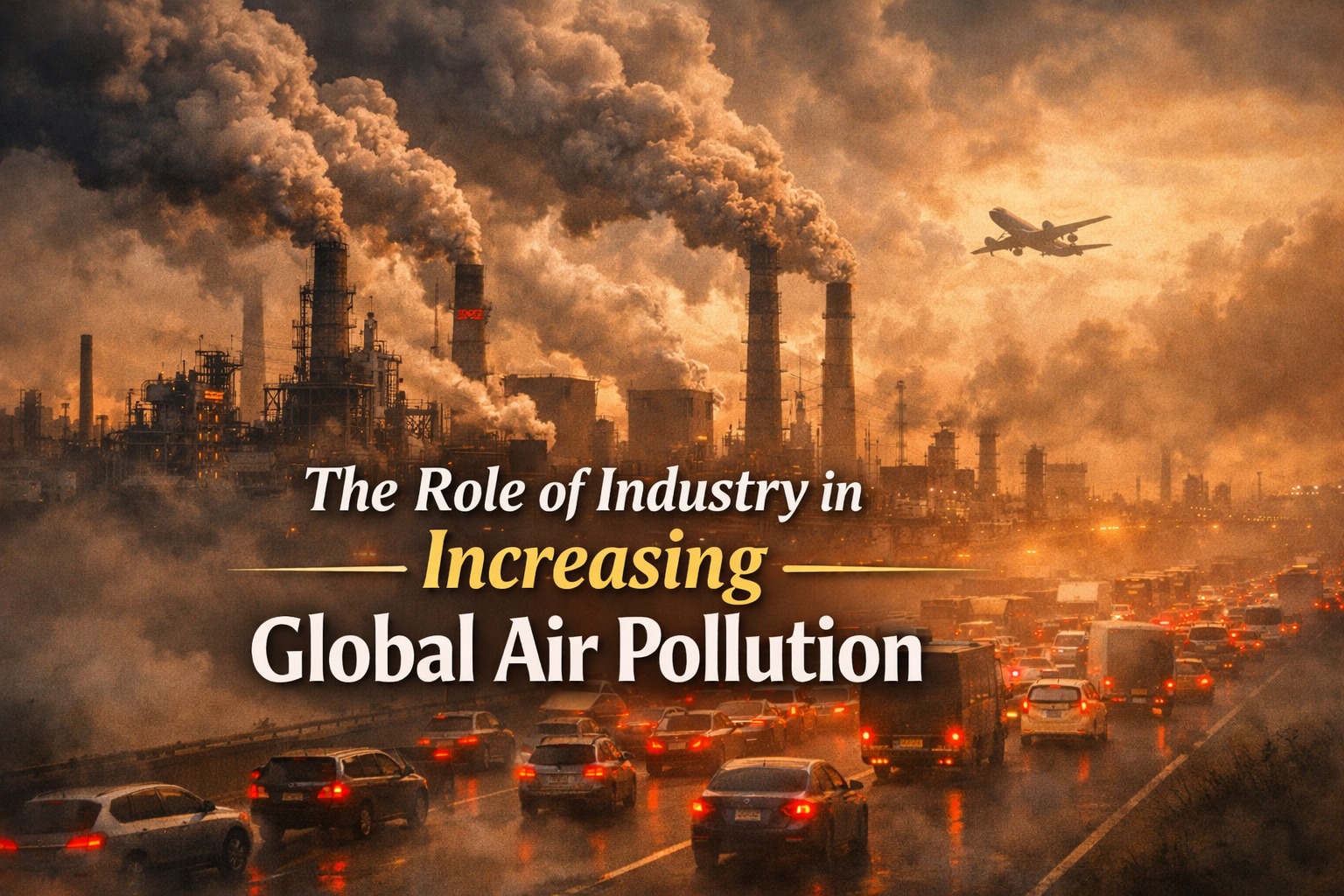
Air pollution has become one of the biggest environmental challenges in the modern world. Rapid industrial growth has improved economies, created jobs, and increased production capacity in many countries. However, industrial activities also contribute significantly to global air pollution. Factories, power plants, mining operations, and manufacturing industries release harmful gases and particles into the atmosphere every day. These emissions not only damage the environment but also threaten human health and global climate stability.
HOW INDUSTRIAL ACTIVITIES CAUSE AIR POLLUTION
Industries rely heavily on burning fossil fuels such as coal, oil, and natural gas to power machines and produce goods. During these processes, large amounts of pollutants are released into the air. Common industrial pollutants include carbon dioxide, sulfur dioxide, nitrogen oxides, and particulate matter.
Factories involved in cement production, steel manufacturing, chemical processing, and energy generation are among the largest contributors to air pollution. Smoke from industrial chimneys often contains toxic substances that spread across cities and rural areas. In many developing countries, weak environmental regulations make the problem even worse.
MAJOR TYPES OF INDUSTRIAL AIR POLLUTANTS
Industrial pollution includes several dangerous substances that negatively affect the environment and public health. Carbon dioxide is one of the main greenhouse gases responsible for global warming. Sulfur dioxide contributes to acid rain, which damages forests, rivers, and buildings.
Nitrogen oxides play a major role in forming smog and ground-level ozone. Meanwhile, fine particulate matter can enter human lungs and bloodstream, increasing the risk of respiratory diseases, heart problems, and lung cancer. Toxic chemicals released from industrial waste may also contaminate nearby ecosystems and agricultural land.
IMPACT OF INDUSTRIAL POLLUTION ON HUMAN HEALTH
The increase in industrial air pollution has serious health consequences for people worldwide. Communities living near factories are often exposed to unhealthy air every day. Long-term exposure to polluted air can cause asthma, bronchitis, chronic lung disease, and cardiovascular disorders.
Children and elderly individuals are especially vulnerable because their immune systems are weaker. According to environmental experts, millions of premature deaths each year are linked to poor air quality. Industrial pollution also reduces overall quality of life by creating dirty environments and unpleasant living conditions.
EFFECTS ON CLIMATE CHANGE AND THE ENVIRONMENT
Industrial emissions play a major role in accelerating climate change. Greenhouse gases trap heat in the atmosphere, causing global temperatures to rise. As a result, the world experiences more extreme weather events such as heatwaves, floods, storms, and droughts.
Air pollution from industries also harms biodiversity. Forests, lakes, and oceans can suffer severe damage due to acid rain and chemical contamination. In addition, excessive industrial emissions reduce air visibility and contribute to the formation of thick smog in urban areas.
SOLUTIONS TO REDUCE INDUSTRIAL AIR POLUTION
Governments, companies, and society must work together to reduce industrial air pollution. One effective solution is transitioning to renewable energy sources such as solar, wind, and hydroelectric power. Industries can also install modern filtration systems to reduce harmful emissions from factories.
Stricter environmental regulations and regular monitoring are essential to ensure industries follow clean production standards. Recycling, energy efficiency, and sustainable manufacturing practices can further minimize pollution levels. Public awareness and international cooperation are also important in encouraging industries to adopt environmentally friendly technologies.
CONCLUSION
Industry plays a significant role in increasing global air pollution through the release of harmful gases and toxic particles. While industrial development supports economic growth, it also creates serious environmental and health challenges. Without proper control, industrial emissions will continue to worsen climate change and threaten public well-being. By adopting cleaner technologies and sustainable practices, industries can help create a healthier and safer future for the planet.
Tentang Penulis
Gusti Ayu Tita
Penulis — Universitas STEKOM
Penulis aktif yang berfokus pada isu-isu akademik, teknologi pendidikan, dan pengembangan sumber daya manusia di lingkungan kampus.



