
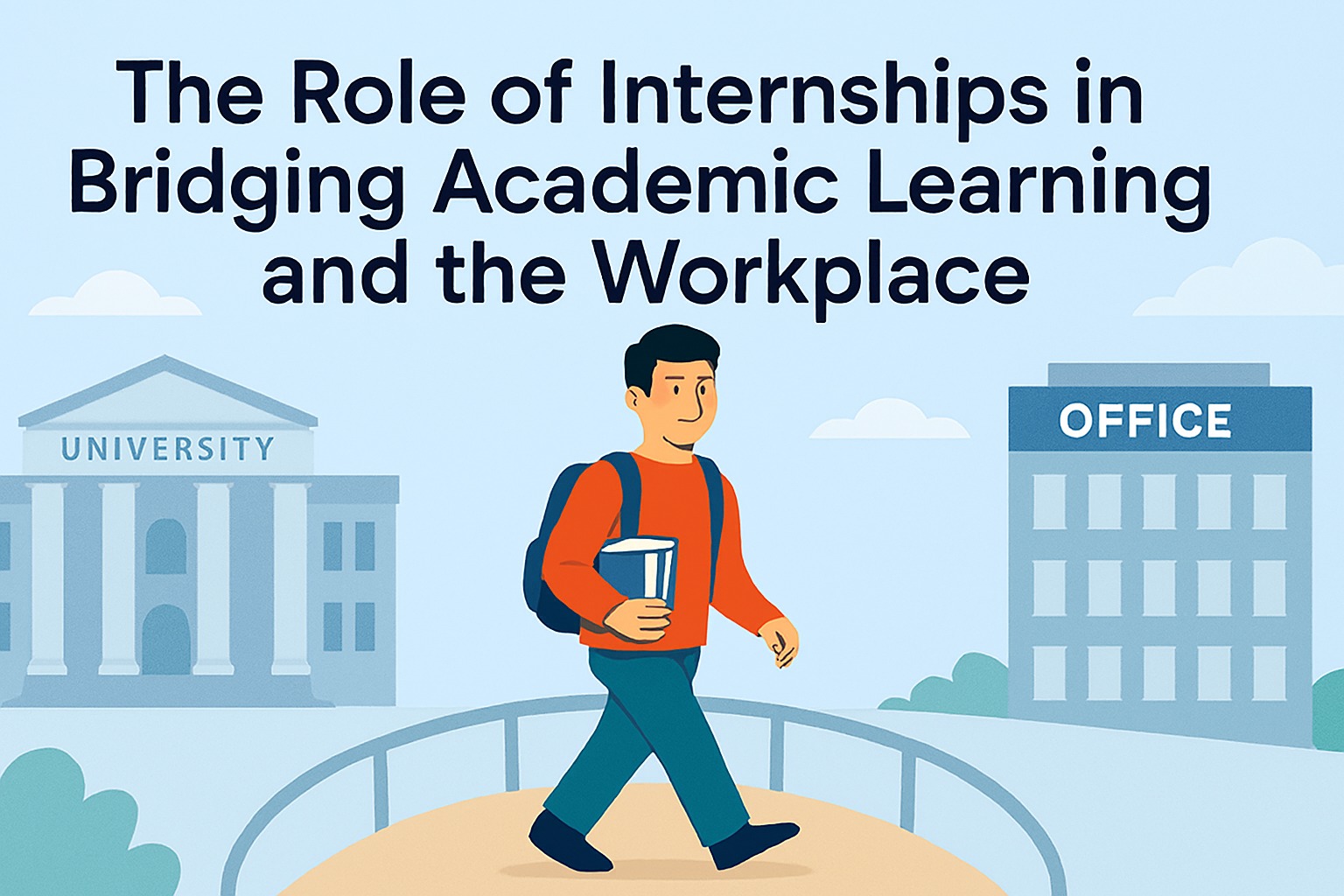
In today’s competitive job market, academic knowledge alone is no longer enough to prepare students for professional careers. Employers increasingly expect graduates to possess not only strong theoretical understanding but also practical skills and workplace awareness. This is where internships play a vital role in bridging academic learning and the workplace. Internships provide students with real-world exposure that complements classroom education. By experiencing professional environments firsthand, students gain insights into how academic concepts are applied in practical settings, making the transition from campus to career smoother and more effective.
INTERNSHIPS AS A PRACTICAL LEARNING PLATFORM
Internships offer students the opportunity to apply theoretical knowledge to real tasks and projects. Instead of learning concepts in isolation, students see how theories function within actual work processes.
Through internships, students can:
- Apply academic concepts in real situations
- Understand workplace standards and expectations
- Learn industry-specific tools and methods
This hands-on approach makes learning more relevant and engaging.
BRIDGING THE GAP BETWEEN THEORY AND REALITY
One of the biggest challenges for graduates is the gap between academic learning and workplace demands. Internships help close this gap by exposing students to real challenges that cannot be fully replicated in classrooms.
By participating in internships, students learn to:
- Adapt theoretical knowledge to practical problems
- Respond to real-time challenges and deadlines
- Develop solutions within professional constraints
This experience strengthens both understanding and readiness for work.
DEVELOPING ESSENTIAL WORKPLACE SKILLS
Internships are not only about technical skills. They also help students develop essential soft skills that are highly valued by employers.
Key skills developed through internships include:
- Professional communication
- Teamwork and collaboration
- Time management and responsibility
These skills prepare students to function effectively in diverse workplace environments.
BUILDING CONFIDENCE AND PROFESSIONAL IDENTITY
Working in a real organization helps students build confidence and develop a professional identity. Internships allow students to experience workplace culture, expectations, and responsibilities firsthand.
As a result, students become:
- More confident in their abilities
- More aware of their career interests
- Better prepared for professional challenges
This confidence plays a crucial role in successful career transitions.
ENHANCING EMPLOYABILITY AND CAREER PROSPECTS
Internships significantly improve students’ employability. Employers often view internship experience as evidence of job readiness and commitment to professional development.
Benefits of internships for career prospects include:
- Stronger resumes and portfolios
- Better performance in job interviews
- Higher chances of receiving job offers
In many cases, internships serve as a pathway to full-time employment.
THE ROLE OF UNIVERSITIES AND EMPLOYERS
Universities and employers share responsibility in maximizing the impact of internships. Academic institutions must design internship programs that align with learning outcomes, while employers should provide meaningful tasks and mentorship.
Effective collaboration ensures that internships:
- Support academic goals
- Provide valuable professional experience
- Benefit both students and organizations
Such partnerships strengthen the overall education-to-work pipeline.
CONCLUSION
Internships play a critical role in bridging academic learning and the workplace. By combining theoretical knowledge with real-world experience, internships help students develop practical skills, professional confidence, and career readiness. As the demands of the job market continue to evolve, internships remain one of the most effective ways to prepare students for successful professional futures.
Tentang Penulis
Gusti Ayu Tita
Penulis — Universitas STEKOM
Penulis aktif yang berfokus pada isu-isu akademik, teknologi pendidikan, dan pengembangan sumber daya manusia di lingkungan kampus.



