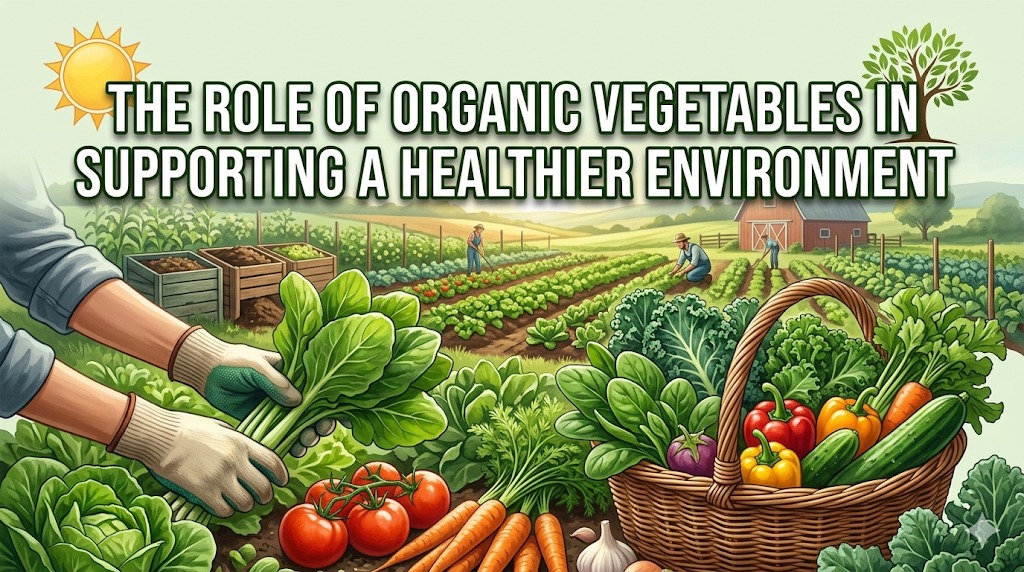
In recent years, the demand for organic vegetables has grown significantly as more people become aware of environmental and health issues. Organic farming practices prioritize sustainability, soil health, and ecological balance, making them an important solution for reducing environmental damage caused by conventional agriculture.
By choosing organic vegetables, individuals not only improve their personal well-being but also contribute to a healthier planet. This article explores how organic vegetables play a key role in supporting environmental sustainability.
REDUCING CHEMICAL POLLUTION
One of the primary advantages of organic vegetables is the absence of synthetic pesticides and fertilizers. Conventional farming often relies on chemical inputs that can contaminate soil, water, and air.
Organic farming avoids these harmful substances, reducing pollution and protecting ecosystems. This helps maintain cleaner natural resources and minimizes risks to wildlife and human health.
IMPROVING SOIL HEALTH
Healthy soil is the foundation of sustainable agriculture. Organic farming practices such as composting, crop rotation, and the use of natural fertilizers improve soil structure and fertility.
Rich, healthy soil retains water more effectively and supports beneficial microorganisms. This leads to long-term agricultural productivity without degrading the land.
SUPPORTING BIODIVERSITY
Organic farms often promote greater biodiversity compared to conventional farms. By avoiding harmful chemicals, they create safer habitats for insects, birds, and other wildlife.
Increased biodiversity helps maintain ecological balance and supports essential processes such as pollination and pest control.
REDUCING CARBON FOOTPRINT
Organic farming methods can help reduce greenhouse gas emissions. Practices like composting and reduced reliance on synthetic fertilizers lower energy consumption and carbon output.
Additionally, healthier soil can store more carbon, contributing to climate change mitigation.
PROMOTING SUSTAINABLE WATER USE
Organic farming encourages efficient water management and reduces water contamination. Without chemical runoff, nearby rivers and groundwater remain cleaner and safer.
Better soil structure also allows water to be absorbed and retained more effectively, reducing waste and supporting sustainable use.
CHALLENGES AND FUTURE OPPORTUNITIES
Despite its benefits, organic farming faces challenges such as higher production costs and limited availability. However, increasing consumer demand and technological advancements are helping expand organic agriculture.
With proper support, organic vegetables can become a mainstream solution for sustainable food systems.
CONCLUSION
Organic vegetables play a vital role in creating a healthier environment. From reducing pollution to improving soil and supporting biodiversity, their benefits extend far beyond individual health.
Choosing organic products is a simple yet powerful step toward environmental sustainability. By supporting organic farming, we contribute to a cleaner, greener, and more balanced planet.
Tentang Penulis
Gusti Ayu Tita
Penulis — Universitas STEKOM
Penulis aktif yang berfokus pada isu-isu akademik, teknologi pendidikan, dan pengembangan sumber daya manusia di lingkungan kampus.