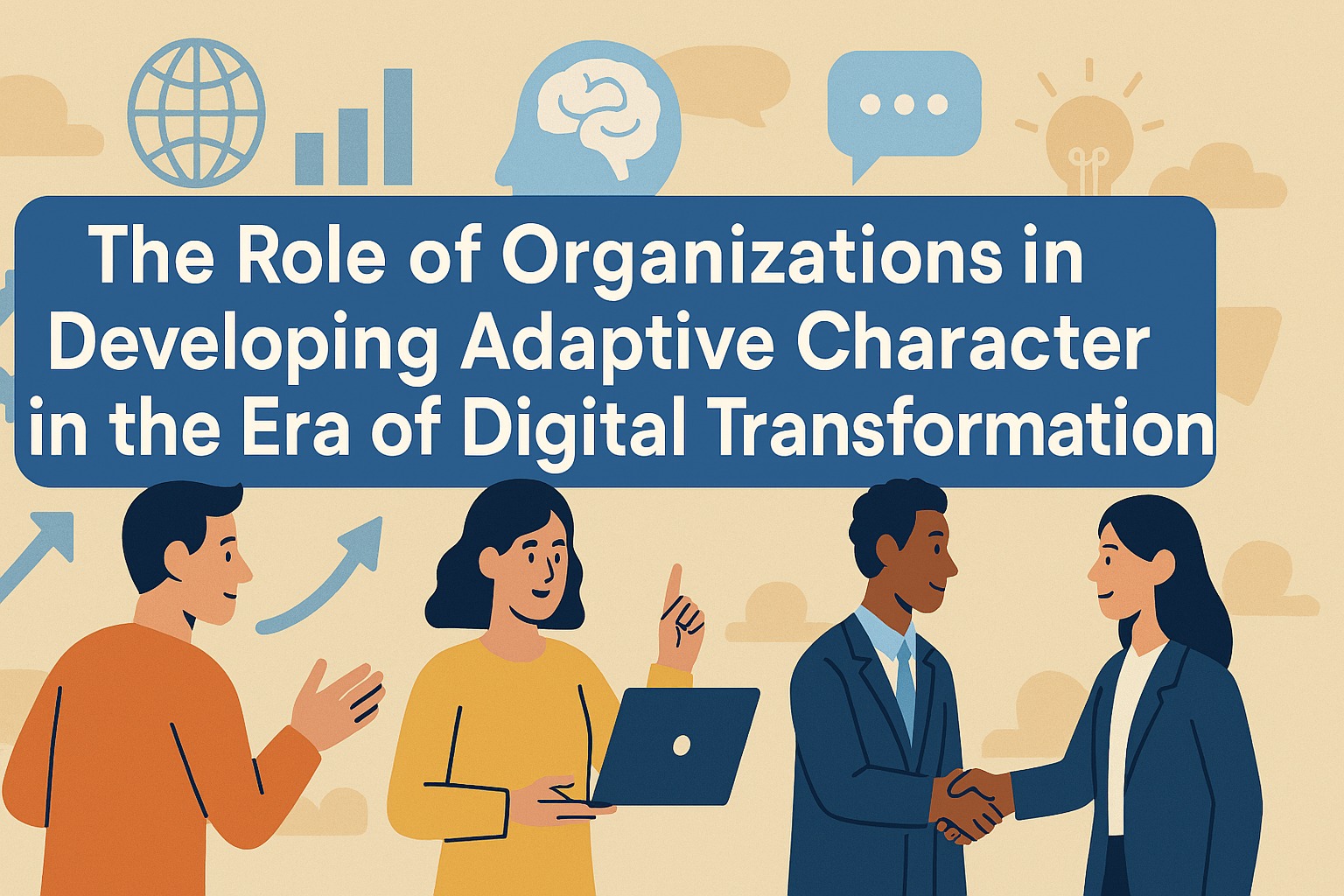
In the era of digital transformation, the ability to adapt has become one of the most critical competencies for personal and professional success. Rapid technological advancements, shifting work models, and evolving communication patterns demand individuals who are flexible, innovative, and resilient. Organizations play a significant role in developing adaptive character by providing experiential learning environments that simulate real-world complexity.Through active participation in organizations, individuals learn how to navigate uncertainty, respond to change, and collaborate effectively in dynamic settings. These experiences shape adaptive character traits that are essential in the digital age.
DIGITAL TRANSFORMATION AND THE NEED FOR ADAPTIVE CHARACTER
Digital transformation has reshaped industries, education systems, and social interaction. Automation, artificial intelligence, and digital communication tools require individuals to continuously update their skills and mindset.
Adaptive character refers to the ability to remain open to change, think critically, and adjust strategies when facing new challenges. Without adaptability, individuals risk being left behind in rapidly evolving environments.
Organizations provide a microcosm of this transformation. Program adjustments, leadership transitions, and technological integration within organizational activities mirror real-world disruptions. This makes organizations an ideal training ground for developing flexibility and resilience.
ORGANIZATIONAL EXPERIENCE AS A LABORATORY FOR CHANGE MANAGEMENT
Organizational dynamics often involve unexpected challenges, such as event restructuring, budget limitations, or shifts in team composition. Members must quickly assess situations and find effective solutions.
By engaging in planning, problem-solving, and evaluation processes, individuals learn practical change management skills. They develop the capacity to remain calm under pressure and adjust strategies without losing direction.
Furthermore, exposure to digital tools within organizations—such as project management platforms, virtual meetings, and digital campaigns—enhances technological literacy. This strengthens readiness for digital workplaces.
CULTIVATING INNOVATION AND COLLABORATIVE THINKING
Adaptive character is closely linked to innovation. Organizations encourage members to propose new ideas, improve systems, and experiment with creative solutions.
Through brainstorming sessions and collaborative projects, individuals practice critical thinking and constructive feedback. They learn to appreciate diverse perspectives and integrate multiple viewpoints into strategic decisions.
This collaborative culture fosters agility. When individuals are accustomed to teamwork and iterative improvement, they become more responsive to change and better prepared for complex professional environments.
STRENGTHENING RESILIENCE AND CONTINUOUS LEARNING
Digital transformation requires lifelong learning. Organizations nurture this mindset by exposing members to new responsibilities and evolving expectations.
Facing setbacks, such as unsuccessful events or unmet targets, teaches resilience. Instead of viewing failure as defeat, members learn to treat it as feedback for improvement.
This growth-oriented mindset strengthens emotional endurance and encourages continuous skill development. In the long term, individuals become proactive learners who can thrive amid uncertainty.
CONCLUSION
Organizations play a vital role in developing adaptive character in the era of digital transformation. Through dynamic experiences, technological engagement, and collaborative problem-solving, individuals cultivate flexibility, resilience, and innovation.
Active involvement in organizations prepares individuals to face rapid change with confidence and competence. In a world driven by digital disruption, adaptive character is not optional—it is essential for sustainable success.
Tentang Penulis
Gusti Ayu Tita
Penulis — Universitas STEKOM
Penulis aktif yang berfokus pada isu-isu akademik, teknologi pendidikan, dan pengembangan sumber daya manusia di lingkungan kampus.