
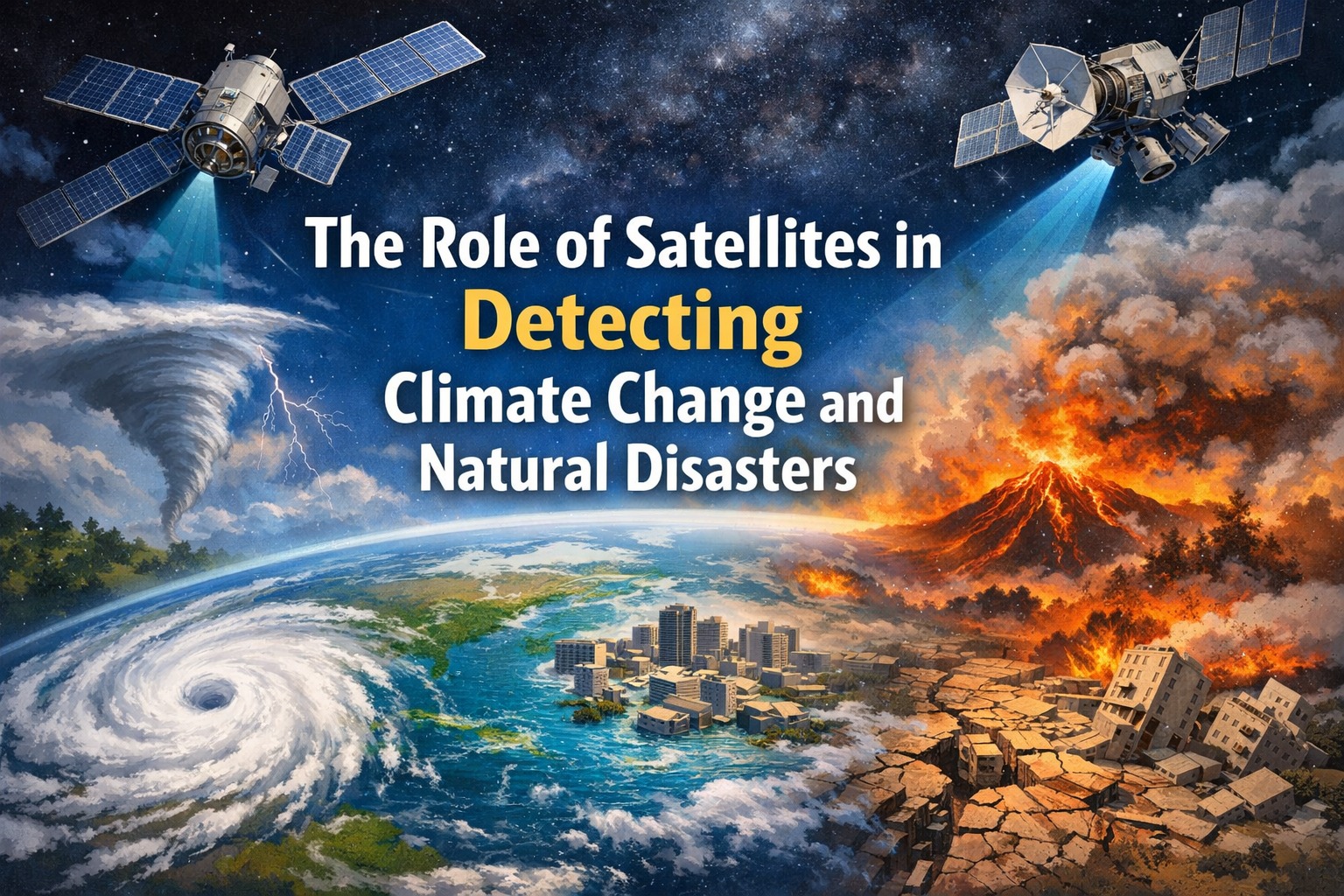
Satellites have become one of the most powerful tools in understanding our planet. From tracking global warming trends to detecting early signs of natural disasters, these advanced technologies play a critical role in safeguarding both the environment and human life. As climate change accelerates and disasters become more frequent, satellite technology continues to provide essential data that supports informed decision-making worldwide.
UNDERSTANDING SATELLITE TECHNOLOGY
Satellite technology refers to man-made objects placed in orbit around the Earth to collect and transmit information. These satellites are equipped with sensors that can monitor atmospheric conditions, land surface changes, ocean temperatures, and more. By continuously gathering data, satellites enable scientists to observe Earth systems in real time and over long periods.
There are different types of satellites, including weather satellites, communication satellites, and Earth observation satellites. Each serves a specific purpose, but all contribute valuable data that enhances our understanding of environmental changes.
MONITORING CLIMATE CHANGE FROM SPACE
One of the most important roles of satellites is monitoring climate change. Satellites measure key indicators such as global temperature, greenhouse gas concentrations, melting ice caps, and rising sea levels. This information helps scientists identify long-term trends and predict future environmental conditions.
For example, satellites can detect shrinking glaciers and polar ice, providing clear evidence of global warming. They also monitor deforestation and changes in vegetation, which are crucial factors influencing the Earth's climate system.
EARLY DETECTION OF NATURAL DISASTERS
Satellites play a vital role in the early detection of natural disasters such as hurricanes, earthquakes, floods, and wildfires. By observing weather patterns and environmental changes, satellites can provide early warnings that help reduce risks and save lives.
Weather satellites track storm development and movement, allowing authorities to issue timely evacuation orders. In the case of wildfires, satellites can identify hotspots and monitor fire spread, enabling faster emergency response.
IMPROVING DISASTER RESPONSE AND MANAGEMENT
Beyond detection, satellites are essential in disaster response and recovery efforts. They provide real-time imagery and data that help emergency teams assess damage, locate affected areas, and allocate resources effectively.
Satellite images can reveal flooded regions, collapsed infrastructure, and isolated communities. This information is critical for coordinating rescue operations and delivering aid where it is needed most.
SUPPORTING GLOBAL ENVIRONMENTAL POLICIES
Satellite data is widely used by governments and international organizations to develop environmental policies and strategies. Accurate and up-to-date information allows policymakers to make evidence-based decisions regarding climate action, conservation, and disaster preparedness.
Global cooperation is strengthened through shared satellite data, enabling countries to work together in addressing environmental challenges that cross national borders.
FUTURE OF SATELLITE TECHNOLOGY IN ENVIRONMENTAL PROTECTION
As technology continues to evolve, satellites are becoming more advanced, offering higher resolution images and more precise data. Innovations such as artificial intelligence and machine learning are enhancing the ability to analyze satellite data quickly and accurately.
In the future, satellites will play an even greater role in predicting environmental changes and mitigating the impact of natural disasters. Their contribution will be essential in building a more resilient and sustainable world.
CONCLUSION
Satellites are indispensable tools in detecting climate change and natural disasters. By providing real-time data and long-term insights, they help scientists, governments, and communities better understand and respond to environmental challenges. As global threats continue to grow, the importance of satellite technology in protecting our planet cannot be overstated.
Tentang Penulis
Gusti Ayu Tita
Penulis — Universitas STEKOM
Penulis aktif yang berfokus pada isu-isu akademik, teknologi pendidikan, dan pengembangan sumber daya manusia di lingkungan kampus.



