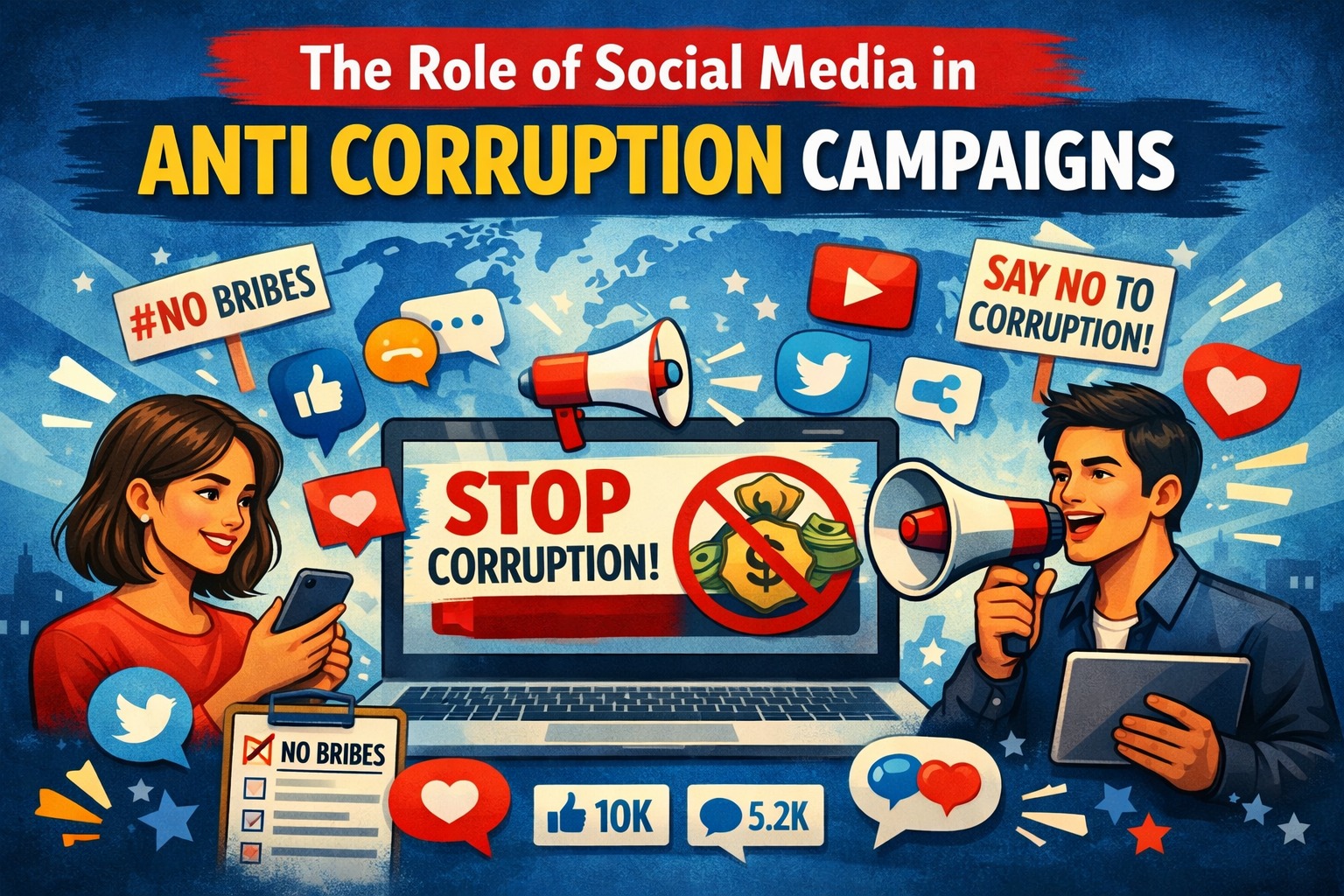
In the digital era, social media has become one of the most influential tools for spreading information and shaping public opinion. Platforms such as Facebook, Instagram, X, TikTok, and YouTube are no longer used only for entertainment and communication, but also for social movements and public awareness campaigns. One of the most significant movements supported by social media today is the fight against corruption.
Anti corruption campaigns have gained wider attention because social media allows information to spread quickly across communities and countries. Through creative content, online discussions, and public participation, social media helps encourage transparency, accountability, and justice in society.
HOW SOCIAL MEDIA SUPPORTS ANTI CORRUPTION MOVEMENTS
Social media provides an open space where people can share information related to corruption cases, government policies, and public accountability. Citizens can easily upload videos, reports, or evidence that expose unethical practices. As a result, corruption issues that were once hidden can quickly become public concerns.
In addition, hashtags and online campaigns make it easier for activists and organizations to unite people around the same cause. Viral campaigns often pressure authorities to investigate corruption cases more seriously. Public support through comments, shares, and online petitions also increases awareness and encourages collective action.
Another important role of social media is educating the younger generation about honesty and integrity. Educational posts, infographics, and short videos help explain the dangers of corruption in simple and engaging ways. This digital approach is especially effective because young people spend a significant amount of time online.
THE POWER OF DIGITAL COMMUNITIES
Digital communities formed through social media can strengthen anti corruption efforts. Online groups allow individuals from different backgrounds to exchange ideas, discuss solutions, and support transparency initiatives. Communities can organize webinars, discussions, and awareness programs without requiring physical meetings.
Furthermore, social media helps non governmental organizations and anti corruption institutions reach larger audiences at lower costs. Information that once depended on traditional media can now spread instantly to millions of users worldwide.
This connectivity also encourages collaboration between journalists, activists, and ordinary citizens. Together, they can monitor suspicious activities and demand accountability from public officials.
CHALLENGES OF USING SOCIAL MEDIA IN ANTI CORRUPTION CAMPAIGNS
Despite its many advantages, social media also faces several challenges in anti corruption campaigns. False information and misleading content can confuse the public and damage the credibility of genuine movements. In some cases, online discussions may spread rumors without proper evidence.
Another challenge is cyber intimidation. Activists and whistleblowers who expose corruption may experience online harassment or threats. Therefore, digital security and responsible communication are essential for maintaining safe and effective campaigns.
In addition, not all communities have equal access to the internet or digital literacy. This gap can limit the reach of anti corruption messages, especially in rural or underdeveloped areas.
STRATEGIES TO MAKE ANTI CORRUPTION CAMPAIGNS MORE EFFECTIVE
To maximize the impact of social media, anti corruption campaigns should focus on accurate information, creative storytelling, and public engagement. Visual content such as animations, posters, and short videos can attract more attention compared to plain text.
Campaign organizers should also collaborate with influencers, educators, and community leaders to spread positive messages about integrity and accountability. Interactive activities such as online challenges, quizzes, and live discussions can further increase participation.
Moreover, promoting digital literacy is important so people can identify reliable information and avoid spreading fake news. Responsible social media use will strengthen the credibility and effectiveness of anti corruption movements.
CONCLUSION
Social media has transformed the way anti corruption campaigns are conducted. It provides fast communication, broad public participation, and powerful educational opportunities. Through digital platforms, citizens can raise awareness, encourage transparency, and demand accountability from leaders and institutions.
Although challenges such as misinformation and cyber harassment still exist, responsible and strategic use of social media can strengthen the fight against corruption. In the future, social media will continue to play a major role in building a more honest, transparent, and accountable society.
Tentang Penulis
Gusti Ayu Tita
Penulis — Universitas STEKOM
Penulis aktif yang berfokus pada isu-isu akademik, teknologi pendidikan, dan pengembangan sumber daya manusia di lingkungan kampus.