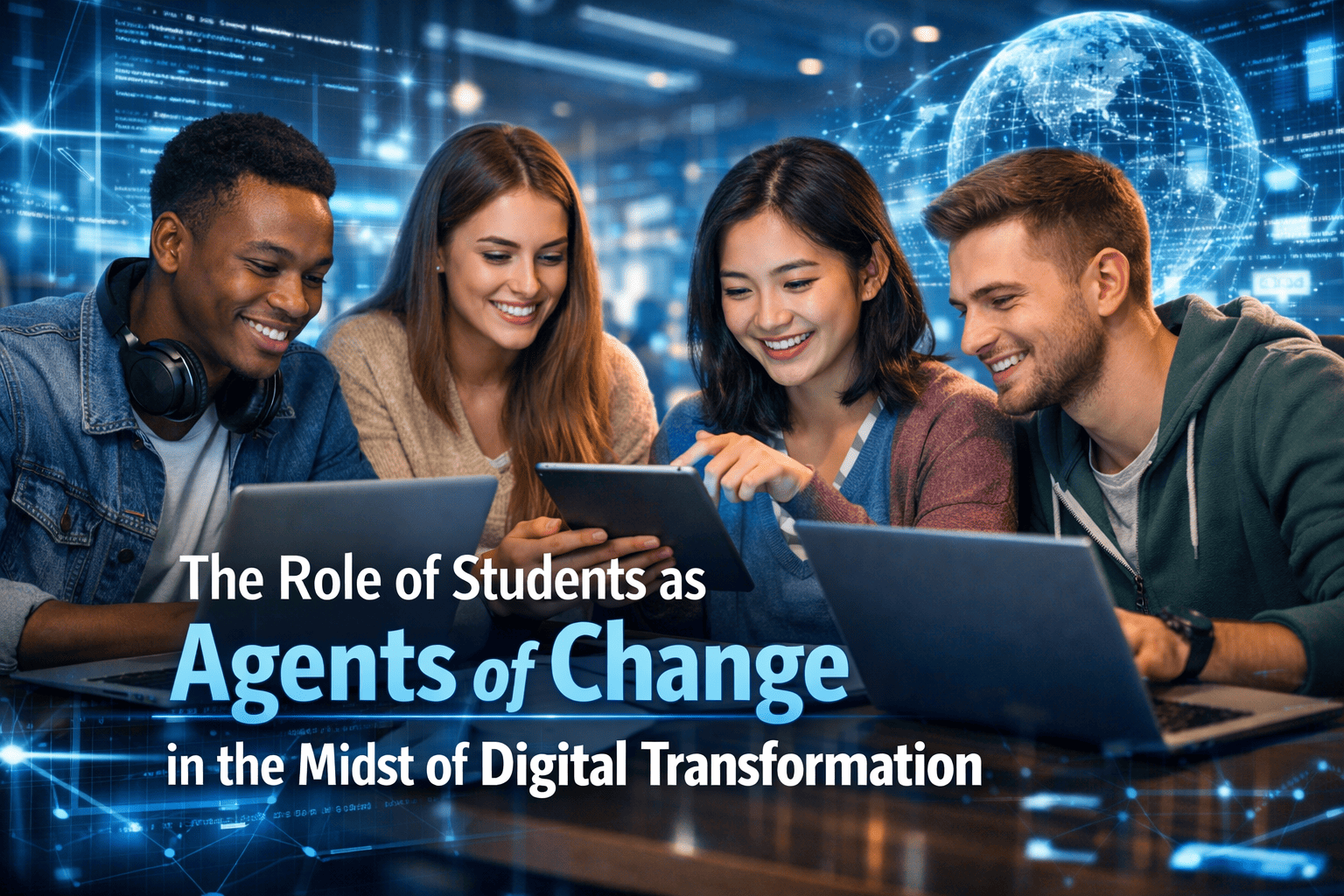
Digital transformation has reshaped almost every aspect of modern life. Technology now influences how people communicate, learn, work, and solve problems. The rapid development of the internet, artificial intelligence, and digital platforms has created new opportunities for innovation and social progress. In this changing environment, students play a crucial role as agents of change who can shape the future through knowledge, creativity, and responsible use of technology. Students occupy a unique position in society because they are part of the academic community while also being closely connected to the realities of social change. With access to education, research resources, and technological tools, students have the ability to generate ideas and initiatives that can respond to modern challenges. When these capabilities are directed toward positive goals, students can contribute significantly to the transformation of society in the digital age.
DIGITAL TRANSFORMATION AND ITS IMPACT ON EDUCATION
Digital transformation has significantly altered the way education is delivered and accessed. In the past, learning was mostly limited to classrooms, textbooks, and face-to-face discussions. Today, digital technology allows students to access a vast range of information through online platforms, digital libraries, educational videos, and virtual learning environments.
This shift has expanded learning opportunities and made knowledge more accessible than ever before. Students can explore various academic fields beyond the boundaries of their formal curriculum. Online courses, webinars, and collaborative platforms enable students to interact with experts and peers from different parts of the world.
The integration of technology in education also encourages independent learning. Students are now expected to be more proactive in seeking knowledge, analyzing information, and applying their understanding to real-world situations. As a result, digital transformation has created a learning environment where students are not only consumers of information but also creators of knowledge and innovation.
STUDENTS AS CATALYSTS FOR SOCIAL CHANGE
Throughout history, students have often been at the forefront of social movements and intellectual progress. Their ability to think critically, question existing systems, and propose new ideas makes them powerful catalysts for change. In the context of digital transformation, this role becomes even more significant.
Students can use digital platforms to raise awareness about important social issues such as education inequality, environmental sustainability, and technological ethics. Through blogs, podcasts, research publications, and social media campaigns, they can share insights and encourage constructive discussions that influence public opinion.
Moreover, students are capable of developing innovative solutions to modern challenges. Many technological startups, social innovation projects, and digital initiatives originate from ideas developed within universities. By combining academic knowledge with technological tools, students can create solutions that address real problems in society.
THE IMPORTANCE OF DIGITAL LITERACY FOR STUDENTS
To effectively function as agents of change, students must possess strong digital literacy skills. Digital literacy goes beyond the ability to use technology; it includes the capacity to evaluate information critically, understand digital ethics, and use technology responsibly.
In the digital era, information spreads rapidly across various platforms. Without proper digital literacy, students may struggle to distinguish between reliable sources and misleading information. Therefore, the ability to analyze, verify, and interpret digital content is essential for maintaining intellectual integrity.
Digital literacy also empowers students to produce meaningful digital content. Instead of merely consuming information, students can create educational materials, research outputs, and technological innovations that contribute positively to the digital ecosystem. By mastering these skills, students become more effective participants in the knowledge economy.
CHALLENGES IN THE DIGITAL ERA
Despite the opportunities offered by digital transformation, students also face several challenges. One of the most significant challenges is the overwhelming amount of information available online. The constant flow of digital content can make it difficult to focus, evaluate sources, and maintain productivity.
Another challenge is the potential misuse of technology. Excessive use of social media, digital distractions, and misinformation can hinder students from using technology in productive ways. Without proper awareness and discipline, digital tools that should support learning can instead become obstacles to personal development.
Furthermore, the rapid pace of technological advancement requires continuous learning. Skills that are relevant today may become outdated in the near future. Students must therefore cultivate adaptability and a lifelong learning mindset to remain relevant in a constantly evolving digital landscape.
BUILDING A FUTURE THROUGH STUDENT INNOVATION
In order to strengthen the role of students as agents of change, educational institutions must encourage innovation, collaboration, and creativity. Universities can support this process by providing opportunities for research, entrepreneurship, and interdisciplinary projects that allow students to apply their knowledge in practical ways.
Students themselves also have a responsibility to actively engage in meaningful activities that contribute to social progress. By participating in research initiatives, community programs, and technological development projects, students can translate their academic knowledge into tangible contributions.
Ultimately, the role of students in the era of digital transformation is not limited to academic achievement. Students have the potential to shape the future by combining intellectual curiosity, technological competence, and social responsibility. When these elements work together, students become powerful agents of change capable of driving progress and innovation in society.
Tentang Penulis
Gusti Ayu Tita P
Penulis — Universitas STEKOM
Penulis aktif yang berfokus pada isu-isu akademik, teknologi pendidikan, dan pengembangan sumber daya manusia di lingkungan kampus.