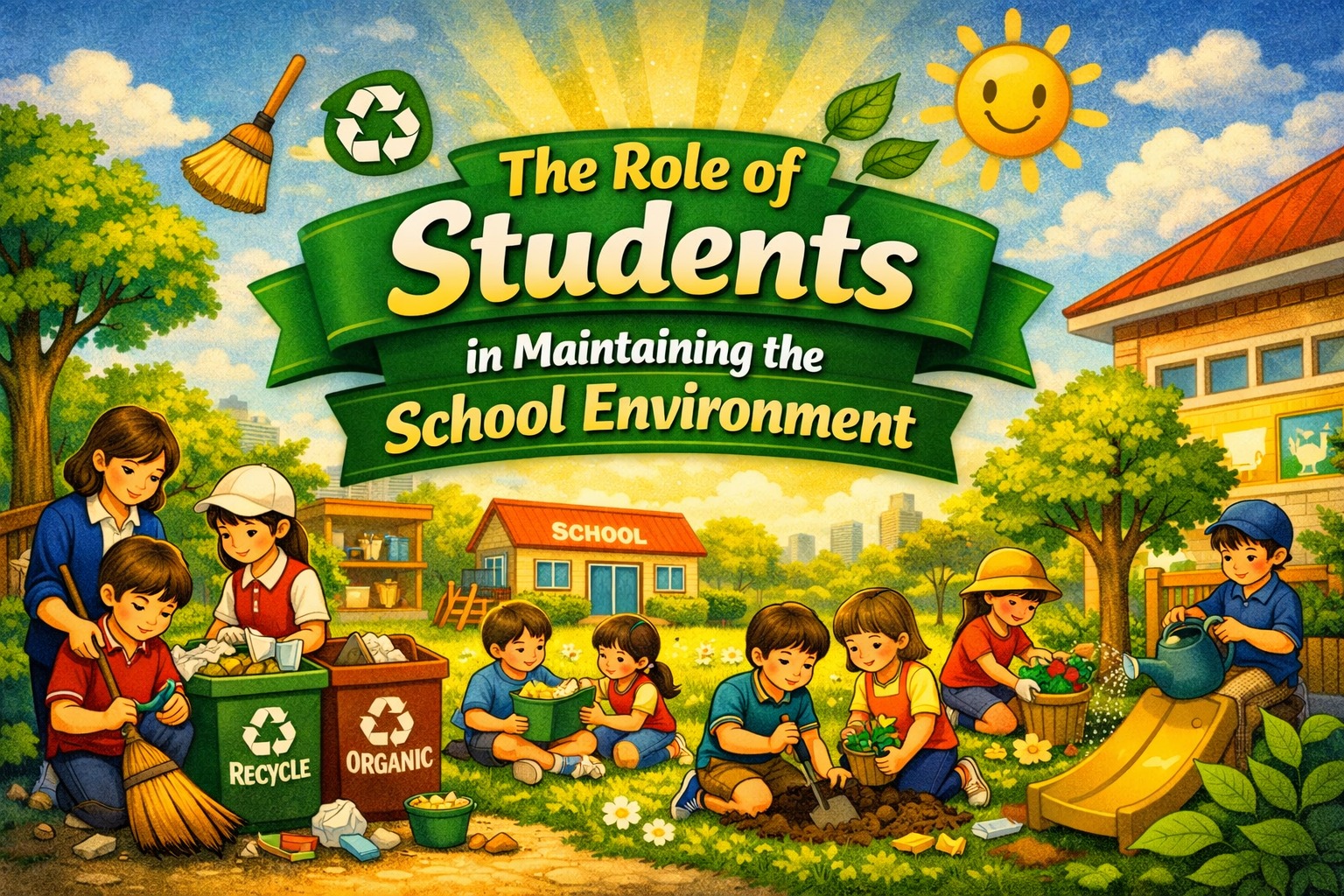
A clean, safe, and green school environment does not happen by chance. It is the result of shared responsibility, daily habits, and strong awareness from every member of the school community—especially students. As the largest group within the school ecosystem, students play a crucial role in creating a positive atmosphere that supports learning, health, and sustainability.
WHY A CLEAN SCHOOL ENVIRONMENT MATTERS
A well-maintained school environment directly influences students’ academic performance and well-being. Clean classrooms, green spaces, and organized facilities help improve focus, reduce stress, and prevent illnesses. When the surroundings are comfortable and hygienic, students feel more motivated to learn and participate in school activities.
Moreover, environmental awareness developed at school shapes lifelong habits. Students who learn to care for their environment early are more likely to practice sustainable living in the future.
STUDENTS AS AGENTS OF CHANGE
Students are not just users of school facilities; they are agents of change. Small daily actions can create significant impacts when performed consistently by many students.
Examples of student contributions include:
* Throwing trash in the correct bins
* Reducing plastic usage
* Saving electricity and water
* Keeping classrooms tidy
* Participating in school clean-up programs
These simple habits build discipline and responsibility while creating a culture of environmental care.
BUILDING A CULTURE OF RESPONSIBILITY
Maintaining the school environment should become part of school culture rather than a forced rule. Students can support this culture by encouraging peers, creating eco-clubs, or organizing environmental campaigns.
Peer influence is powerful. When students remind each other to keep the environment clean, the message feels more relatable and effective than strict supervision alone. Over time, these shared values become part of everyday behavior.
THE ROLE OF STUDENT ORGANIZATIONS AND ACTIVITIES
Extracurricular activities provide excellent opportunities to promote environmental awareness. Student councils and environmental clubs can lead initiatives such as:
* Recycling programs
* Tree planting days
* Clean classroom competitions
* Awareness posters and campaigns
These activities not only improve the environment but also build leadership, teamwork, and problem-solving skills.
DEVELOPING SUSTAINABLE HABITS FOR THE FUTURE
Caring for the school environment prepares students to face global environmental challenges. Climate change, waste management, and pollution are issues that require responsible future generations.
By practicing sustainable habits at school, students learn that every action matters. Turning off lights, using reusable bottles, and reducing waste may seem small, but they shape a mindset of responsibility that lasts a lifetime.
CONCLUSION
Students play a vital role in maintaining the school environment. Through daily habits, teamwork, and environmental awareness, they can create a clean, safe, and inspiring place to learn. A better school environment begins with simple actions, and when students take responsibility, they help build a healthier future for everyone.
Tentang Penulis
Gusti Ayu Tita
Penulis — Universitas STEKOM
Penulis aktif yang berfokus pada isu-isu akademik, teknologi pendidikan, dan pengembangan sumber daya manusia di lingkungan kampus.