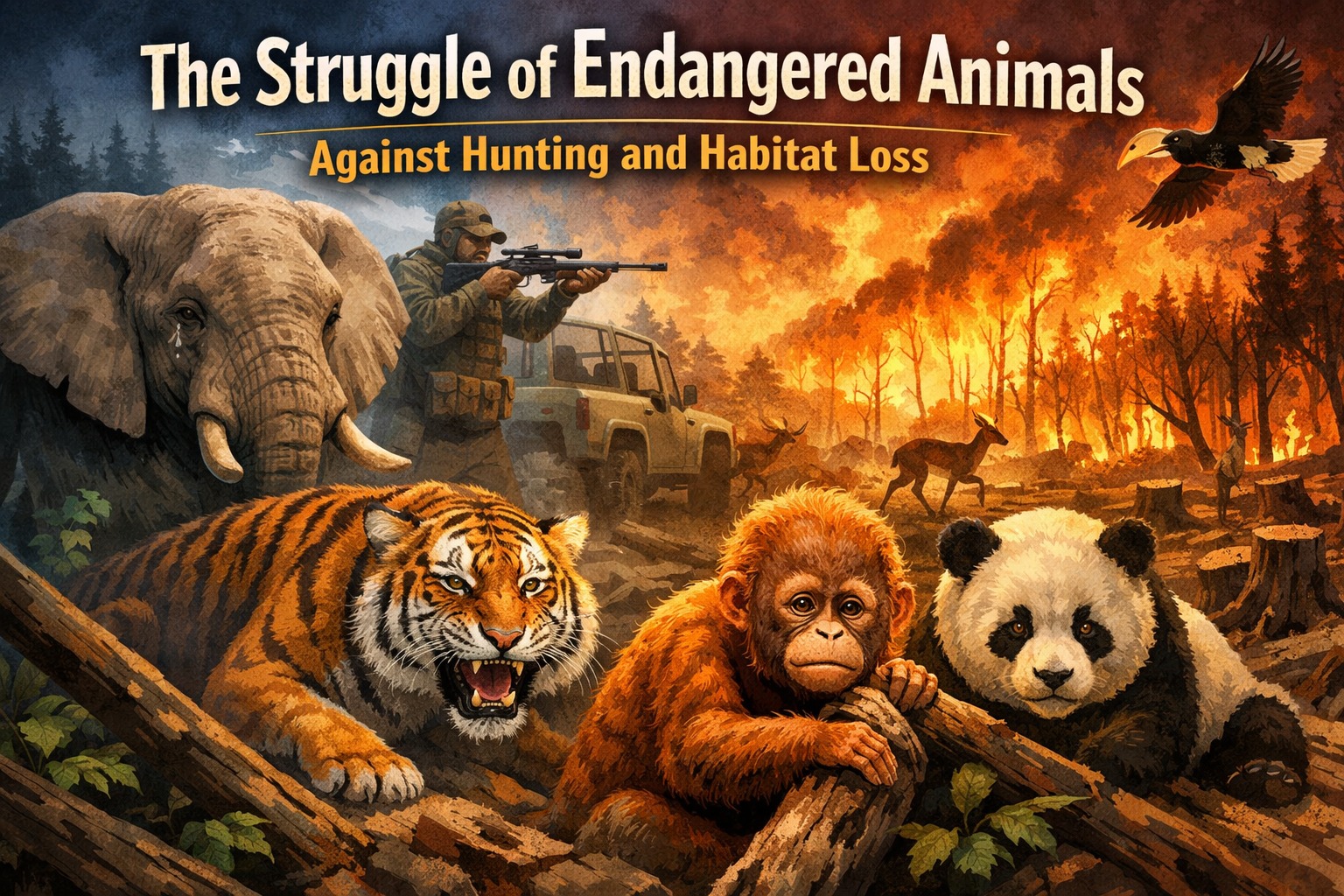
Wildlife around the world is facing an alarming crisis. Many animal species are now struggling to survive because of illegal hunting and the rapid destruction of natural habitats. Forests are disappearing, oceans are becoming polluted, and climate change is making ecosystems unstable. Without serious action, countless species could vanish forever. Protecting endangered animals is not only important for biodiversity but also essential for maintaining ecological balance and the future of humanity.
WHY ENDANGERED ANIMALS ARE IMPORTANT
Endangered animals play a major role in keeping ecosystems healthy. Every species has a unique function in nature, whether it is controlling pests, spreading seeds, or maintaining food chains. When one species disappears, the entire ecosystem can become unbalanced.
For example, predators such as tigers help control herbivore populations, while bees and birds assist in pollination. The loss of these animals can lead to environmental damage that affects forests, agriculture, and even human life.
THE IMPACT OF ILLEGAL HUNTING
Illegal hunting, also known as poaching, remains one of the biggest threats to wildlife. Many animals are hunted for their skin, horns, meat, or other body parts that are sold on the black market. Elephants are targeted for ivory, rhinos for their horns, and exotic birds for the illegal pet trade.
Poaching not only reduces animal populations but also disrupts breeding systems. In some cases, species become so rare that they can no longer reproduce effectively in the wild. As a result, extinction becomes increasingly difficult to prevent.
Weak law enforcement and high market demand continue to encourage wildlife crimes in many countries. Conservation groups are working hard to stop illegal hunting through patrols, stricter regulations, and public education campaigns.
HABITAT LOSS AND ENVIRONMENTAL DAMAGE
Habitat loss is another major reason why animals are becoming endangered. Forests are cleared for agriculture, mining, roads, and urban development. Wetlands are drained, and coral reefs are damaged by pollution and rising ocean temperatures.
When animals lose their habitats, they struggle to find food, shelter, and safe breeding areas. Some species are forced into smaller regions, increasing competition and conflict with humans.
Deforestation in tropical regions is especially dangerous because rainforests contain some of the richest biodiversity on Earth. Orangutans, tigers, and many bird species are losing their homes at a rapid pace due to logging and plantation expansion.
CLIMATE CHANGE WORSENS THE CRISIS
Climate change is adding more pressure to already vulnerable species. Rising temperatures, extreme weather events, and changing rainfall patterns are affecting animal migration and survival.
Polar bears are losing sea ice habitats, marine animals are suffering from warming oceans, and droughts are reducing water sources for wildlife. Many animals cannot adapt quickly enough to these environmental changes.
The combination of climate change, habitat destruction, and illegal hunting creates a serious threat to global biodiversity.
CONSERVATION EFFORTS TO SAVE WILDLIFE
Many organizations and governments are taking action to protect endangered animals. National parks, wildlife reserves, and anti-poaching programs have helped some species recover from the brink of extinction.
Breeding programs and habitat restoration projects also provide hope for endangered species. Public awareness campaigns encourage people to avoid products linked to wildlife exploitation and support sustainable practices.
Technology is increasingly being used in conservation efforts. Drones, satellite tracking, and camera traps help researchers monitor wildlife populations and detect illegal activities in remote areas.
HOW PEOPLE CAN HELP PROTECT ENDANGERED ANIMALS
Everyone can contribute to wildlife conservation in simple but meaningful ways. Supporting eco-friendly products, reducing plastic waste, and protecting forests can help preserve natural habitats.
People should also avoid purchasing products made from endangered animals and report illegal wildlife trade if they encounter it. Educating communities about the importance of biodiversity is another effective way to encourage conservation.
Small actions from individuals, combined with strong government policies and international cooperation, can make a significant difference in protecting wildlife for future generations.
CONCLUSION
The struggle of endangered animals against hunting and habitat loss is one of the most urgent environmental issues today. Illegal hunting, deforestation, pollution, and climate change continue to threaten countless species across the planet.
Protecting wildlife requires cooperation from governments, organizations, and individuals worldwide. By preserving habitats, enforcing wildlife protection laws, and promoting environmental awareness, humanity can help ensure that endangered animals continue to survive in the future.
Tentang Penulis
Gusti Ayu Tita
Penulis — Universitas STEKOM
Penulis aktif yang berfokus pada isu-isu akademik, teknologi pendidikan, dan pengembangan sumber daya manusia di lingkungan kampus.