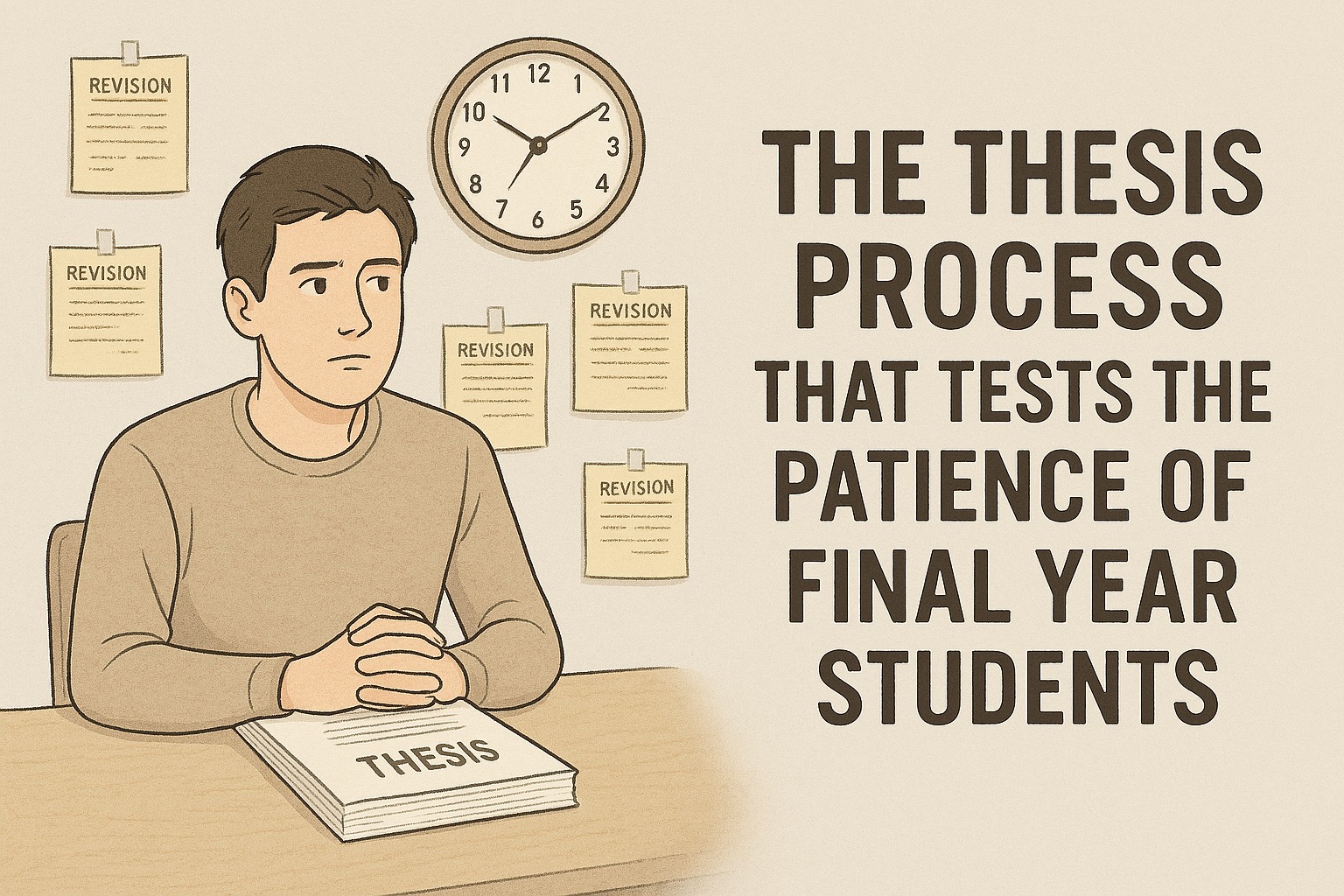
For many students, the final semester is imagined as a joyful countdown to graduation. It is a time when dreams feel closer and the future seems more certain. However, reality often tells a different story. Instead of feeling relaxed and excited, many final-year students find themselves facing one of the most demanding challenges in their academic journey: the thesis. The thesis process is not just about writing a long academic paper. It is a test of patience, discipline, consistency, and emotional strength. From choosing a topic to defending the final results, every stage requires time, focus, and resilience.
THE BEGINNING: CHOOSING THE RIGHT TOPIC
The thesis journey usually starts with one important decision: selecting a topic. At first, this may seem simple, but for many students, it becomes a major obstacle.
Students must choose a topic that is relevant, researchable, and approved by their supervisor. Some students struggle because they have too many ideas, while others feel they have none at all. Choosing a topic that is too broad or too complex can lead to difficulties later in the process.
This stage often takes weeks or even months, and it requires patience before the real writing even begins.
ADAPTING TO INDEPENDENT LEARNING
During earlier semesters, students are used to structured schedules. They attend classes, follow clear instructions, and complete assignments with specific deadlines.
However, the thesis process is very different. Students are expected to work independently. They must plan their own schedules, manage their research, and stay motivated without daily reminders from lecturers.
This sudden shift can be stressful. Without proper time management, students may feel lost or overwhelmed.
THE LONG ROAD OF RESEARCH
Once the topic is approved, the next stage is research. This is often one of the most time-consuming parts of the thesis process.
Students must read academic journals, collect data, conduct surveys, or perform experiments. Sometimes, the process does not go as planned. Respondents may be difficult to find, data may be incomplete, or results may not match expectations.
These challenges require patience and flexibility. Students often need to adjust their methods or repeat parts of their research.
WAITING FOR SUPERVISOR FEEDBACK
One of the most stressful moments in the thesis process is waiting for feedback from the supervisor. After submitting a draft, students must wait for corrections, suggestions, or approval.
The waiting period can feel long and uncertain. Some students receive feedback quickly, while others must wait days or even weeks. When the feedback finally arrives, it often comes with many revisions.
Although revisions are part of the learning process, repeated corrections can test a student’s patience and motivation.
THE CYCLE OF REVISION
The thesis process rarely ends with one draft. Most students must go through several rounds of revisions. They write, submit, receive feedback, and rewrite again.
This cycle can be exhausting, especially when students feel they have already done their best. Sometimes, entire sections must be rewritten, which can feel discouraging.
However, this stage is also where the thesis becomes stronger and more polished.
TIME MANAGEMENT CHALLENGES
Without regular classes, many students struggle to manage their time. Some think they have plenty of time, so they delay their work.
Procrastination becomes a common issue. Students may spend days or weeks without making progress. As deadlines approach, stress increases, and the work begins to feel overwhelming.
Developing a consistent writing routine is essential to avoid this situation.
EMOTIONAL UPS AND DOWNS
The thesis process is not only intellectually demanding, but also emotionally challenging. Students may feel anxious, frustrated, or doubtful about their abilities.
Seeing friends graduate earlier can also create pressure. Some students begin to compare themselves with others, which can lower their confidence.
These emotional ups and downs are normal, but they require strong mental resilience.
LESSONS LEARNED FROM THE THESIS JOURNEY
Although the thesis process is difficult, it provides valuable lessons. Students learn how to handle long-term projects, solve problems independently, and stay disciplined even when motivation is low.
They also develop critical thinking skills, research abilities, and emotional strength. These skills are useful not only in academics, but also in professional life.
PRACTICAL TIPS TO STAY PATIENT AND FOCUSED
To survive the thesis process, students can apply several simple strategies:
- Break the thesis into small, manageable tasks.
- Set daily or weekly writing goals.
- Communicate regularly with the supervisor.
- Create a comfortable and distraction-free study environment.
- Take short breaks to maintain mental balance.
These steps can help reduce stress and keep progress steady.
A TEST OF PERSEVERANCE BEFORE GRADUATION
The thesis process truly tests the patience of final-year students. It requires consistent effort, emotional strength, and the ability to face uncertainty. However, once the thesis is completed, the sense of achievement is worth the struggle. The process shapes students into more mature, disciplined, and confident individuals. In the end, the thesis is not just a requirement for graduation. It is a journey that prepares students for the real challenges of life beyond college.
Tentang Penulis
Gusti Ayu Tita
Penulis — Universitas STEKOM
Penulis aktif yang berfokus pada isu-isu akademik, teknologi pendidikan, dan pengembangan sumber daya manusia di lingkungan kampus.