
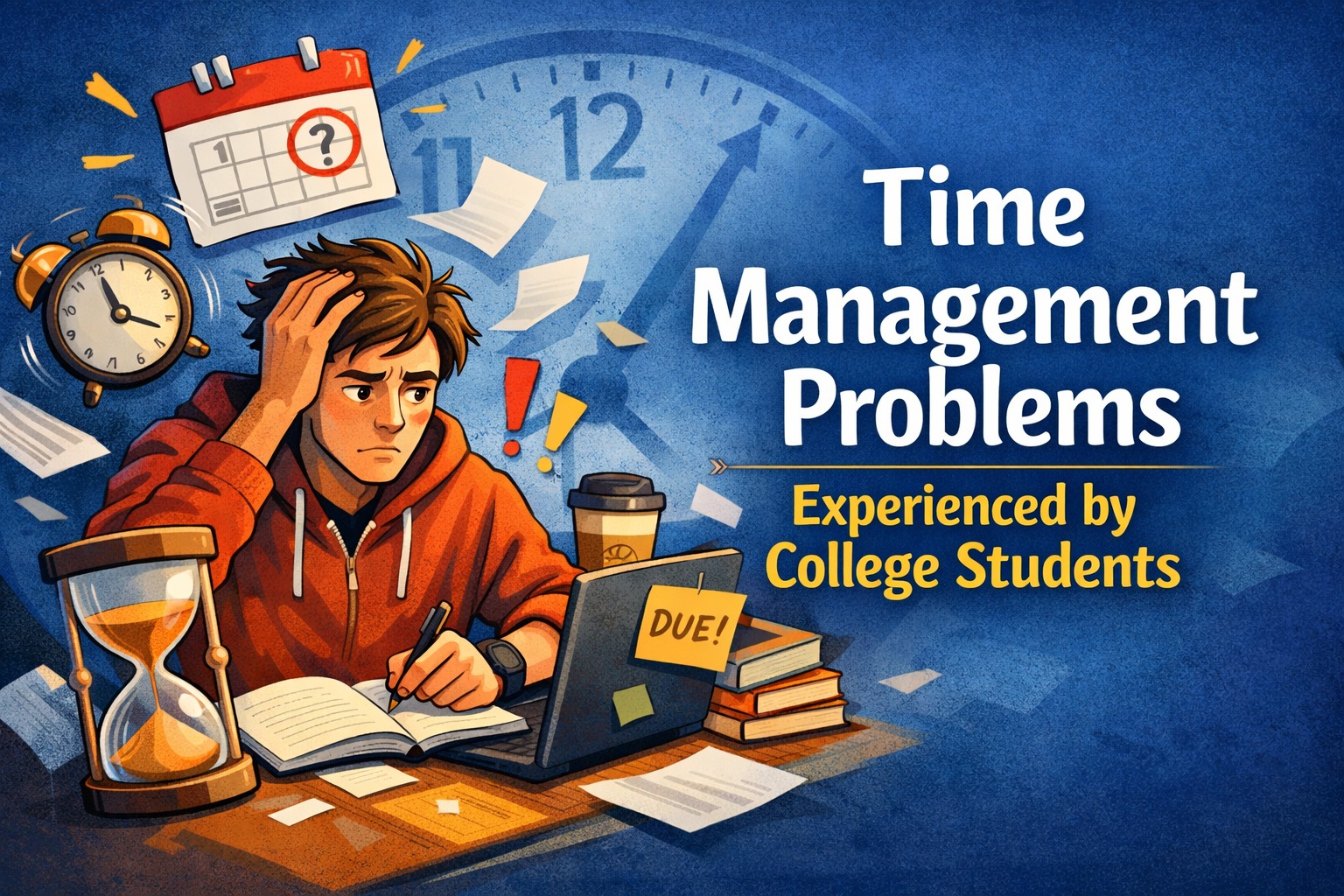
Managing time effectively is one of the biggest challenges faced by college students today. Academic pressure, social activities, part-time jobs, and personal responsibilities often create difficulties in balancing daily schedules. Poor time management can negatively affect academic performance, mental health, and overall productivity. Therefore, understanding the common time management problems experienced by college students is essential to finding practical solutions.
CAUSES OF TIME MANAGEMENT PROBLEMS
Many college students struggle with organizing their time because of several factors. One major cause is procrastination. Students often delay completing assignments until the deadline approaches, which increases stress and reduces the quality of their work.
Another factor is excessive involvement in extracurricular activities. While joining organizations and events can improve soft skills, participating in too many activities may reduce study time and rest hours.
Technology distractions also contribute significantly to poor time management. Social media, online games, and streaming platforms consume a large portion of students’ daily schedules without them realizing it.
In addition, some students lack clear priorities. Without proper planning, they may spend more time on less important tasks and ignore urgent academic responsibilities.
IMPACTS OF POOR TIME MANAGEMENT
Poor time management can create various negative effects for college students. One of the most common impacts is declining academic achievement. Students who fail to manage their time effectively often miss deadlines, skip classes, or perform poorly during exams.
Mental and physical health problems can also appear. Lack of sleep, stress, anxiety, and burnout are frequently experienced by students with overloaded schedules.
Moreover, ineffective time management may reduce productivity and motivation. Students can feel overwhelmed by unfinished tasks, making it harder to stay focused and disciplined.
Poor relationships may also develop when students cannot balance academic responsibilities with social or family life. Constant stress often affects communication and emotional stability.
STRATEGIES TO IMPROVE TIME MANAGEMENT
Improving time management requires discipline and consistent habits. One effective strategy is creating a daily or weekly schedule. Planning activities in advance helps students allocate enough time for studying, resting, and socializing.
Setting priorities is equally important. Students should identify urgent and important tasks first before handling less essential activities. Using techniques such as to-do lists can make tasks easier to manage.
Reducing distractions is another practical step. Limiting social media usage during study sessions can increase concentration and productivity. Students may also use productivity applications to monitor their daily activities.
Additionally, learning to say no is important. College students should avoid taking too many responsibilities that exceed their capacity. Maintaining balance is essential for long-term success.
THE IMPORTANCE OF SELF-DISCIPLINE
Self-discipline plays a major role in successful time management. Even with a well-organized schedule, students must remain committed to following their plans consistently.
Building positive habits such as waking up early, studying regularly, and avoiding procrastination can significantly improve academic performance. Self-discipline also helps students develop responsibility and independence, which are valuable skills for future careers.
CONCLUSION
Time management problems experienced by college students are common but manageable. Procrastination, distractions, and poor prioritization often become the main causes of ineffective scheduling. These issues can affect academic achievement, mental health, and personal relationships. However, by creating schedules, setting priorities, reducing distractions, and developing self-discipline, students can improve their productivity and maintain a healthier balance between academic and personal life.
Tentang Penulis
Gusti Ayu Tita
Penulis — Universitas STEKOM
Penulis aktif yang berfokus pada isu-isu akademik, teknologi pendidikan, dan pengembangan sumber daya manusia di lingkungan kampus.



