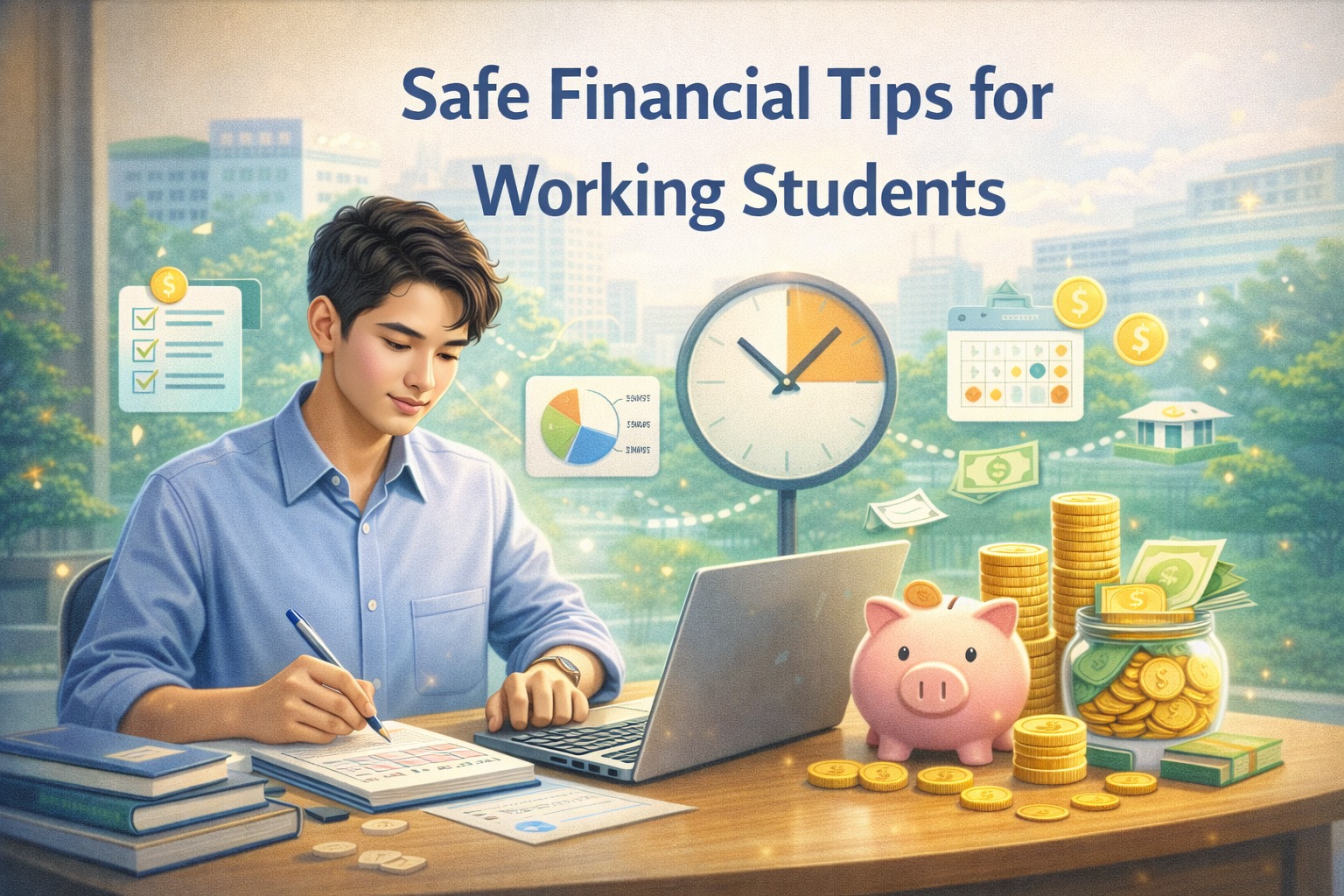
Working while studying requires students to manage their time, energy, and finances wisely. Many students feel their income is never enough — not because their salary is too small, but because their financial management is still unorganized. Safe and realistic financial tips are needed so students can remain economically stable without disrupting their academic focus.
UNDERSTANDING PERSONAL FINANCIAL CONDITIONS
Knowing Income Sources and Spending Flow
Students need to understand where their income comes from and where their money goes. By recognizing their financial flow, students can control expenses and avoid unconscious overspending habits.
DISTINGUISHING BETWEEN NEEDS AND WANTS
Setting Priorities from the Start
Not everything we want must be fulfilled immediately. Students must distinguish between primary needs such as tuition fees, food, and transportation, and wants that can still be postponed.
CREATING A MONTHLY BUDGET PLAN
Managing Expenses in a Structured Way
A monthly budget helps students regulate income and expenses more effectively. With a clear budget, students can avoid impulsive spending and maintain financial stability.
BUILDING THE HABIT OF SAVING EARLY
Setting Aside Income Consistently
Saving does not have to wait until income is large. Setting aside a small portion of earnings regularly helps students build healthy financial habits and prepare funds for the future.
AVOIDING A CONSUMPTIVE LIFESTYLE
Not Being Easily Influenced by Surroundings
Social environments often influence spending patterns. Students need strong self-control to avoid falling into a consumptive lifestyle that can disrupt financial stability.
PREPARING AN EMERGENCY FUND
Anticipating Unexpected Situations
An emergency fund is important for working students to handle urgent needs such as medical expenses or sudden academic costs. This fund helps students stay calm without having to rely on debt.
MAINTAINING BALANCE BETWEEN WORK AND FINANCES
Not Overworking Just for Money
Working excessively for additional income can negatively affect health and academic performance. Students must maintain balance so their finances stay secure without sacrificing more important aspects of life.
CONCLUSION
Safe financial tips for working students can be applied by understanding personal finances, creating a budget, saving consistently, and avoiding a consumptive lifestyle. With proper financial management, students can balance work and study more calmly, steadily, and with clear direction.
Tentang Penulis
Gusti Ayu Tita
Penulis — Universitas STEKOM
Penulis aktif yang berfokus pada isu-isu akademik, teknologi pendidikan, dan pengembangan sumber daya manusia di lingkungan kampus.