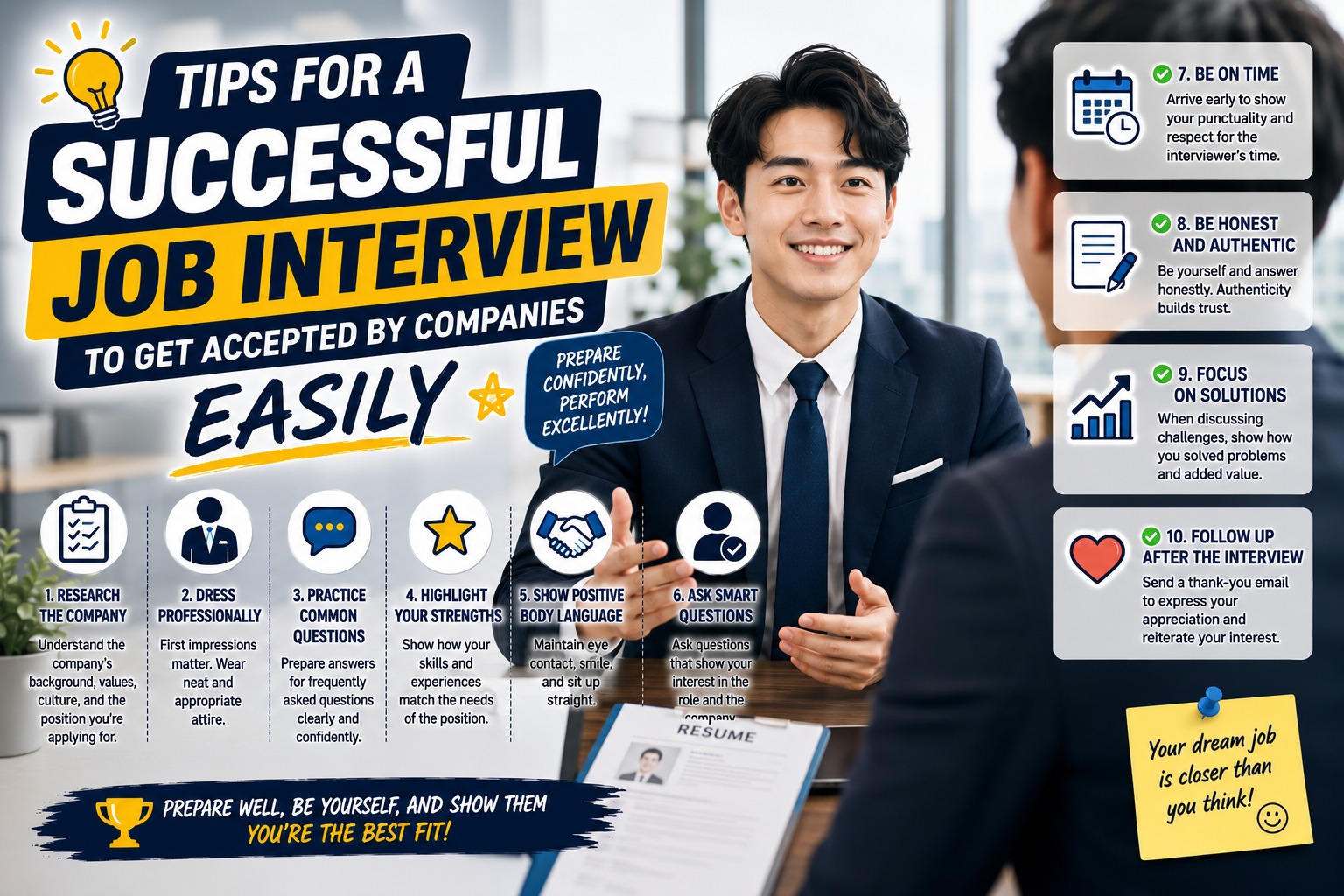
A job interview is one of the most important stages in the recruitment process. For many job seekers, especially fresh graduates, interviews can feel stressful and challenging. However, proper preparation and the right attitude can significantly increase the chances of getting accepted by a company. Employers not only evaluate skills and qualifications but also assess confidence, communication abilities, and professionalism during interviews.
RESEARCH THE COMPANY BEFORE THE INTERVIEW
One of the best ways to prepare for a job interview is by learning about the company. Understand the company’s background, vision, products, services, and work culture. Employers often ask candidates what they know about the company to measure their interest and preparation.
Researching the company also helps candidates answer questions more confidently and show genuine enthusiasm for the position.
UNDERSTAND THE JOB POSITION
Candidates should fully understand the position they are applying for. Learn about the responsibilities, required skills, and qualifications related to the role.
Understanding the job description allows candidates to explain how their abilities and experiences match the company’s needs. It also helps them answer interview questions more effectively.
PRACTICE COMMON INTERVIEW QUESTIONS
Practicing interview questions can help reduce nervousness and improve confidence. Some common interview questions include:
- Tell me about yourself
- Why do you want to work here?
- What are your strengths and weaknesses?
- Why should we hire you?
Preparing clear and honest answers helps candidates communicate more smoothly during interviews.
DRESS PROFESSIONALLY
Professional appearance creates a positive first impression. Wearing neat and appropriate clothing shows respect for the company and demonstrates professionalism.
Choose outfits that match the company culture while still maintaining a clean and formal appearance. Good grooming and proper body language also contribute to a confident image.
ARRIVE ON TIME
Punctuality reflects discipline and responsibility. Arriving late can create a negative impression before the interview even begins.
Plan transportation and prepare necessary documents in advance to avoid delays. Arriving early also gives candidates time to relax and focus before the interview starts.
SHOW CONFIDENCE AND POSITIVE BODY LANGUAGE
Confidence is an important factor during interviews. Maintain eye contact, smile naturally, and speak clearly when answering questions.
Positive body language shows enthusiasm and professionalism. Avoid crossing arms, looking distracted, or speaking too softly because these behaviors may reduce the interviewer’s confidence in the candidate.
BE HONEST AND AUTHENTIC
Honesty is highly valued in professional environments. Candidates should answer questions truthfully and avoid exaggerating skills or experiences.
Authenticity helps build trust with interviewers and creates a more natural conversation. Employers usually appreciate candidates who are genuine and willing to learn.
HIGHLIGHT YOUR SKILLS AND ACHIEVEMENTS
During interviews, explain your skills, experiences, and achievements confidently. Mention internships, projects, organizational involvement, or certifications that are relevant to the position.
Use real examples to demonstrate problem-solving abilities, teamwork, leadership, or other valuable skills. Specific examples make answers more convincing and memorable.
ASK THOUGHTFUL QUESTIONS
At the end of interviews, employers often ask whether candidates have questions. This is a good opportunity to show interest in the company and position.
Questions about team structure, company culture, or career development opportunities can create a positive impression and show professionalism.
FOLLOW UP AFTER THE INTERVIEW
Sending a polite thank-you message after the interview can demonstrate appreciation and professionalism. A short follow-up email expressing gratitude for the opportunity may help candidates stand out positively.
Although simple, this action reflects good communication skills and professional etiquette.
CONCLUSION
A successful job interview requires preparation, confidence, and professionalism. By researching the company, practicing interview questions, dressing appropriately, and showing positive communication skills, candidates can improve their chances of getting accepted by companies more easily. Consistent preparation and a willingness to learn from every interview experience will help job seekers achieve greater career success.
Tentang Penulis
Gusti Ayu Tita
Penulis — Universitas STEKOM
Penulis aktif yang berfokus pada isu-isu akademik, teknologi pendidikan, dan pengembangan sumber daya manusia di lingkungan kampus.