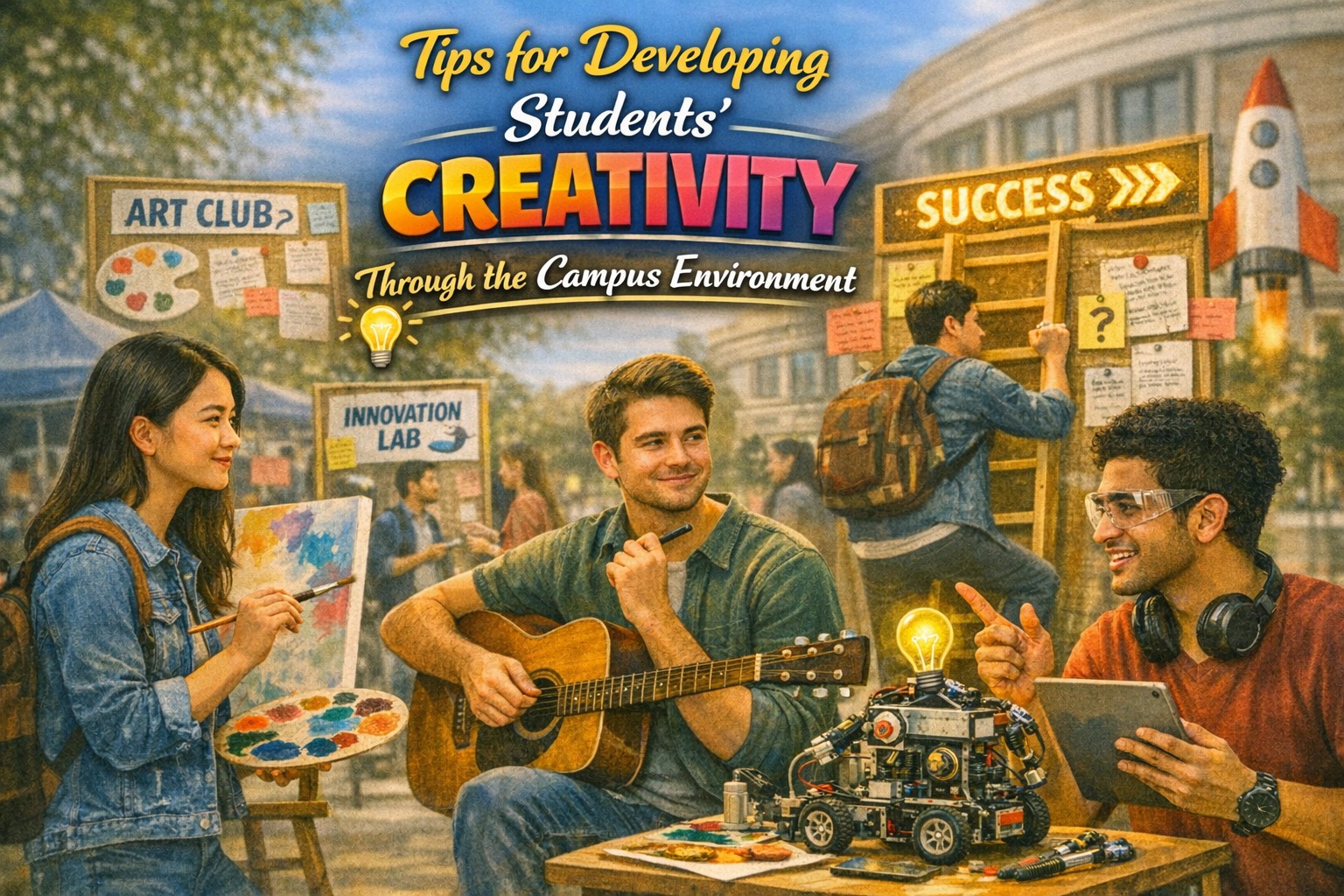
The university environment is a place where students not only gain academic knowledge but also develop essential skills that shape their future. Among these skills, creativity plays a significant role in helping students adapt, innovate, and respond to challenges in both academic and professional settings. Creativity allows students to generate new ideas, approach problems from different perspectives, and transform ordinary experiences into meaningful opportunities. The campus environment provides countless resources that can stimulate creativity, such as academic discussions, collaborative projects, student organizations, and diverse social interactions. However, developing creativity requires more than simply being present in this environment. Students must actively engage with their surroundings and use available opportunities to explore ideas and express their thoughts.
THE CAMPUS ENVIRONMENT AS A SOURCE OF CREATIVE INSPIRATION
One of the most valuable aspects of university life is the diversity of experiences and perspectives found on campus. Students interact with people from different academic backgrounds, cultures, and interests. These interactions often introduce new ideas and viewpoints that can inspire creative thinking.
When students are exposed to diverse perspectives, they begin to see problems and situations from multiple angles. This process encourages them to question assumptions and explore alternative solutions. For example, participating in interdisciplinary discussions or collaborative projects can spark innovative ideas that may not emerge in a more limited environment.
The campus environment also provides access to various learning spaces such as libraries, laboratories, discussion forums, and student communities. These spaces allow students to experiment with ideas, conduct research, and exchange knowledge. By actively engaging with these resources, students can transform their environment into a powerful source of inspiration for creativity.
ENCOURAGING ACTIVE PARTICIPATION IN CAMPUS ACTIVITIES
Active participation in campus activities is another effective way to develop creativity. Universities offer a wide range of programs, including student organizations, workshops, competitions, and cultural events. These activities provide opportunities for students to express their ideas, collaborate with others, and develop innovative solutions.
Through participation, students learn to communicate their thoughts, share perspectives, and refine their ideas based on feedback from others. This process strengthens creative thinking because it requires students to adapt their ideas and explore different possibilities.
In addition, involvement in campus activities often challenges students to think outside their comfort zones. Whether organizing events, leading projects, or contributing to group discussions, students are encouraged to develop original approaches that make their initiatives unique and effective.
BUILDING COLLABORATIVE CREATIVE EXPERIENCES
Creativity rarely develops in isolation. Collaboration plays an important role in generating new ideas and expanding perspectives. When students work together on projects or discussions, they combine their knowledge, experiences, and creativity to produce more innovative outcomes.
The campus environment naturally supports collaborative learning. Group assignments, research projects, and student organizations encourage students to exchange ideas and solve problems collectively. This collaborative process allows individuals to learn from each other while also discovering new ways of thinking.
Through collaboration, students also develop important interpersonal skills such as communication, empathy, and teamwork. These skills support creative development by creating an environment where ideas can be shared freely and refined through constructive dialogue.
CREATING A HABIT OF CREATIVE EXPLORATION
Developing creativity also requires consistent practice and exploration. Students who wish to strengthen their creative abilities must cultivate habits that encourage curiosity and experimentation. The campus environment offers numerous opportunities for students to explore new interests and expand their knowledge.
For instance, students can attend seminars, participate in creative workshops, or engage in extracurricular projects that challenge their imagination. These activities allow them to experiment with ideas and discover new ways of thinking.
Creating a habit of exploration also means being open to learning from everyday experiences. Simple interactions, classroom discussions, or observations of campus life can spark creative ideas. By maintaining curiosity and openness, students gradually develop a mindset that supports continuous creative growth.
CONCLUSION
The campus environment provides a rich foundation for developing students’ creativity. Through exposure to diverse perspectives, active participation in campus activities, collaborative learning experiences, and consistent creative exploration, students can strengthen their ability to generate innovative ideas and solutions.
Creativity is not only a talent but also a skill that can be cultivated through meaningful engagement with the surrounding environment. Students who take advantage of the opportunities offered by campus life are more likely to develop creative thinking that supports both their academic journey and their future careers.
Ultimately, by actively interacting with the campus environment and embracing opportunities for learning and collaboration, students can transform their university experience into a powerful platform for creative development and personal growth.
Tentang Penulis
Gusti Ayu Tita
Penulis — Universitas STEKOM
Penulis aktif yang berfokus pada isu-isu akademik, teknologi pendidikan, dan pengembangan sumber daya manusia di lingkungan kampus.