
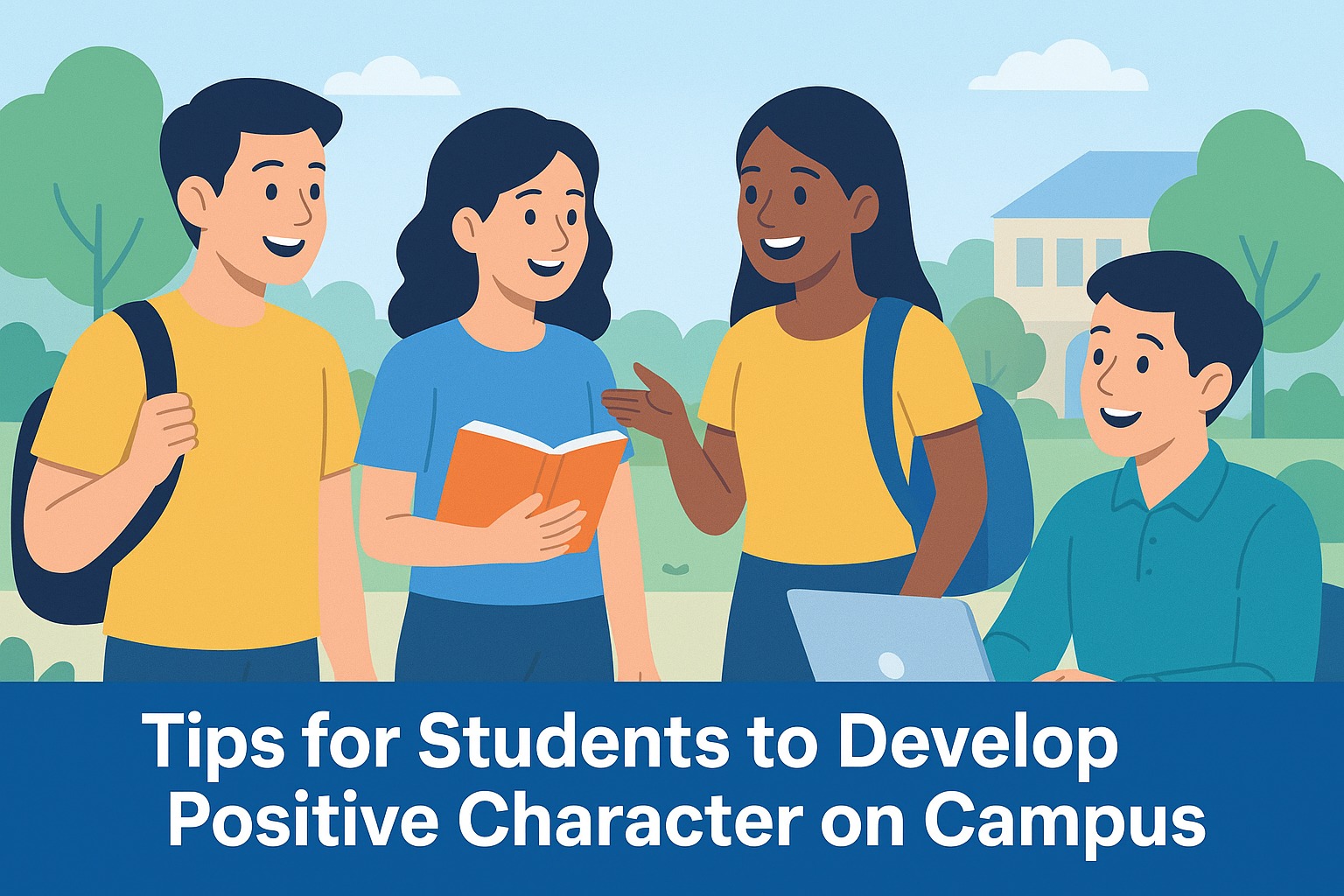
In the dynamic world of university life, students are expected not only to excel academically but also to build strong positive character. These character traits will play a significant role when entering the workforce and interacting in society. So, how can students develop positive character during their time on campus? Here is the complete explanation.
1. BEING ACTIVE IN CAMPUS ORGANIZATIONS AND COMMUNITIES
Joining student organizations is not just about gathering with friends. Many positive character traits are developed here, such as leadership, communication, and responsibility.Students who are active in organizations tend to be more confident, skilled in problem-solving, and accustomed to working with diverse types of people.
Tips:
- Choose an organization that matches your interests.
- Start by taking small roles first.
- Be consistent in attending and participating in activities.
2. BEING ABLE TO MANAGE TIME WELL
Positive character traits like discipline, consistency, and responsibility are built through good time management.
With classes, assignments, organizations, and personal activities, students need to learn how to prioritize.
Simple strategies:
- Create a daily to-do list.
- Separate what is important and urgent.
- Avoid the habit of procrastination.
3. DEVELOPING ETHICS AND PROFESSIONALISM EARLY
The campus environment is the best place to practice professional behavior.
This includes how you speak, respect lecturers, appreciate peers, and behave during discussions.
Positive character traits such as respect, integrity, and work ethic will form when practiced consistently.
Examples of professional behavior:
- Not underestimating assignments.
- Arriving to class on time.
- Respecting others’ opinions even when you disagree.
4. LEARNING TO MANAGE EMOTIONS AND BUILD MENTAL RESILIENCE
College often comes with pressure—piled tasks, presentations, conflicts with friends, and more.
The ability to manage emotions helps students face challenges without reacting impulsively.
Ways to build mental resilience:
- Think before responding.
- Take a pause when feeling stressed.
- Talk to someone you trust as a form of emotional regulation.
5. SURROUNDING YOURSELF WITH POSITIVE FRIENDSHIPS
Your social circle greatly influences your character. Being around supportive, honest, and motivated people encourages you to grow and do positive things.
Signs of a positive environment:
- Not toxic.
- Supporting each other’s achievements.
- Able to correct one another respectfully.
- Comfortable for sharing stories without drama.
6. DEVELOPING EMPATHY AND RESPECT FOR OTHERS
Empathy is an essential positive character trait for students.
Through empathy, you learn to understand others’ perspectives and recognize that everyone has their own story.
Simple ways to show empathy:
- Listen when others are speaking.
- Avoid forcing your opinions.
- Accept differences in interests, backgrounds, and viewpoints.
7. CONSISTENTLY IMPROVING YOURSELF BEYOND THE CLASSROOM
Positive character often grows through learning experiences outside the classroom.
This includes joining seminars, reading self-development books, or learning new skills.
Students who actively seek self-improvement tend to be more open-minded, wise, and growth-oriented.
8. MAINTAINING PHYSICAL AND MENTAL HEALTH
Healthy students find it easier to build positive character.
With a fit body and stable mental state, you can manage yourself better, stay productive, and have the energy to do good.
Tips:
- Get enough sleep.
- Eat regularly.
- Exercise lightly.
- Take breaks when needed.
CONCLUSION
Developing positive character in the campus environment is not an instant process—it grows through daily habits. By joining organizations, managing time well, maintaining ethics, and surrounding yourself with a supportive circle, students can grow into strong, professional, and work-ready individuals.Positive character not only earns respect on campus but also becomes a valuable asset when entering the professional world and wider social life.
Tentang Penulis
Gusti Ayu Tita
Penulis — Universitas STEKOM
Penulis aktif yang berfokus pada isu-isu akademik, teknologi pendidikan, dan pengembangan sumber daya manusia di lingkungan kampus.



