
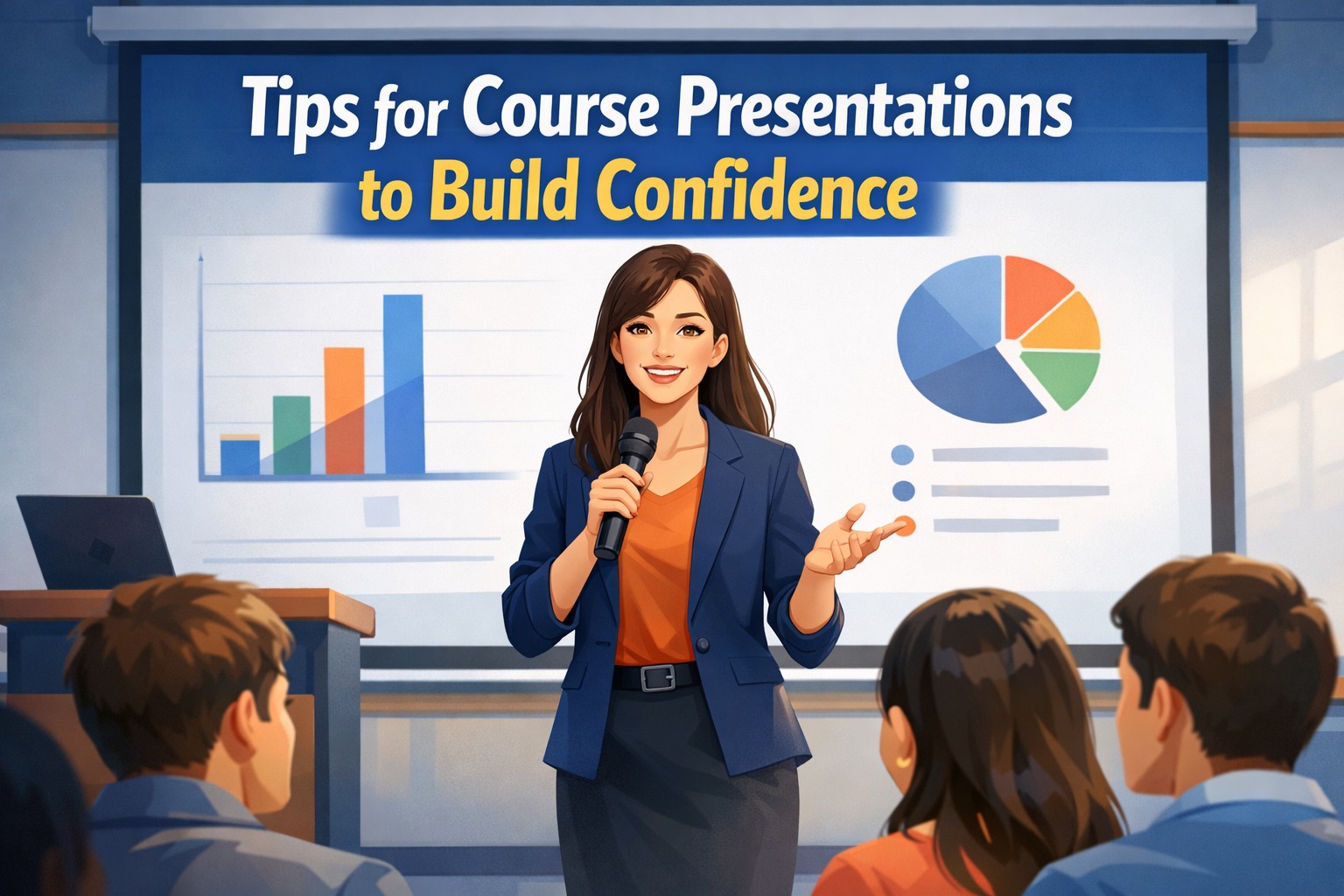
Course presentations are an important part of university learning. Almost every student will face presentation assignments, either individually or in groups. However, many students feel nervous, lack confidence, or even fear speaking in front of the class. In fact, presentation skills greatly influence academic assessment and soft skill development. Therefore, understanding presentation tips to build confidence is essential.
UNDERSTANDING THE MATERIAL THOROUGHLY
The main step to presenting confidently is mastering the material. When students truly understand the topic, nervousness naturally decreases. Strong comprehension allows ideas to flow more smoothly and convincingly.
Take time to read references, note key points, and understand the structure of the topic before presentation day.
ORGANIZING A CLEAR PRESENTATION STRUCTURE
A well-structured presentation helps the audience understand the material more easily. A clear structure also makes presenters calmer because they know what comes next.
Generally, a presentation consists of an introduction, main content, and conclusion. Use simple slides focused on key points and avoid excessive text.
PRACTICING DELIVERY
Practice is the key to building confidence. Try rehearsing in front of a mirror, recording your voice, or practicing with friends. Practice helps students become familiar with the material while improving intonation and clarity.
The more often you practice, the less nervous you will feel during the actual presentation.
MANAGING BODY LANGUAGE AND EYE CONTACT
Body language plays a major role in conveying confidence. Standing upright, using natural hand gestures, and maintaining eye contact with the audience make presentations more convincing.
Avoid constantly looking down or focusing only on slides. Eye contact shows confidence and readiness to engage with the audience.
MANAGING NERVOUSNESS EFFECTIVELY
Feeling nervous during a presentation is normal. However, it is important to manage it so it does not interfere with delivery. Take deep breaths before starting, speak at a calm pace, and focus on the message you want to convey.
Viewing the presentation as a knowledge-sharing process rather than a burden helps reduce mental pressure.
STAYING CALM DURING THE QUESTION AND ANSWER SESSION
The Q&A session is often the most intimidating part. To handle it well, listen carefully to questions and respond calmly. If unsure about an answer, be honest without panicking.
A calm and open attitude reflects maturity and confidence as a student.
CONCLUSION
Course presentations do not have to be intimidating. By mastering the material, structuring presentations clearly, practicing regularly, and managing nervousness effectively, students can present with greater confidence. Strong presentation skills benefit not only academic performance
Tentang Penulis
Gusti Ayu Tita
Penulis — Universitas STEKOM
Penulis aktif yang berfokus pada isu-isu akademik, teknologi pendidikan, dan pengembangan sumber daya manusia di lingkungan kampus.



