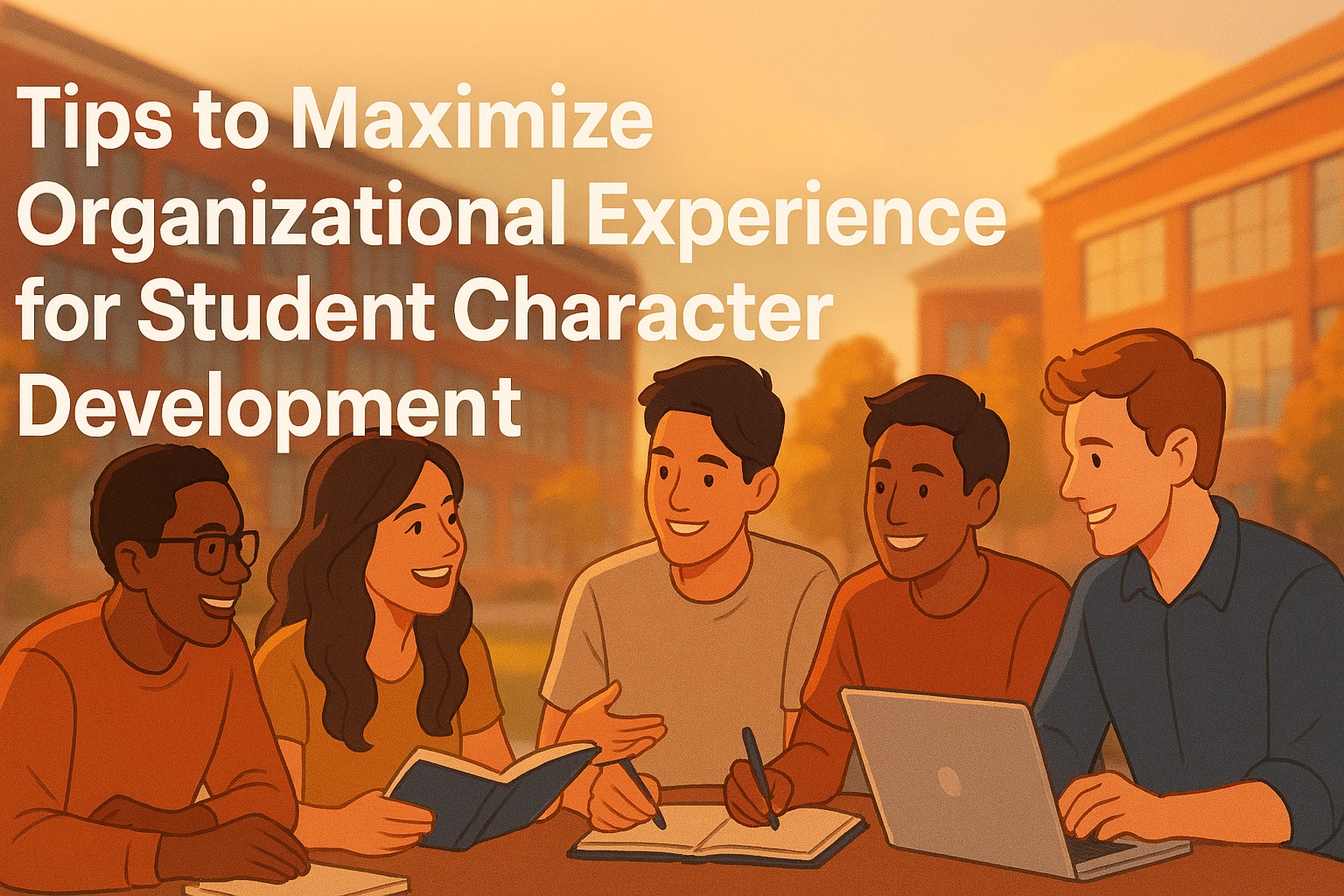
Student organizations play a crucial role in shaping not only academic competence but also personal character. Beyond lectures and assignments, organizational involvement offers real-world experiences that challenge students to grow emotionally, socially, and intellectually. However, simply joining an organization is not enough. To truly benefit from it, students must approach their organizational journey with awareness, commitment, and strategic intention. Understanding the right tips to maximize organizational experience for student character development can transform ordinary participation into meaningful personal growth. Organizational activities expose students to teamwork, leadership, conflict resolution, and responsibility. These experiences build resilience, discipline, integrity, and empathy. When approached deliberately, student organizations become powerful platforms for developing strong character traits that will remain valuable long after graduation.
UNDERSTANDING THE PURPOSE OF ORGANIZATIONAL INVOLVEMENT
The first step in maximizing organizational experience is understanding its purpose. Many students join organizations merely to fill their resumes or follow peers. While networking and credentials are important, the deeper value lies in personal transformation. Students should reflect on what they hope to gain, whether it is leadership skills, communication confidence, or emotional maturity.
By setting clear intentions, students become more engaged and proactive. Instead of passively attending meetings, they actively seek responsibilities that challenge their abilities. Purpose-driven involvement encourages accountability and long-term commitment. When students recognize organizations as training grounds for character development, their mindset shifts from participation to growth.
Having clarity also helps students align with organizations that match their values and interests. Alignment strengthens motivation and ensures that the experience feels meaningful rather than burdensome. This internal motivation is essential for consistent engagement.
TAKING RESPONSIBILITY AND STEPPING OUT OF COMFORT ZONES
Character development requires discomfort. Student organizations often present situations that demand courage, such as leading a project, speaking in public, or managing conflicts among members. Instead of avoiding these challenges, students should intentionally step outside their comfort zones.
Taking responsibility for tasks and accepting leadership roles strengthens accountability and discipline. When students are entrusted with organizing events or coordinating teams, they learn to manage time effectively and prioritize commitments. These experiences cultivate reliability, a key element of strong character.
Facing difficulties also builds resilience. Projects may fail, plans may change unexpectedly, and criticism may arise. Through these experiences, students develop emotional endurance and learn how to respond constructively rather than react impulsively. Over time, repeated exposure to challenges strengthens mental toughness and self-confidence.
BUILDING EFFECTIVE COMMUNICATION AND EMPATHY
Organizational environments are rich with diversity. Members come from different academic backgrounds, cultures, and perspectives. Engaging with this diversity helps students refine communication skills and develop empathy.
Effective communication is not limited to speaking confidently; it includes listening actively and understanding others’ viewpoints. When students participate in discussions, debates, and collaborative planning, they practice articulating ideas clearly while respecting differing opinions. This habit encourages open-mindedness and critical thinking.
Empathy develops when students work closely with teammates toward shared goals. Understanding others’ challenges and strengths fosters mutual respect. Students learn to manage conflicts professionally and maintain harmony within the group. These interpersonal skills are essential for building trustworthy and ethical character traits.
PRACTICING CONSISTENCY AND SELF-DISCIPLINE
One of the most overlooked aspects of organizational involvement is consistency. Character is shaped not by occasional actions but by repeated habits. Attending meetings regularly, completing assigned tasks on time, and fulfilling commitments demonstrate integrity and self-discipline.
Balancing academic responsibilities with organizational duties also trains time management. Students who successfully manage both areas develop stronger focus and productivity. This balance requires planning, prioritization, and perseverance. Over time, these habits become embedded in their daily routines.
Consistency also builds credibility. When students prove dependable, they earn trust from peers and mentors. Trust strengthens leadership opportunities and enhances personal reputation. In this way, disciplined behavior directly contributes to character development.
EMBRACING REFLECTION AND CONTINUOUS IMPROVEMENT
Maximizing organizational experience requires reflection. After completing projects or events, students should evaluate their performance and identify areas for growth. Reflection transforms experience into insight.
By analyzing what worked well and what needs improvement, students sharpen their critical thinking abilities. They become more aware of their strengths and weaknesses. This awareness encourages humility and a willingness to learn.
Continuous improvement ensures that organizational involvement remains dynamic rather than repetitive. Students who actively seek feedback and apply lessons demonstrate maturity and adaptability. These qualities are fundamental components of strong character.
Reflection also strengthens emotional intelligence. Understanding personal reactions to stress, criticism, or failure allows students to regulate emotions more effectively in future situations. As a result, they develop stability and composure under pressure.
LONG-TERM IMPACT ON PERSONAL AND PROFESSIONAL LIFE
When students intentionally maximize their organizational experience, the benefits extend far beyond campus life. Character traits such as integrity, leadership, resilience, empathy, and discipline become permanent assets. These qualities are highly valued in professional environments and community leadership roles.
Employers often seek graduates who can collaborate, solve problems, and adapt to change. Organizational experience provides practical training in these areas. More importantly, it nurtures ethical decision-making and responsibility, which are crucial for sustainable success.
Ultimately, student organizations serve as developmental laboratories where character is tested and strengthened. By engaging with purpose, accepting challenges, practicing discipline, communicating effectively, and reflecting consistently, students can transform their organizational journey into a powerful foundation for lifelong growth.
Tentang Penulis
Gusti Ayu Tita
Penulis — Universitas STEKOM
Penulis aktif yang berfokus pada isu-isu akademik, teknologi pendidikan, dan pengembangan sumber daya manusia di lingkungan kampus.