
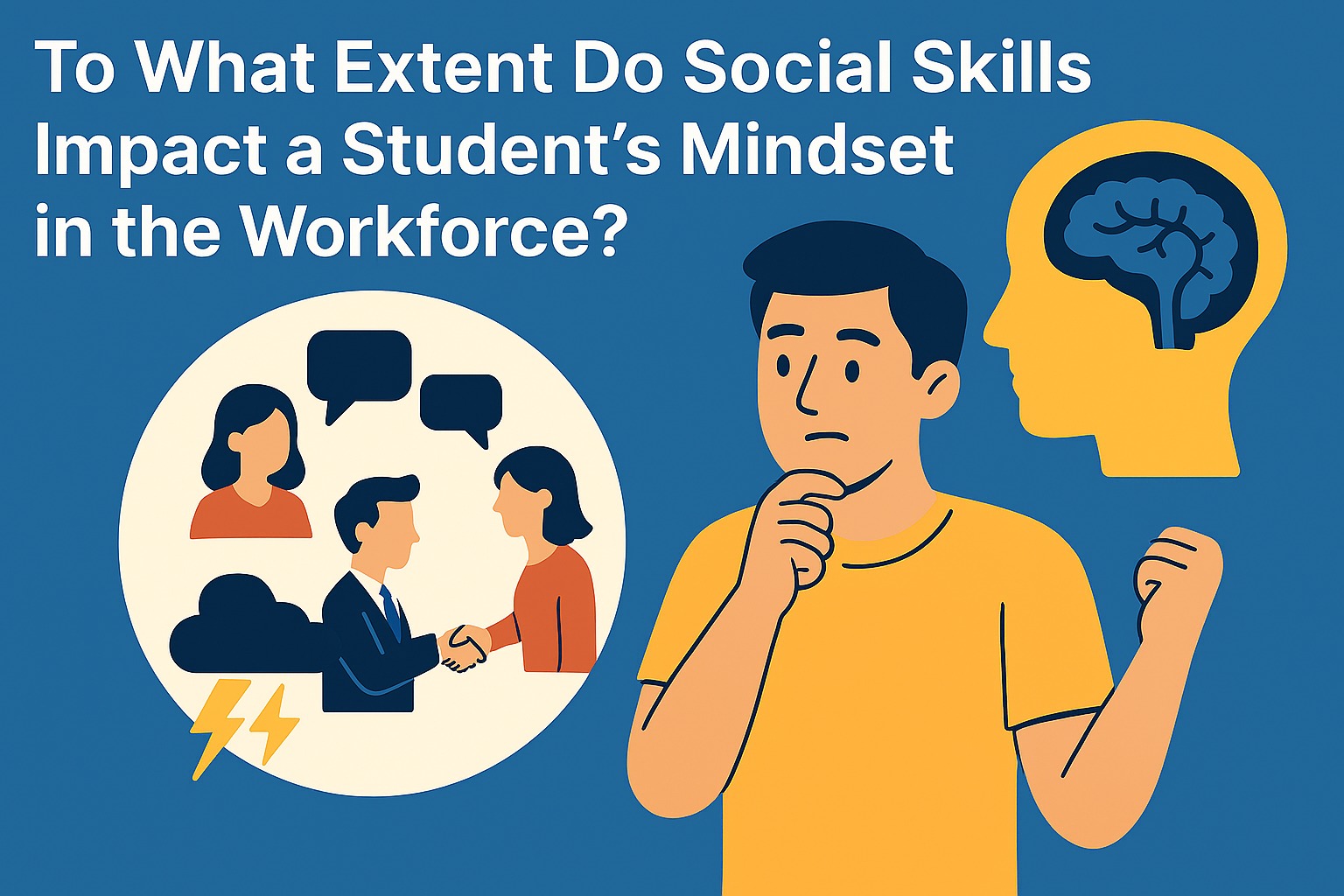
In the increasingly competitive job market, technical skills are not the only factors determining an individual's success. One of the most important factors is social skills , which play a significant role in shaping a student’s mindset
when facing the workforce. Good social skills can help students interact effectively with coworkers, supervisors, and clients, as well as influence how they tackle challenges in the workplace. So, how much do social skills influence a student's mindset in the workforce? This article will discuss the importance of social skills and how they affect a student’s mindset.
THE IMPORTANCE OF SOCIAL SKILLS IN THE WORKPLACE
Social skills encompass various abilities, such as interpersonal communication , teamwork, negotiation, and adapting to company culture. In the workplace, nearly all tasks and projects require collaboration with others, whether in small teams or large groups. Students with strong social skills will find it easier to adjust and perform well in various social situations in the workplace.
As time goes on, the workforce places increasing emphasis on soft skills , particularly social skills. Someone who can adapt and communicate well will be valued, regardless of how much technical expertise they possess. Therefore, students who want to succeed in the workforce must start developing these social skills during their university years.
DEVELOPING EFFECTIVE COMMUNICATION SKILLS
One of the most vital social skills in the workplace is effective communication . Students who possess strong communication skills will find it easier to share ideas and information with others. This is essential in meetings, presentations, and group discussions. Communication skills also include the ability to listen, allowing students to understand others' perspectives and respond constructively.
In the workplace, clear and open communication can prevent misunderstandings and increase efficiency. Furthermore, good communication helps build strong relationships with colleagues, which is essential for fostering a productive and harmonious work environment. Students who possess this skill tend to be more confident in interacting with various parties, which shapes a positive mindset when facing challenges.
TEAM COLLABORATION SKILLS
In the workplace, almost all large projects involve teamwork . Students who can collaborate well within teams will find it easier to adjust to dynamic work environments. Social skills such as the ability to give and receive constructive feedback play a significant role in team success.
Students who prioritize the team's interests over personal gains and remain open to feedback and suggestions will be more appreciated in the workforce. This helps them build a collaborative mindset that is essential for facing diverse situations in their job.
IMPROVING CONFLICT MANAGEMENT SKILLS
Conflicts are inevitable in the workplace, especially when individuals with different backgrounds work together. The ability to manage conflict constructively is crucial to prevent disruptions in work and to maintain harmonious relationships with colleagues. Students with strong social skills will be able to handle disagreements calmly and seek mutually beneficial solutions.
This skill is also closely related to negotiation . In the workplace, students may need to negotiate tasks, deadlines, or resource distribution. With strong social skills, they will find it easier to reach win-win solutions while maintaining good professional relationships.
ENHANCING EMOTIONAL INTELLIGENCE (EQ)
Emotional intelligence (EQ) is the ability to recognize and manage one’s emotions as well as understand others' emotions. Students with high EQ can manage stress more easily, empathize with others, and maintain motivation in high-pressure situations.
In the workplace, emotional intelligence is crucial for maintaining harmonious relationships with coworkers and staying calm in the face of challenges. Students with strong EQ will find it easier to handle stress, stay motivated, and approach obstacles with a positive attitude.
THE IMPACT OF SOCIAL SKILLS ON STUDENTS’ MINDSET
Good social skills directly influence a student’s mindset in the workplace. Students who can communicate well, work in teams, and manage conflicts wisely will develop a collaborative and positive mindset . They will not only focus on personal achievements but will also be oriented towards team and company success.
Social skills also help students stay motivated and open to feedback, which is essential in the learning and career development process. With the right mindset, students will be more prepared to adapt to changes and face the various challenges that arise in the workforce.
CONCLUSION
Social skills play a significant role in shaping a student’s mindset to face the competitive workforce. The ability to communicate well, collaborate in teams, manage conflicts, and have strong emotional intelligence helps students adjust to the dynamic work environment. Students who develop their social skills early on will be better prepared to face the challenges of the workforce and have a greater chance of success.
With strong social skills, students can build solid professional relationships, maintain motivation, and stay focused on their goals. Therefore, it’s essential for students to begin developing social skills as part of their preparation for entering the competitive job market.
Tentang Penulis
Gusti Ayu Tita
Penulis — Universitas STEKOM
Penulis aktif yang berfokus pada isu-isu akademik, teknologi pendidikan, dan pengembangan sumber daya manusia di lingkungan kampus.



