Comfort can feel safe, predictable, and emotionally secure. For many students, staying within familiar routines—attending classes, completing minimum assignments, socializing with the same circle—creates a sense of stability. However, when comfort becomes a permanent state rather than a temporary rest point, it can quietly limit growth and long-term success. In academic life, growth rarely happens inside a bubble of certainty. Progress often requires discomfort, new experiences, and calculated risks. When students become too comfortable in their comfort zone, they may unknowingly restrict their academic performance, personal development, and career readiness.
UNDERSTANDING THE COMFORT ZONE IN STUDENT LIFE
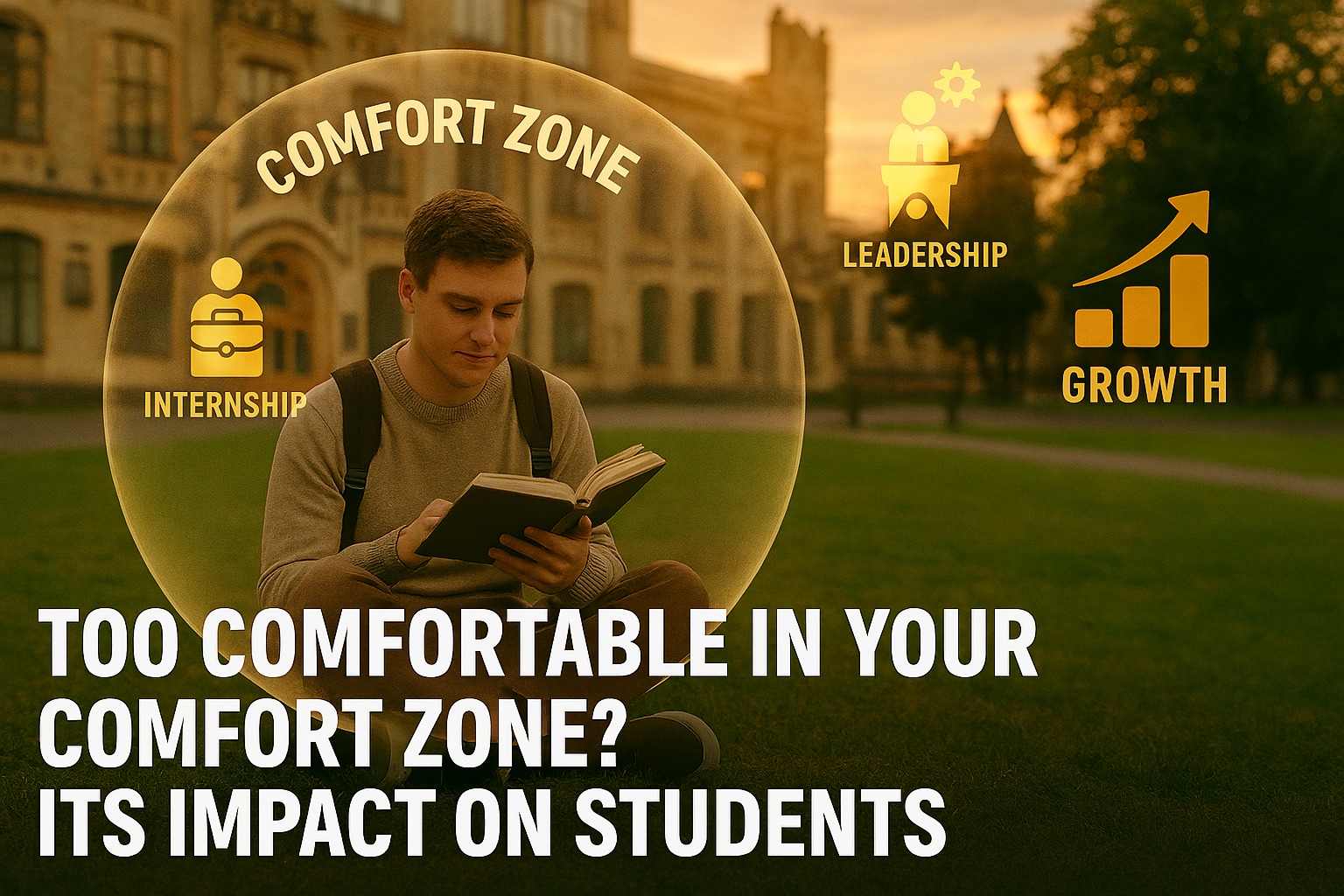
The comfort zone is a psychological state where individuals feel in control, experience low anxiety, and operate within familiar boundaries. For students, this might include sticking to subjects they already excel at, avoiding leadership roles, hesitating to speak in discussions, or declining opportunities that seem challenging.
At first glance, there is nothing wrong with feeling comfortable. In fact, emotional stability is important for learning. The problem arises when comfort turns into avoidance. Instead of using stability as a foundation for growth, some students use it as a shield against uncertainty.
Over time, this avoidance shapes habits. Students may stop challenging themselves, resist feedback, or ignore opportunities that require additional effort. Gradually, potential remains untapped.
HOW EXCESSIVE COMFORT LIMITS ACADEMIC GROWTH
Academic development depends on engagement and challenge. When students only aim to meet minimum requirements, they limit their intellectual expansion. Learning becomes transactional—focused on grades rather than understanding.
For example, a student might avoid difficult courses to protect their GPA. While this strategy may maintain short-term academic performance, it can reduce exposure to complex problem-solving experiences that build resilience and analytical thinking.
Participation in class discussions, research projects, competitions, or organizational activities often requires stepping beyond familiar territory. Students who remain overly comfortable may miss these experiences, losing valuable chances to strengthen communication skills, leadership qualities, and critical thinking.
True learning often involves confusion, mistakes, and revision. Without discomfort, deep mastery rarely occurs.
THE PSYCHOLOGICAL EFFECTS OF STAYING TOO SAFE
Remaining in a comfort zone can also influence mindset. When students repeatedly avoid challenges, they may develop self-doubt about their ability to handle difficulty. Ironically, by trying to protect themselves from failure, they become more sensitive to it.
Risk avoidance reduces opportunities to build confidence. Confidence grows when individuals face challenges and discover that they can adapt. Without such experiences, students may underestimate their capabilities.
Additionally, staying too comfortable can weaken motivation. Novelty and challenge stimulate engagement. Routine without growth may lead to boredom, reduced curiosity, and decreased academic enthusiasm.
IMPACT ON FUTURE CAREER READINESS
The professional world rewards adaptability, initiative, and problem-solving ability. Employers often seek individuals who can navigate uncertainty and learn quickly.
Students who consistently stay within their comfort zones may struggle during transitions—whether entering internships, adapting to new work environments, or handling complex responsibilities. Real-world situations rarely mirror predictable classroom routines.
Networking, public speaking, leadership roles, and skill upgrades all require stepping beyond comfort. If students avoid these growth opportunities during university years, they may feel unprepared in competitive job markets.
Career readiness is not built solely on academic knowledge. It is strengthened by exposure to challenges that develop resilience and flexibility.
BALANCING COMFORT AND GROWTH
It is important to clarify that discomfort does not mean constant stress. Healthy growth occurs in a balanced space between comfort and anxiety. This is sometimes referred to as the growth zone—where tasks feel challenging but achievable.
Students can begin by setting small expansion goals. Speaking once during a class discussion, joining a new organization, taking a slightly more challenging course, or learning a new skill are practical starting points.
Reflection also plays a key role. Asking questions such as “What am I avoiding?” or “Which opportunities make me nervous but excited?” can reveal hidden growth areas.
Gradually, as students expand their boundaries, what once felt uncomfortable becomes familiar. The comfort zone itself grows larger.
DEVELOPING A GROWTH-ORIENTED STUDENT MINDSET
A growth-oriented mindset views challenges as opportunities rather than threats. Instead of protecting current abilities, students focus on expanding them.
This shift requires accepting temporary discomfort as part of development. Mistakes are reframed as feedback, not proof of inadequacy. Competition becomes motivation rather than intimidation.
Students who embrace growth tend to explore internships, certifications, leadership roles, and collaborative projects. These experiences build not only competence but also adaptability—an essential trait for long-term success.
Ultimately, being too comfortable in your comfort zone may feel secure today, but it can restrict tomorrow’s possibilities. Academic life offers a unique environment to experiment, fail safely, and grow strategically. By stepping beyond familiar boundaries, students strengthen their confidence, expand their skills, and prepare themselves for dynamic futures.
Growth begins where comfort ends—and that is where real transformation takes place.
Tentang Penulis
Gusti Ayu Tita
Penulis — Universitas STEKOM
Penulis aktif yang berfokus pada isu-isu akademik, teknologi pendidikan, dan pengembangan sumber daya manusia di lingkungan kampus.